
The vision of a decentralized exchange (DEX) is compellingly simple: a trustless platform where smart contracts autonomously manage trades, users maintain absolute control of their assets, and intermediaries are eliminated. However, the journey from this elegant concept to a secure, functional, and scalable platform is a complex architectural and technical challenge. A single vulnerability in the logic governing trades, liquidity, or wallet interactions can render the entire platform insecure or unusable.
For years, the cryptocurrency trading landscape was dominated by centralized exchanges (CEXs), which offered speed and convenience at a significant cost: users had to relinquish control of their funds. This inherent risk of centralized custody, underscored by high-profile insolvencies and security breaches, has been a primary driver behind the surge in decentralized models. DEXs respond to this by enabling peer-to-peer trading directly from user wallets, with transparency and security embedded directly into the codebase.
This article serves as a roadmap for entrepreneurs, developers, and investors, detailing the process, costs, and critical considerations for crypto exchange development services.
Understanding the core model: CEX vs. DEX
At its heart, a decentralized exchange (DEX) is a platform that facilitates the direct swapping of digital assets between users’ wallets without a custodian holding the funds. Every transaction is executed and verified on the blockchain through self-operating smart contracts. This model eliminates custody risk but places the responsibility for security squarely on the user.
In contrast, centralized exchanges (CEXs) function more like traditional financial brokerages. Users deposit funds into exchange-controlled wallets, and trades occur within the platform’s internal ledger. This allows for high-speed, off-chain order matching but requires users to trust the exchange’s security practices, financial integrity, and operational honesty.
The architectural foundation of a DEX
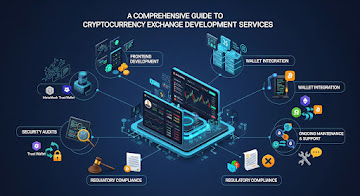
A functional DEX is not a monolithic application but a network of interconnected components working in concert. Replacing a central authority with code requires a sophisticated architecture built on several key pillars:
- Smart contracts: These are the immutable backbone of the exchange, encoding the rules for trading, liquidity provision, and fee distribution. Their development demands rigorous testing and security auditing, as any flaw can be exploited once deployed.
- Liquidity pools: Instead of traditional order books, most modern DEXs utilize liquidity pools—shared reserves of tokens locked in a smart contract. Users, known as Liquidity Providers (LPs), deposit assets into these pools and earn fees from the trades that occur within them.
- Automated market maker (AMM): This is the algorithm that powers liquidity pools. It uses a mathematical formula to determine asset prices dynamically based on the ratio of tokens in the pool, enabling instant swaps without needing a counterparty on the other side of the trade.
- Wallet integration: A DEX interface does not hold user keys; it acts as a gateway. It must seamlessly connect with non-custodial wallets like MetaMask or WalletConnect, allowing users to sign transactions directly from their own secure environment.
- Supporting infrastructure: This includes blockchain nodes for reading and writing data, oracles for fetching real-time external price information, and off-chain components for caching data to improve user experience.
The development lifecycle
Building a reliable DEX is a structured, multi-phase process that extends far beyond mere coding. It involves strategic planning, economic design, and relentless security focus.
- Research and strategic planning.
This initial phase involves defining the project’s vision. Will it focus on a specific niche? Which blockchain will it operate on? The decisions made here regarding protocol and feature set lay the groundwork for all subsequent development.
- Tokenomics and business logic design.
A DEX is an economic ecosystem. This stage involves designing the incentive structures that will make it sustainable. This includes defining trading fee models, LP reward mechanisms, and, if applicable, the distribution and utility of a governance token.
- UI/UX design and prototyping.
The complexity of blockchain interactions must be masked by an intuitive user interface. Creating wireframes and interactive prototypes for critical user flows—such as connecting a wallet, confirming a swap, and adding liquidity—is essential for driving adoption.
- Smart contract development.
This is the core technical work. Developers write, test, and refine the smart contracts that will govern the exchange’s operations. This is typically done using languages like Solidity or Rust, within frameworks such as Hardhat or Foundry.
- Front-end and backend integration.
The user interface, often built with React and libraries like Ethers.js, is connected to the smart contracts. A lightweight backend may be developed to handle tasks like analytics, historical data presentation, and improving application performance.
- Rigorous testing and security audits.
This is the most critical phase for ensuring platform security. The code undergoes extensive testing on testnets, followed by professional audits from independent security firms. These audits are non-negotiable, as they identify vulnerabilities that could lead to catastrophic financial loss.
- Mainnet launch and liquidity bootstrapping.
After successful audits, the contracts are deployed to the mainnet. However, a DEX without liquidity is non-functional. Launch strategies often include liquidity mining programs or initial pool seeding to attract the first LPs and create a vibrant trading environment.
Key factors influencing development cost
The cost of developing a cryptocurrency exchange is highly variable and is predominantly determined by the project’s scope. Key factors include:
- Feature set: A basic MVP with swap and pool functionality is less costly than an enterprise-grade platform with staking, advanced governance, and multi-chain support.
- Blockchain selection: Building on Ethereum may involve higher gas optimization costs, while using other EVM-compatible chains can be more cost-effective.
- Smart contract complexity: Custom AMM logic, cross-chain bridges, and sophisticated governance modules significantly increase development and auditing time.
- Security audits: Engaging top-tier auditing firms is a substantial but essential investment, often costing as much as the initial development phase.
- Team composition and location: The size and expertise of the development team, as well as their geographic region, have a major impact on the overall budget.
Choosing a development partner
The success of a decentralized exchange project is inextricably linked to the proficiency of its development team, making the choice of a technology partner a pivotal decision. An ideal partner should possess a comprehensive track record demonstrating their capability to manage end-to-end development, seamlessly guiding a project from its initial conceptual and tokenomics phase all the way through to deployment and ongoing maintenance. Crucially, this must be underpinned by a security-first mindset, evidenced by a rigorous commitment to smart contract auditing and penetration testing. Furthermore, the team must have deep, practical expertise with your chosen blockchain protocol and its associated development tools, a qualification best validated by a robust portfolio of live, functional, and secure trading platforms they have successfully delivered.
Conclusion
Developing a cryptocurrency exchange is a multifaceted endeavor that blends advanced blockchain technology with sound economic principles. It requires a meticulous approach to security, a deep understanding of decentralized architecture, and a commitment to creating a seamless user experience. While the path is complex, the result—a transparent, secure, and user-empowered trading platform—is a powerful contribution to the evolving digital economy. A successful launch is not the end of the journey, but the beginning of maintaining, scaling, and growing a trusted financial ecosystem.
Disclaimer: This is a paid post and should not be treated as news/advice. LiveBitcoinNews is not responsible for any loss or damage resulting from the content, products, or services referenced in this press release.