

Bitcoin stabilizes as STH inflows and leverage drop, reducing sell pressure and signaling a post-capitulation reset.
Bitcoin is stabilizing after a sharp drawdown as markets shift from panic to steadier behavior. Trading conditions still sit well below prior highs, but multiple on-chain and derivatives signals now point to less forced selling. Short-term holders, once a key source of sell pressure, appear to be slowing their inflows to exchanges.
Bitcoin Deleveraging Deepens as Futures Open Interest Drops to $22B
As spotted by Darfost, data from Binance shows that short-term holder (STH) inflows have fallen sharply. The 7-day sum reportedly moved from nearly 100,000 BTC during the February capitulation period to roughly 25,000 BTC today. That fourfold drop signals a moderation in reactive selling, suggesting the most urgent phase of distribution may already be over.
Panic Fades as STH Inflows Fall to 25K BTC on Binance
“This is a rather positive signal, considering that STHs are known to be the most sensitive and least stable group of investors.” – By @Darkfost_Coc
Link ⤵️https://t.co/ggAe8VgN5R pic.twitter.com/VIpI6OJ9wP
— CryptoQuant.com (@cryptoquant_com) March 27, 2026
Behavioral change also appears in STH profitability metrics. During the selloff, STH-MVRV slipped well below 1.0, a zone often linked with capitulation-like conditions. In that window, many recent buyers held coins at a loss, which tends to pressure holders to exit when prices weaken. Since then, STH-MVRV has been gradually recovering.
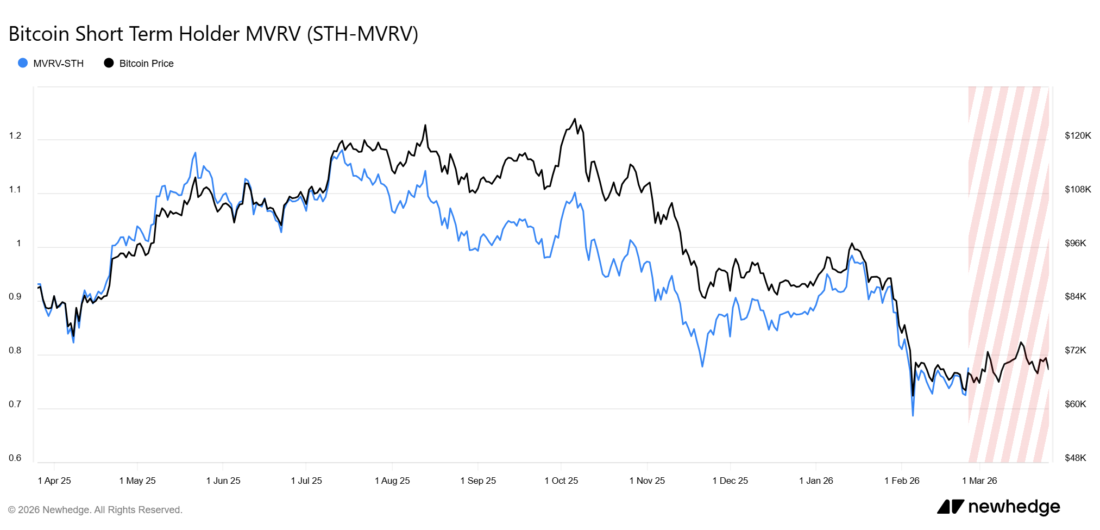
Image Source: NewHedge
That rebound matters because it implies less urgency among remaining short-term holders. Forced sellers likely already left the market, while many current STHs sit closer to break-even levels than they did during the deepest drawdown.
As a result, the decline in exchange inflows looks less like a brief pause and more like a post-capitulation reset in how short-term participants respond to price stress.
Falling Open Interest and Reserves Point to Reduced Downside Risk for BTC
Bitcoin futures open interest reportedly fell from late-2025 levels near $47B to around $22B in recent weeks. This contraction aligns with the broader price drop and reflects liquidation activity that typically drains leverage from crowded positions. With open interest lower, the market faces less systemic pressure from overextended traders.
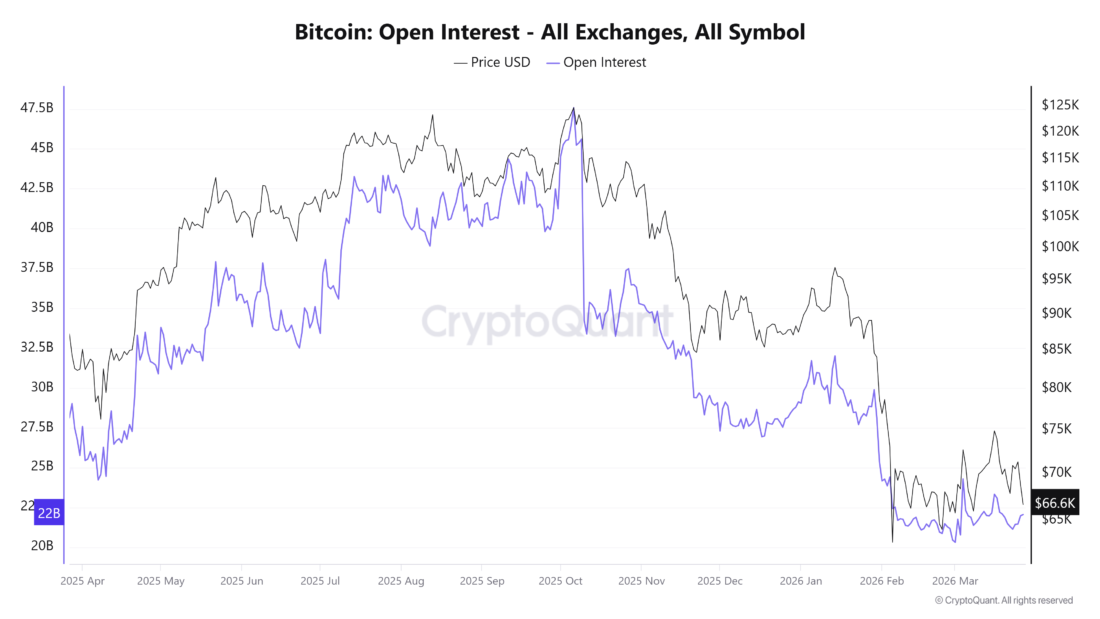
Image Source: CryptoQuant
So far, current conditions do not indicate aggressive re-leveraging. Instead, the pattern points toward a market that has moved through a deleveraging phase and is now working through consolidation.
Supply conditions also look tighter on exchanges. Exchange reserve data shows a continued decline in BTC balances held by exchanges, trending toward about 2.7 million BTC while extending a multi-year withdrawal pattern.
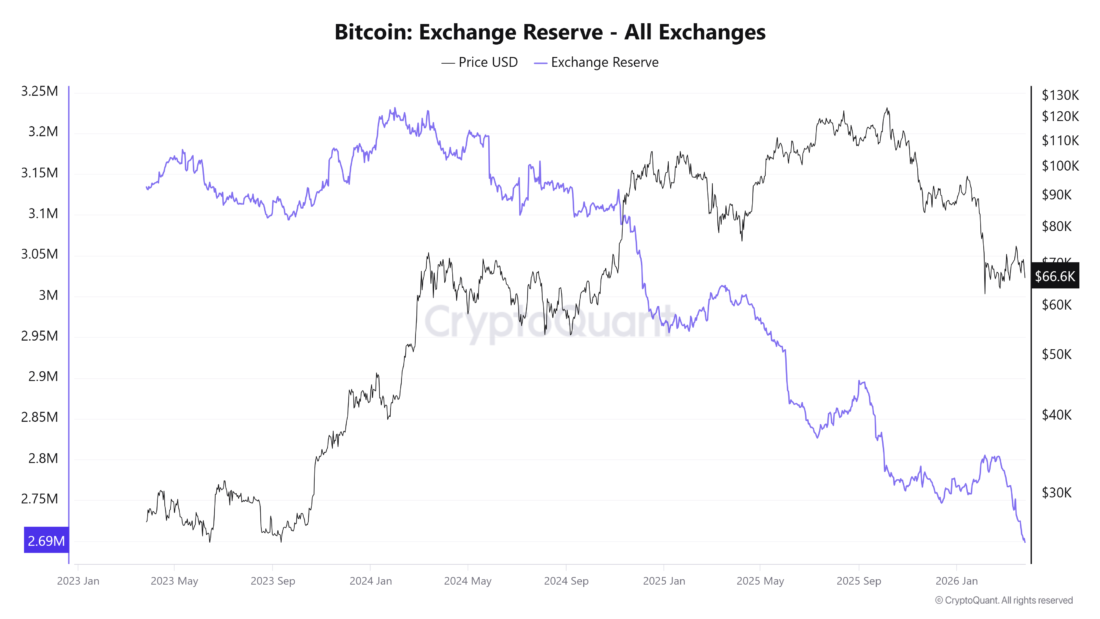
Image Source: CryptoQuant
Importantly, the recent correction did not trigger a sustained rebuild of exchange reserves. That suggests short-term holders drove much of the distribution, while long-term holders held back from sending significant supply back to exchanges.
Basically, these signals portray stabilization with less readily available sell-side liquidity. Binance STH inflows around 25,000 BTC reflect a broader shift in investor behavior, while falling open interest reduces the odds of another liquidation spiral.
According to market observers, the next test lies in demand strength. If buyers keep absorbing supply steadily, the current easing of panic pressure could last beyond the first rebound.