



Short squeeze and easing geopolitical risk push BTC higher, while on-chain data shows steady but cautious momentum.
Bitcoin and major cryptocurrencies opened the week with strong gains as traders returned from the Easter break to shifting geopolitical signals. Renewed optimism around a possible Iran ceasefire drove a sharp reversal in sentiment. Short positioning built during the weekend quickly unwound, triggering liquidations across derivatives markets. Price action now sits back near the top of a multi-week range, with traders watching whether momentum can extend
Ether Outperforms as Crypto Rally Gains Pace on Ceasefire Developments
Bitcoin climbed 3% to $69,120 on Monday, marking its highest level in over a week. Ether outperformed, rising 3.7% to $2,130, its strongest daily move in several sessions. Solana gained 2% to $82, XRP added 2.2% to $1.34, and Dogecoin increased 1.7% to $0.093. Combined strength pushed total crypto market capitalization back above $2.5 trillion.
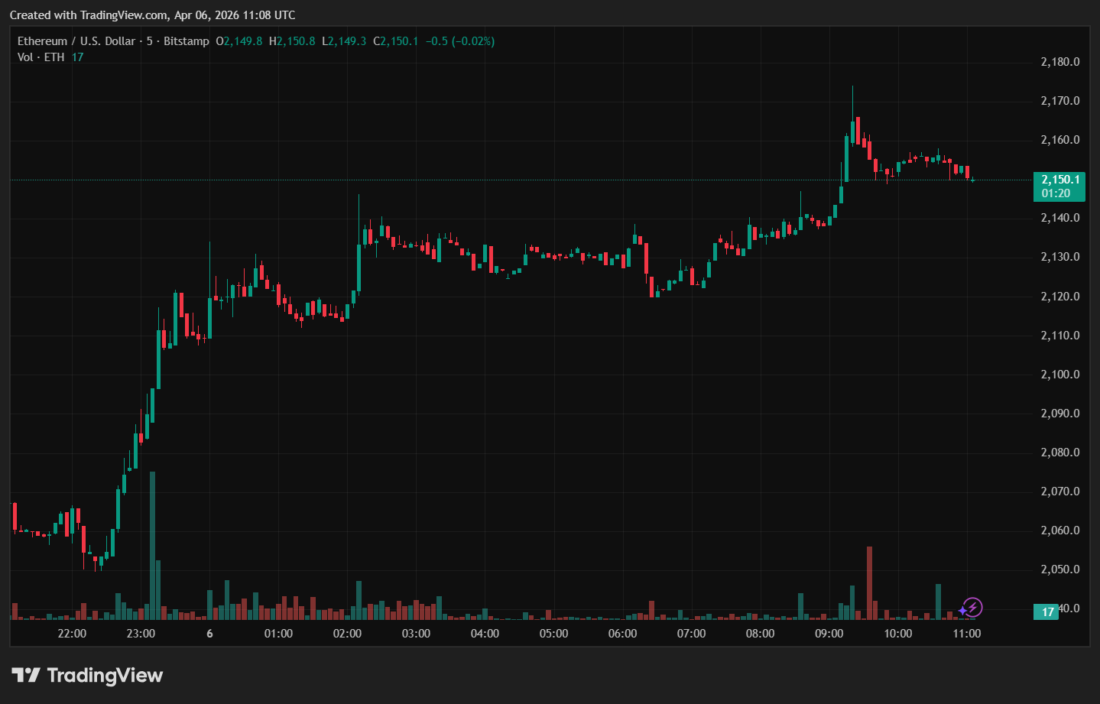
Image Source: TradingView
Geopolitical developments drove much of the move. Reports indicated that the U.S., Iran, and regional intermediaries are discussing a 45-day ceasefire. That agreement could end the six-week conflict if extended.
Additional reports confirmed increased ship movement through the Strait of Hormuz, easing supply concerns. Market participants reacted quickly, pricing in reduced geopolitical risk despite renewed threats from Donald Trump targeting Iranian infrastructure.
Crowded Shorts Unwind as Bitcoin Volatility Sparks $273M Liquidation Wave
Derivatives data show how heavily traders leaned bearish before the rebound. Liquidations reached $273.8 million over 24 hours across more than 81,000 traders. Short positions accounted for $196.7 million, nearly three times the $77.1 million in long liquidations. A single ETH-USDT short worth $10.17 million on Binance marked the largest forced close.
Bitcoin traded between $66,634 and $69,350 within 24 hours, a $2,700 range. That move captured crowded short positions placed during last week’s sentiment decline.
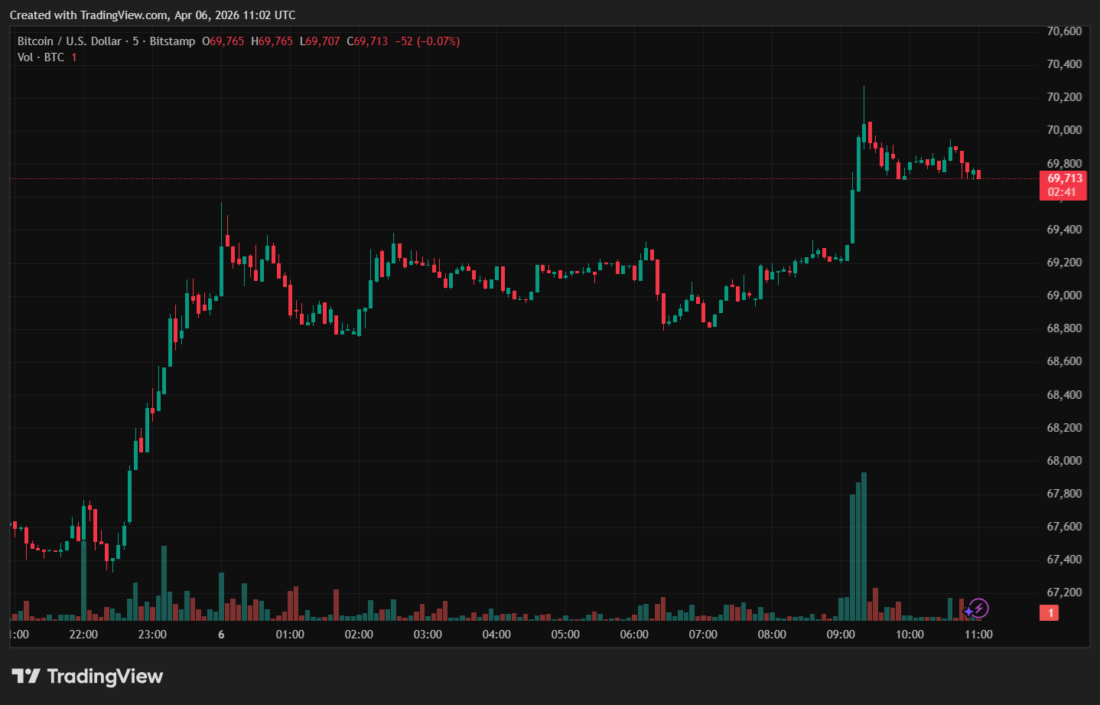
Image Source: TradingView
Sentiment data supports the rally’s contrarian nature. Weekend metrics showed one of the most bearish readings since the conflict began. Social media tracked five negative posts for every four positive ones. Such skew often precedes sharp reversals in crypto markets, especially when liquidity remains thin.
Positioning and market structure offer additional context:
- Futures open interest increased by roughly 5% to $107 billion.
- Daily trading volume surged about 64% to $129 billion.
- Large holders (1,000+ BTC) declined to 1,266 wallets by April 5.
- Supply clusters concentrate near $69,422, with thin resistance above $70,685.
On-Chain Data Shows Slowing Accumulation as Bitcoin Tests Key Resistance
Range dynamics remain unchanged despite the rally. Bitcoin continues to trade within the $65,000 to $73,000 band that has defined price action during the conflict. Resistance levels near $71,500 and $81,200 stand as the next major tests. These align with lower-band and trader realized price metrics tracked on-chain.
Long-term holder net position change has slowed to 87,038 BTC, suggesting a reduced accumulation pace. At the same time, supply distribution indicates limited overhead resistance once the price clears the $70,000 zone.
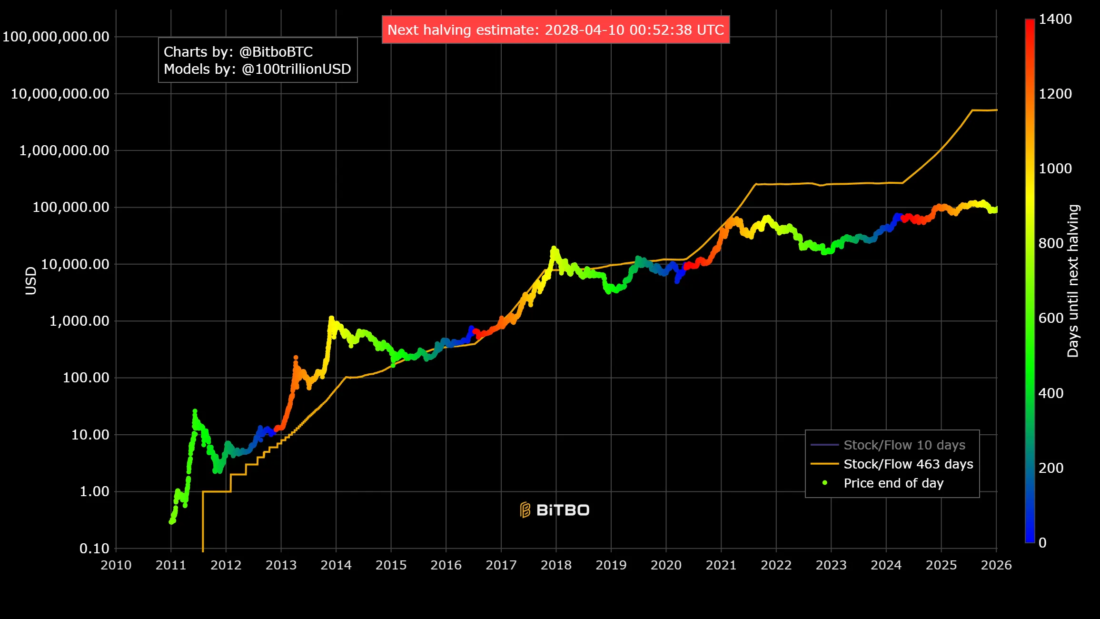
Image Source: BitBo
Structural valuation metrics suggest Bitcoin is not yet overheated. The stock-to-flow cross-asset model data places current prices within expected value ranges. Unlike prior cycle peaks in 2013 and 2017, the price has not deviated significantly above modeled levels. Similarly, current pricing avoids the deep discounts seen during the 2018 and 2022 bear markets.
Cycle timing also remains supportive. Bitcoin continues to trade within the post-halving expansion phase, historically associated with sustained upward pressure. Model projections still point toward higher valuation bands over time, even as short-term consolidation persists.


