

Bitcoin shows resilience as oil spikes and volatility rises, while shrinking exchange reserves and lower leverage tighten supply.
Rising tensions in the Middle East pushed global markets into defensive positioning over the weekend. Oil surged above $115 as traders priced in the risk of supply disruptions near the Strait of Hormuz. Equity markets weakened while volatility climbed. In contrast, Bitcoin has remained relatively steady during the latest wave of macro stress.
Iran Tensions Push Oil Past $115 as Market Volatility Climbs
Tensions in Iran have increased fears of longer instability in the region. Markets are watching the Strait of Hormuz closely, as 20% of the world’s oil passes through this narrow channel daily.
QCP: Escalating Iran tensions pushed oil above $115, driving risk-off sentiment in global markets. While Treasuries and gold weakened amid inflation concerns, the U.S. dollar strengthened, and BTC showed resilience with options flows indicating volatility hedging rather than…
— Wu Blockchain (@WuBlockchain) March 9, 2026
Experts say that if shipping through the strait slows or stops, global supply could tighten, pushing prices higher. Because of that risk, oil markets reacted quickly as tensions increased.
Oil prices climbed above $115, bringing renewed inflation concerns across financial markets. Higher energy costs often raise consumer prices and slow economic growth. And as such, investors have begun reducing exposure to risk assets.
As contained in a recent QCP report, the CBOE Volatility Index rose above 29, reflecting stronger demand for downside protection. As uncertainty spreads, traders have shifted toward more defensive positioning.
Bitcoin Diverges From Risk Assets as Safe Havens Lose Ground
Traditional safe-haven assets have not reacted in their usual way. US Treasuries and gold both came under pressure during the latest market stress. Rising oil prices are pushing inflation expectations higher, which in turn drives bond yields upward.
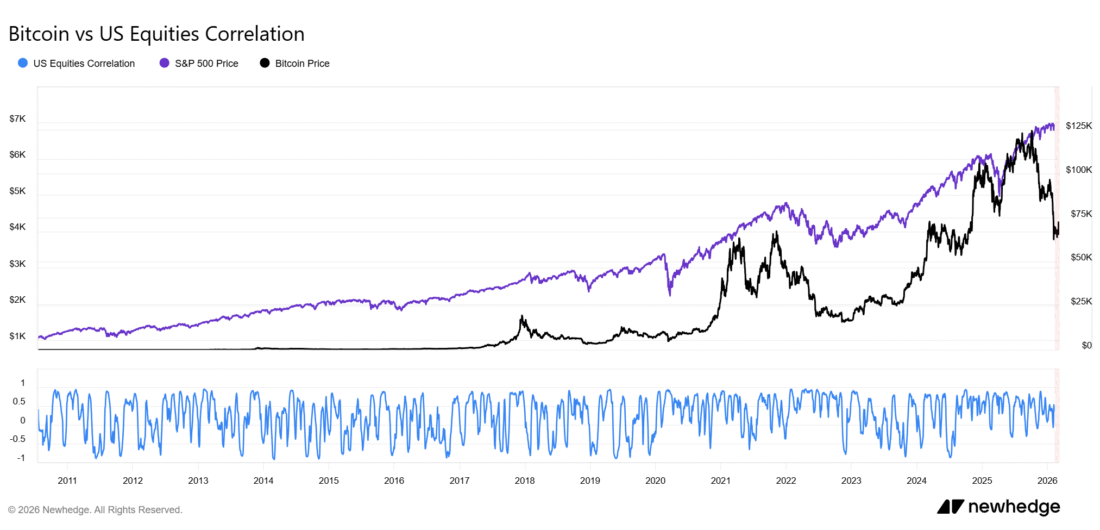
Image Source: NewHedge
Higher yields often weaken demand for government bonds and precious metals. As yields rise, holding these assets becomes less attractive. Because of this shift, both Treasuries and gold struggled to attract strong defensive flows.
Instead, capital has moved toward the US dollar. Elevated yields continue to support the currency. At the same time, the United States benefits from its role as a net energy exporter. Rising oil prices can strengthen the country’s trade balance during supply shocks.
In light of this, Bitcoin has shown unusual stability. Crypto assets often fall alongside equities during periods of macro stress. But recent trading suggests a degree of separation from traditional risk assets.
Bitcoin Liquid Supply Shrinks as Derivatives Market Cools After Correction
On-chain data points to tightening supply conditions for the OG crypto. Bitcoin balances held on centralized exchanges continue to decline. Exchange reserves now sit near 2.7 million BTC.
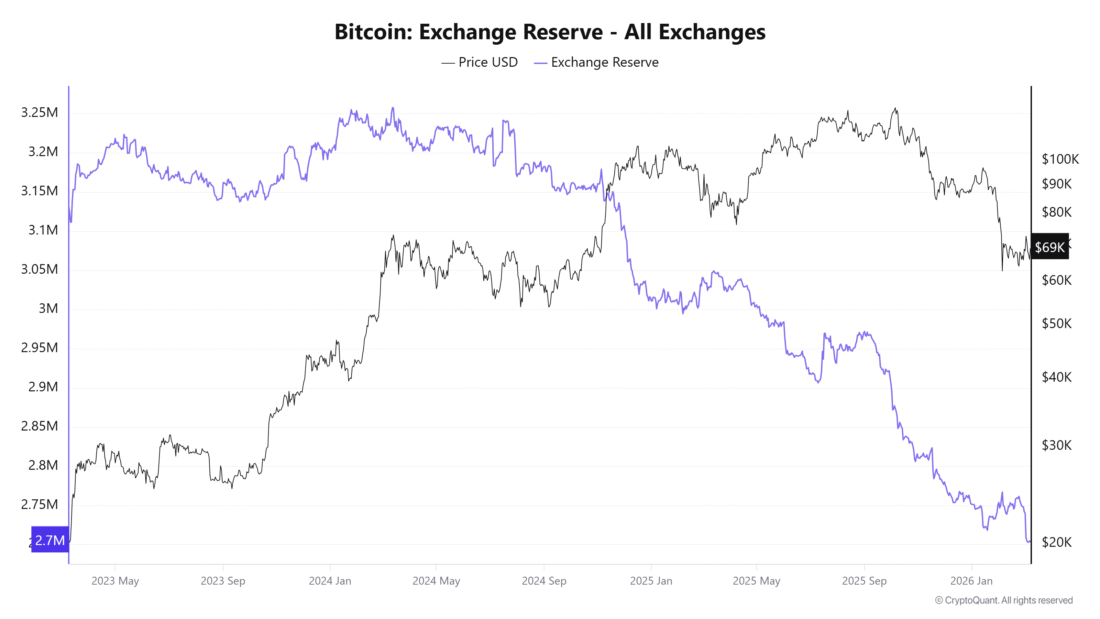
Image Source: CryptoQuant
During 2024, exchange holdings exceeded 3.2 million BTC. The steady reduction indicates that many coins are moving into long-term storage or institutional custody. As a result, the amount of Bitcoin available for immediate trading continues to shrink.
Derivatives data also suggests that speculative pressure has eased. Bitcoin futures open interest dropped significantly following the recent correction. Levels have fallen from nearly $46 billion to around $21.9 billion.
Options activity presents a more balanced outlook for the near term. Demand for downside protection remains present but less aggressive than during the initial shock. Most short-dated hedges currently target the $61,000 to $64,000 price range.
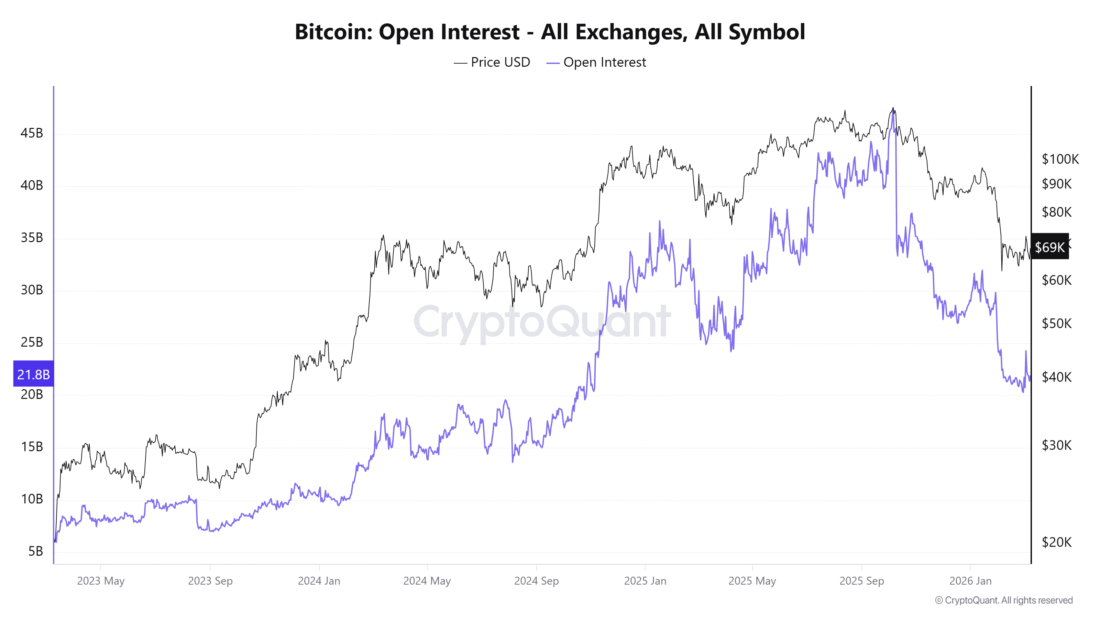
Image Source: CryptoQuant
At the same time, some traders appear to expect continued volatility rather than a sharp drop. One notable trade involved 500 contracts of the BTC April 2026 $72,000 straddle. Such positions benefit from large price moves in either direction.
March open interest remains concentrated at the $75,000 and $125,000 call strikes. Although a rapid recovery toward those levels appears unlikely in the short term, the positioning suggests traders still see upside potential.
The debate continues over Bitcoin’s role as “digital gold,” as the asset increasingly serves as a financial exit during periods of instability. Currency volatility and political tension in parts of the Gulf have strengthened that use case.