

Bitcoin weakens near $70K as ETF outflows, bearish options positioning, and macro risks drive defensive sentiment.
Bitcoin hovered around the $70,000 mark after failing to sustain momentum above $75,000 earlier in the week. Market sentiment has shifted as macro uncertainty deepens and volatility spreads across global assets. A recent streak of ETF inflows has now reversed, prompting questions about institutional demand. Derivatives data also reveals that traders are positioning more defensively.
Bitcoin Weakens as ETF Outflows Break Recent Inflow Streak
Price action turned sluggish following Tuesday’s rejection near $75,000. Bitcoin drifted lower into the $70,000 range by Friday, reflecting hesitation across both spot and derivatives markets. The move coincided with two consecutive days of net outflows from US-listed spot Bitcoin ETFs, breaking a seven-day inflow streak that had supported recent upside.
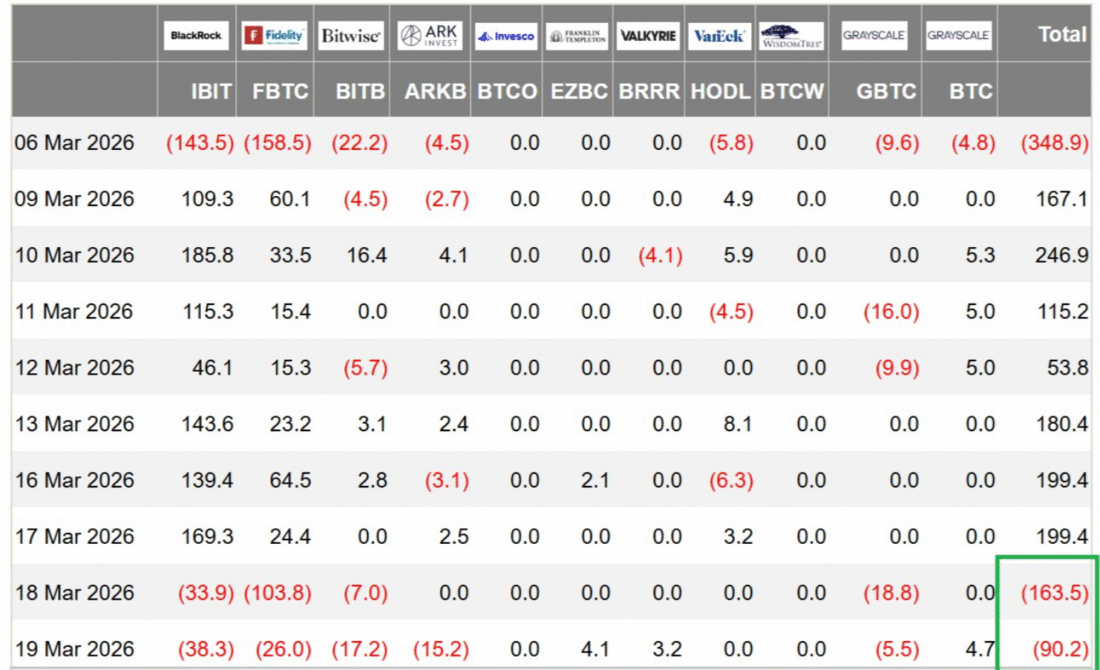
Image Source: Farside Investors
Outflows totaled $254 million over the two sessions. While not large enough to signal a structural shift, the change in direction has unsettled traders.
Weakness in US equities has added pressure, with the S&P 500 dropping to its lowest level in six months. Bitcoin continues to track broader market sentiment, especially during periods of heightened risk aversion.
Bearish Sentiment Builds as Bitcoin Options Skew Turns Negative
Similar to crypto assets, the broader financial markets have also witnessed increased selling pressure. Selling pressure has not been limited to crypto. Gold, for instance, fell nearly 10% within three days.
Such moves suggest widespread liquidation across asset classes rather than isolated weakness. Rising geopolitical tensions linked to the US and the Israel-Iran conflict have pushed investors toward safer positioning.
Options markets reflect this growing caution. Data from Deribit shows that demand for put options far exceeded calls, with put premium volumes reaching roughly 2.5 times those of bullish contracts. This imbalance signals a clear preference for downside protection over upside exposure.
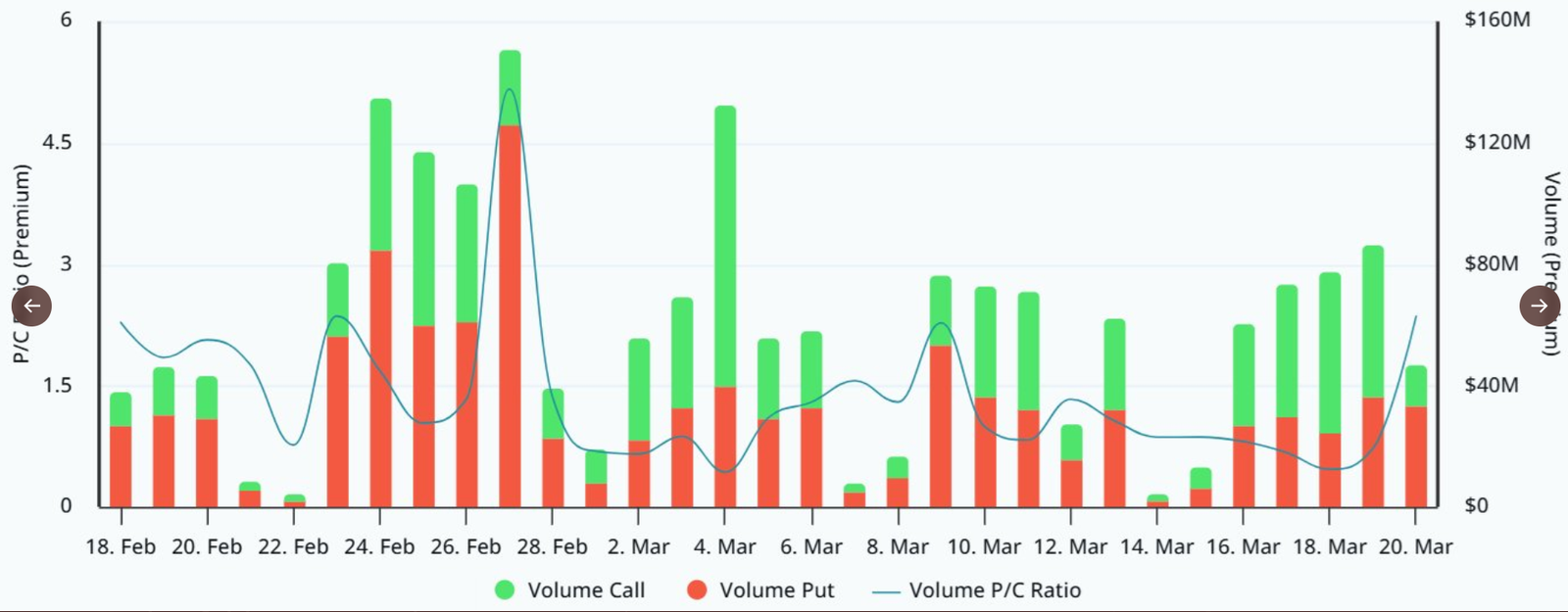
Image Source: Laevitas.ch
The delta skew metric reinforces that view. Bitcoin’s 30-day options delta skew climbed to 16%, well above the 6% threshold typically associated with bearish sentiment. At these levels, market makers are assigning a higher probability to further downside, suggesting limited confidence in support near $69,000.
Conditions remain less extreme than the panic seen in late February, but the broader trend points to rising stress. Bitcoin has declined about 21% over the past three months, while traditional markets have held up relatively better. This divergence has left traders increasingly frustrated with Bitcoin’s relative performance.
Over the same period, Bitcoin has lagged the S&P 500 by roughly 17%. Even the recent push toward $75,000 failed to shift sentiment in options markets, indicating that traders view rallies with caution rather than conviction.
Risk-Off Mood Deepens as Macro Uncertainty Pressures Crypto
Oil prices have surged above $94 per barrel since mid-March, marking a sharp increase from the previous month. Higher energy costs are feeding inflation concerns, which could limit the Federal Reserve’s ability to ease monetary policy.
Economic forecasts are beginning to reflect these risks. Analysts warn that rising fuel costs may reduce consumer spending and strain supply chains. Import-dependent manufacturers could face higher input costs and potential shortages, adding further pressure to the global economy.
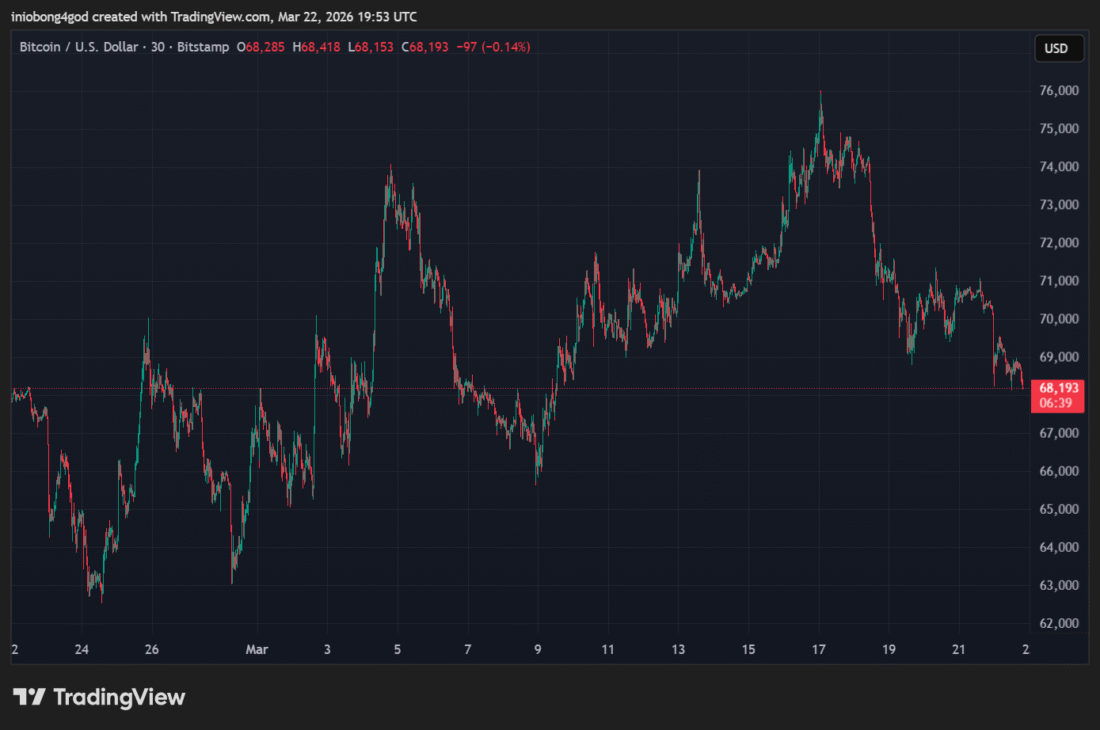
Image Source: TradingView
ETF outflows alone do not point to a clear institutional exit, but combined signals suggest a more defensive market stance. Traders are increasingly focused on hedging downside risk as uncertainty persists. Confidence in Bitcoin holding above $68,000 remains fragile under current conditions.
Market direction now hinges on macro developments and broader risk sentiment. Until stability returns, Bitcoin is likely to remain range-bound, with traders prioritizing protection over aggressive positioning.