

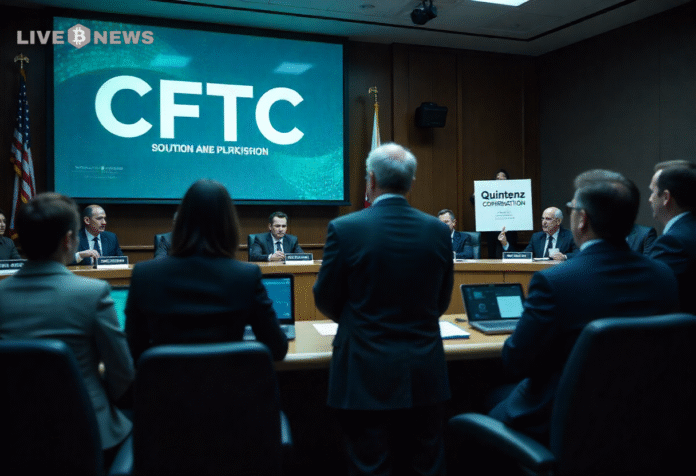

The CFTC and DOJ filed lawsuits against three states trying to regulate federally registered prediction markets. Here’s what it means.
The Commodity Futures Trading Commission is going to court.
On April 2, 2026, the CFTC and the U.S. Department of Justice filed three separate lawsuits against Arizona, Connecticut, and Illinois. The suits target state-level actions against CFTC-registered designated contract markets.
At the heart of the dispute is a question of jurisdiction. The federal agency says states have no authority to regulate these markets.
Related reading:
New CFTC Guidance Brings Stablecoins Deeper Into U.S. Finance
CFTC Claims Exclusive Federal Authority Over Prediction Markets
The CFTC argues it holds clear and longstanding exclusive jurisdiction under the Commodity Exchange Act.
Congress granted the agency comprehensive authority over event contracts following the 2008 financial crisis. That authority covers any contract based on a commodity, which the law defines broadly.
CFTC Chairman Michael S. Selig addressed the matter directly.
He said the agency would continue defending its regulatory authority against what he described as overzealous state regulators.
Selig noted that Congress had previously rejected a fragmented state-by-state approach. The reason, he said, was that such a patchwork system led to weaker consumer protection and higher fraud risk.
The CFTC’s roots in prediction market regulation go back to 1992. That year, the agency recognized the Iowa Electronic Markets, a University of Iowa futures market.
Traders there could buy and sell contracts tied to events like presidential elections and corporate earnings.
The @CFTC has clear and longstanding exclusive jurisdiction to regulate prediction markets. But recently, state regulators have tried to impose inconsistent and contrary obligations on CFTC-registered prediction markets. In response, the CFTC and @TheJusticeDept today filed three…
— Mike Selig (@ChairmanSelig) April 2, 2026
Why Arizona, Connecticut, and Illinois Are Facing Federal Lawsuits
Each of the three states took action against CFTC-registered prediction market operators. The CFTC says those actions conflicted directly with federal law.
Some states moved to ban certain contracts. Others attempted to regulate or restrict the platforms hosting them.
The CFTC views these moves as a direct challenge to its statutory mandate. The agency says Congress specifically designed the CEA to prevent exactly this kind of regulatory conflict. A unified national framework, it argues, is far better for market participants than competing state rules.
The DOJ’s involvement signals the federal government is treating this seriously.
Filing in three separate federal district courts at once is a significant legal step. It reflects how far the standoff between state and federal regulators has escalated.
Read also:
CFTC Chair Marks 100 Days With Deregulatory Push And Crypto Growth Plans Ahead
What Comes Next for Prediction Market Regulation in the U.S.
The CFTC is not just fighting in court. The agency recently issued an Advanced Notice of Proposed Rulemaking. That process is meant to identify areas of confusion around how the CEA applies to prediction markets.
The agency expects to issue regulations that clarify those obligations going forward.
This legal push comes as prediction markets have grown in visibility. Political event contracts in particular have attracted mainstream attention. More users are trading contracts tied to elections, economic data, and other real-world outcomes.
The outcome of these lawsuits could reshape how prediction markets operate across the country.
If the CFTC wins, states will face clear limits on how far they can go. The cases are still in early stages, but the implications for the broader crypto and derivatives space are significant.


