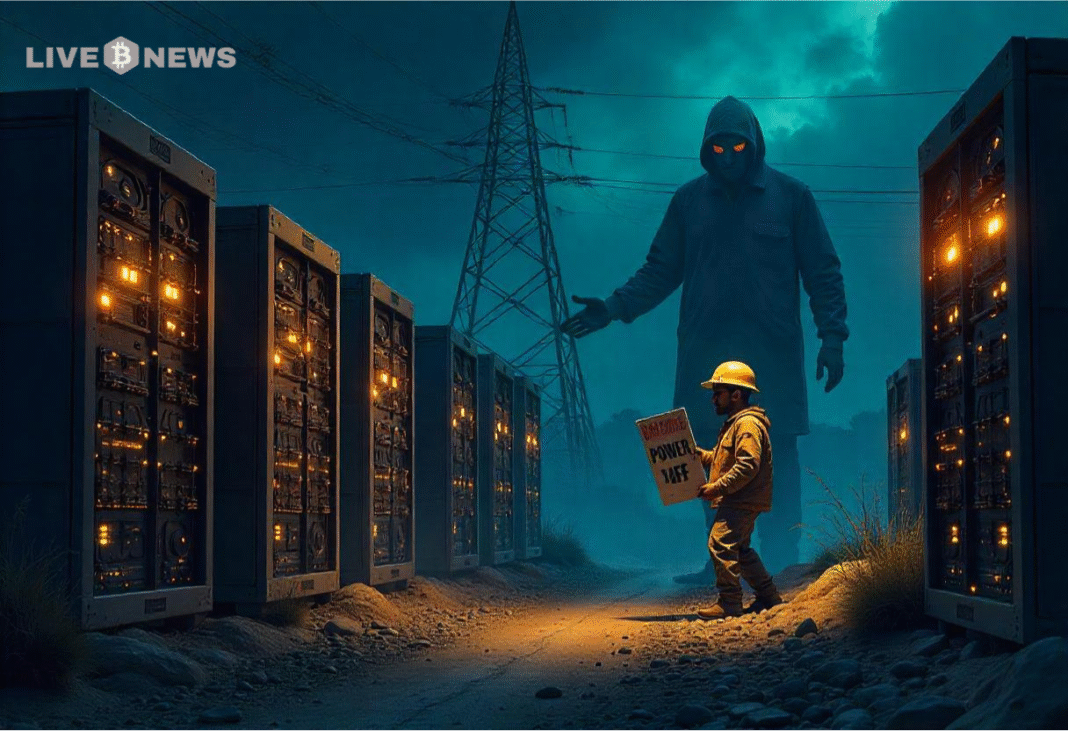

Russia is now attempting to treat crypto mining as a rising export as production grows and firms use BTC for trade.
Russia views Bitcoin mining as a major economic tool that helps companies handle trade during global tension.
Officials are now seeing mining revenue as an important part of national activity. They are discussing how this sector supports imports, foreign exchange needs and daily trade.
Russia Pushes Bitcoin Mining Toward Formal Economic Status
Russia’s government has pointed out the rise of domestic mining and hopes to include it in official economic reports.
Officials argue that digital assets support trade when standard payment routes face pressure. This way, national planners can track how firms settle import bills through BTC when other channels become slower or restricted.
Russian companies currently rely on digital payments to handle goods from partners that accept Bitcoin. These flows shape the country’s foreign exchange activity, and officials say this change should appear in state records since the volume now affects trade planning.
Russia considers BTC production a source of value that can help balance transactions during periods of volatility.
Economic advisor Maxim Oreshkin calls Bitcoin mining an underrated export. He says miners add value because the coins often circulate abroad even though they exist only on a network.
He also notes that BTC generated inside Russia supports companies that need steady payment routes. This view thus changes the national stance on digital assets and encourages new tracking methods.
Russia’s Hashrate Share Rises as Industrial Sites Expand
Russia now holds roughly 16% of the global hashrate. This share shows how fast industrial zones across Siberia and the Far East have expanded. Many firms have also placed facilities near regions that offer stable power and cooler temperatures.
These setups reduce energy costs and allow long-running hours.
Large mining farms use new hardware and cooling systems to raise output, and these sites grow as companies invest in reliable power links and strong building designs.
Domestic suppliers also produce parts that support long-term use. This structure is expected to strengthen Russia’s position among global mining hubs all the more.
Additionally, climate conditions help keep operational costs lower. Natural cooling methods reduce the load on equipment and firms can maintain stable production even when the global market changes.
As activity grows, Russia continues to gain more attention from companies that build industrial mining gear.
Related Reading: Russia to Legalize Crypto for Foreign Trade Settlements
Crypto Mining Output Climbs as Firms Add More Infrastructure
Reports show that Russia mined close to 35,000 BTC this year. This number shows new construction efforts and improved equipment across the sector.
Several industrial players appear focused on renewable sources and tools that support steady energy use.
Russia is now mining Bitcoin at a scale big enough to affect the RUB exchange rate.
– Gas → Bitcoin
– Bitcoin → USDT/USDC/Tokenized Gold
– Liquidity → ETH, SOL and the entire altcoin market
Nobody is ready for what happens when a nation-state with infinite energy plays the… pic.twitter.com/w4k7NEPlvR— renatinho Ulianov (@crypto_ulianov) December 3, 2025
Many companies are also upgrading older hardware to improve efficiency. Some deploy immersion setups that lower heat stress on machines, and these changes push output higher compared to previous years.
So far, Russia has now joined a group of leading mining nations that includes the United States and Kazakhstan.
The better infrastructure helps the country stay competitive after network halving events cut block rewards, and firms compensate by adding more machines and using smarter energy plans.
Because of this, the national output remains strong even as difficulty rates climb.
Officials see this trend as a way to build new trade channels, and countries that accept BTC may work closer with Russia as digital flows gain structure.
This approach is expected to increase Russia’s strength in crypto mining across trade talks and business planning.