 Peter Mwenda·1d ago
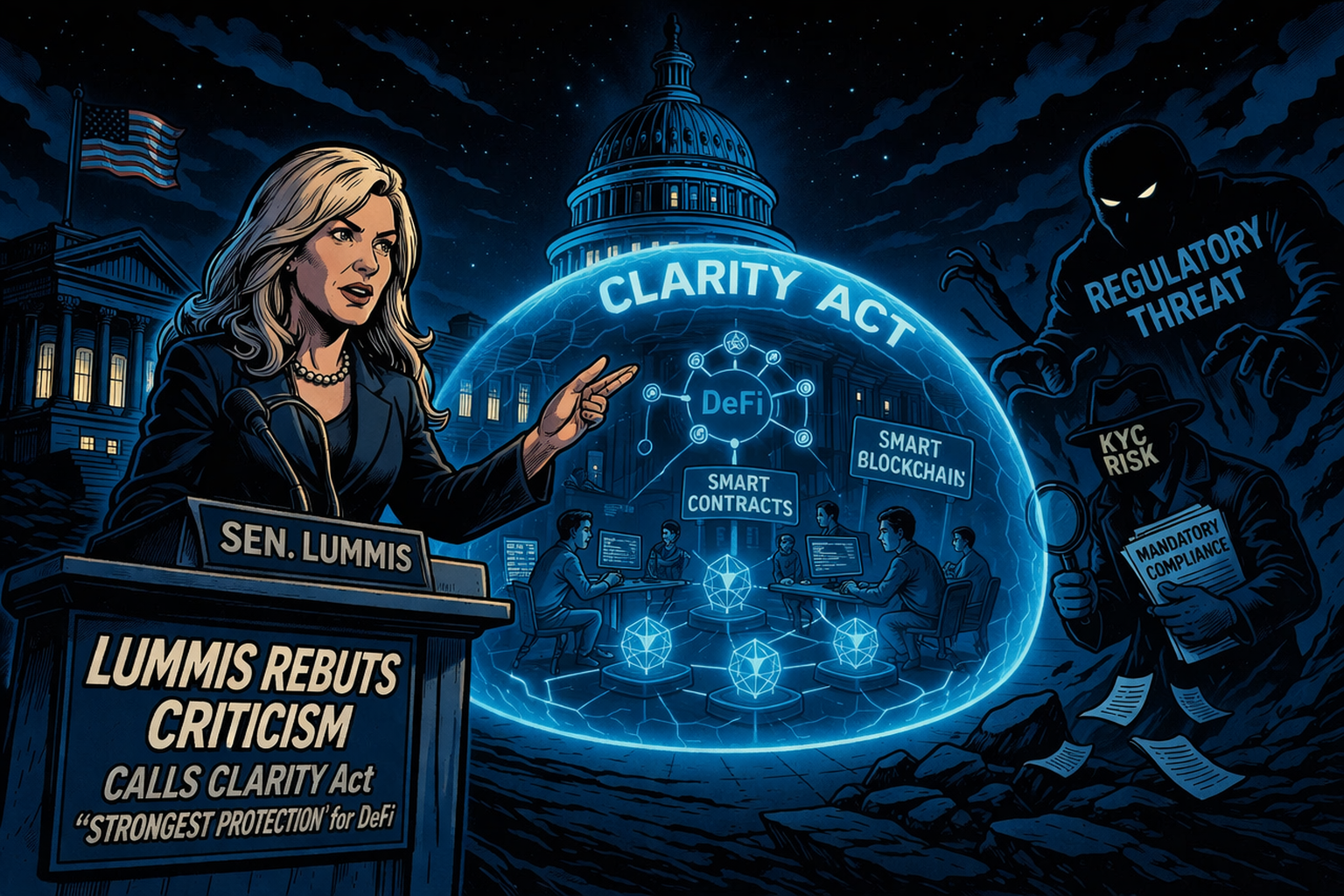
United States Senator Cynthia Lummis warned that domestic blockchain innovation could be put at risk in the future.
She added that the domestic crypto industry is undergoing unprecedented regulatory threats unless there is prompt legislation.
Consequently, the stalls in Congress now threaten to completely dismantle America’s digital asset ecosystem.
Lummis’ statement followed this month’s Senate proceedings.
The Senate Banking Committee passed its piece of the package, following the Agriculture Committee’s successful vote earlier in January.
With those committee actions completed, the bill still faces several major hurdles before becoming law: a full Senate vote; the legislative reconciliation steps required to finalise the bill; and a final agreement between the House and Senate—all before the legislation reaches the President’s desk.
American software developers face immediate legal dangers if lawmakers fail to pass the Clarity Act this session.
Lummis warned that authorities will target open-source programmers just for publishing software code.
Thus, there is a need for express statutory protections for engineers to prevent the federal government from acting antagonistically.
If the Clarity Act doesn't pass this Congress, American software developers will be targeted again for prosecution in the near future just for publishing code. These are the stakes.
— Senator Cynthia Lummis (@SenLummis) May 27, 2026
In other words, the core of her warning is that today’s legislative uncertainty makes many software developers look over their shoulders, especially when building code that helps run blockchain-related services.
Thus, the passage of the Clarity Act remains vital for preserving domestic technological advancement.
Meanwhile, market sentiment is starting to feel a bit more bleak about the legislation’s near-term future.
Honestly, progress on this key legislation still stalls due to ongoing political divisions.
For example, Democratic lawmakers heavily hesitate to support the bill without stricter ethical guidelines.
They call for comprehensive measures to prevent government officials from trading digital tokens.
In response, negotiations now include provisions that ban top politicians from conducting personal crypto transactions.
The ban would apply to the President, Vice President and all members of Congress. Of course, these ethics rules are added to ensure that they gain the support of both parties.
However, the legislative calendar presents another massive hurdle for the embattled crypto bill. When senators return from recess in June, intense competition for floor time begins. \
The Clarity Act will have to compete against several large, high priority national policy packages.
Specifically, lawmakers must address an urgent housing package and a massive farm bill.
In addition, the critical June 12 FISA deadline requires immediate attention from the entire Senate.
For this reason, these conflicting agendas risk derailing digital asset reform.
Still, even with all those huge roadblocks, Lummis stays engaged, actively looking for a practical path forward.
Furthermore, Jaret Seiberg, an analyst at TD Cowen, believes the chances of the CLARITY Act passing this year are diminishing.
At that point, the industry will watch closely, to see if Congress can actually make it happen.
Related News
Explore more