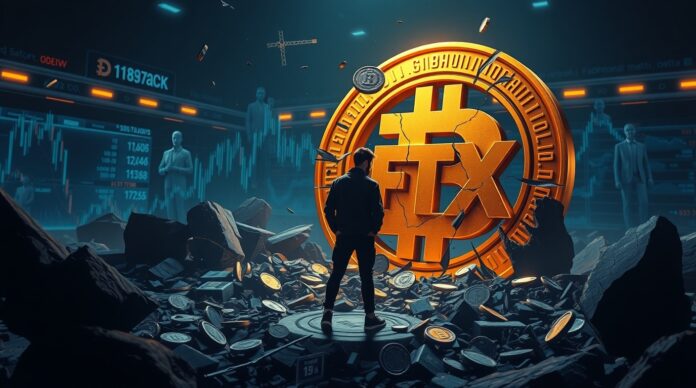

Introduction: Behind the Façade of Crypto’s Golden Exchange
The FTX collapse in November 2022 is one of the biggest failures for a firm of its size—crypto or otherwise. Its disgraced owner, Sam Bankman-Fried (SBF), who was then a revolutionary figure, launched the exchange about three years prior to its downfall. It came with the promise of being the safest and most sophisticated crypto exchange the world had ever seen, positioning it away from the myriad options that had gone down due to hacks and mismanagement.
SBF elevated the exchange to what he promised. By 2021, it had become a venture capital darling, found massive endorsements from sports franchises and Hollywood celebrities, and Washington lawmakers looked favorably upon its founder. With this reputation, it easily attracted over a million users who harnessed its cutting-edge trading offerings. The platform also secured over $2 billion from major investors, like SoftBank, Sequoia Capital, and Paradigm.
FTX had become mainstream. Its marketing campaigns were everywhere, spearheaded by household names like Tom Brady and Larry David. The exchange also secured a naming rights deal with the Miami Heat’s arena, which was then called the FTX Arena. The exchange now appealed to more than just the average crypto user; it was pulling in individuals who were not even well-versed in the asset class. It effectively began closing the gap between crypto and TradFi.
Sounding like a dream? Because it was. FTX was a carefully orchestrated illusion—a scam—by its top dog, SBF. The exchange, with its Alameda Research controversy and entanglement, drove an $8 billion hole, driving itself and its sister hedge fund to the ground and leaving its customers with nothing. Whether SBF leveraged Alameda, the hedge fund he founded, to make risky bets or utilized the FTX native FTT tokens to inflate his exchange’s valuations, he built a house of cards that was primed to take a fatal hit at any time.
The FTX scandal went beyond a crypto exchange failure; it was a well-crafted deception aimed at taking money away from unsuspecting customers for self-motivated profits.
The Rise—What Was Promised?
FTX was not marketed to be the average retail-focused exchange, like Coinbase or Gemini. Rather, it was aimed to deliver value for professional crypto investors and traders by offering advanced tools, better liquidity, and lower fees.
Advanced Trading Products
The platform’s trading tools put it on the map; not many exchanges offered them.
- Crypto futures and options for complex hedging and speculation.
- Tokenized stocks for users to hold positions in companies like Apple and Tesla without having to deal with brokers.
- Leveraged tokens for traders seeking amplified positions and volatility for better gains.
These aspects of its offerings made FTX Wall Street’s playground of choice.
The FTT Token
This token was central to the FTX ecosystem—it offered discounts on fees, staking rewards, and governance rights to users. However, those running the exchange used it for insidious purposes. SBF and his troop constantly inflated its value and used it as collateral to borrow real assets through Alameda.
Effective Altruism and Leadership
SBF leveraged social good initiatives to build a PR image, which allowed him to get away with everything until it was too late. His “Effective Altruism” campaign saw him give away generously—in the billions—for pandemic preparedness, political contributions, and development. This positioned him as the crypto philosopher-king, giving him moral legitimacy and an in with lawmakers in Washington. He used altruism as a cover for the financial fraud occurring at his exchange.
Investor Backing and Media Hype
By 2021, FTX was the cream of the crypto crop. Having acquired $2 billion in funding from top-tier VCs, the platform was valued at about $32 billion. Sequoia even famously put out a 14,000-word report about SBF, calling him the next Warren Buffett. The fallen founder also testified in front of the US Congress and was seen as the industry’s poster boy and its most responsible ambassador.
While all of this occurred, SBF was beefing up his scams, which led to the unforeseen and unstoppable catastrophe.
The Breaking Point—What Went Wrong?
FTX may have gone bust in November 2022, but its decision-makers sowed the seeds of downfall much earlier.
Alameda’s Shadow Role
The eventual court filings highlighted the kind of privileges that Alameda enjoyed with FTX.
- Liquidation exemptions despite trades going south.
- No limit on negative balances, meaning no-consequences trading despite losing billions.
- Direct access to FTX customer funds to cover its losses.
The FTT Collateral Illusion
The FTT token’s crash triggered the exchange’s collapse. CoinDesk published a leaked Alameda balance sheet that indicated most of its assets were expressed in FTT and other illiquid tokens. What essentially happened, and what the crypto ecosystem caught up to, was FTX creating an illusion of solvency by using a token that it controlled.
With the exposé, customers and investors lost all confidence. Who would not? It was evident that this empire was built on tokens that had no intrinsic value. FTT was massively held by FTX and Alameda on their balance sheets and saw its prices pumped via artificial scarcity. Its utility was just a front for financial engineering.
On top of all that, it was highly illiquid, which set the foundation for a price crash as soon as holders began dumping. With SBF using this asset as collateral, the token’s crash sent FTX and Alameda cascading down into visible insolvency.
Binance’s Fatal Blow
With revelations coming to light, Binance, then led by Changpeng ‘CZ’ Zhao, decided to offload its FTT holdings. Of course, this caused mass hysteria among FTX users. Around $6 billion worth of withdrawals were requested in the following 72 hours. But FTX, having siphoned away its funds to Alameda, could not honor these withdrawals.
November 11, 2022: The Collapse
With no option due to its insolvent situation, FTX, FTX.US, and Alameda filed for bankruptcy. SBF stepped away. John J. Ray III—the restructuring expert—took over as CEO to ensure the bankruptcy proceedings went smoothly and investors could recoup losses. After his first assessment of the company, he famously stated that FTX showed “a complete failure of corporate controls.”
The Fallout—Consequences of the Implosion
The FTX bankruptcy drove the crypto ecosystem into limbo, augmenting events from earlier that year that had already triggered the market to move in that direction.
Customer Losses
- More than $8 billion in customer deposits were not available for withdrawals.
- FTX.US, which SBF claimed had no troubles, was not solvent.
- Retail users, in the tens, if not hundreds of thousands, lost their life savings because they trusted the platform.
Investor Meltdown
The top VCs that pumped investments into FTX—SoftBank, Sequoia, and Paradigm—all admitted to conducting little due diligence and failing risk-identification processes. An internal Sequoia memo also mentioned that their 14,000-word profile, which gave a raving review of SBF, was based on nothing more than a Zoom call.
Legal Actions
Considering the ramifications, the FTX legal case escalated in no time.
- SBF was arrested in the Bahamas and extradited to the US in December 2022.
- Prosecutors charged him with wire fraud, money laundering, conspiracy, and campaign finance violations.
- FTX insiders testified against him—Caroline Ellison (Alameda CEO and SBF’s ex-girlfriend) and Gary Wang (FTX co-founder) confirmed the misuse of customer funds.
Public Distrust
With this exchange collapsing, the broader ecosystem felt the challenges.
- Institutional adoption declined drastically.
- Crypto assets saw prices plunge despite an already dipping market.
- Centralized platforms witnessed retail users withdrawing funds en masse.
- Regulators went after numerous exchanges and centralized platforms.
The FTT Token Crash
From what was worth over $26 and the central piece to the FTX ecosystem, FTT dipped to below $2 in days. This wiped off billions in value, leading to the entire saga being a cautionary tale of toxic economics.
The Analysis—Why It Failed
To classify the FTX scandal as a mistake would not make sense. It was a design failure hidden by SBF’s charisma, investor complacency, and regulatory blind spots.
Centralization Disguised as Innovation
If there is one thing that remains a constant, it is that centralized crypto platforms, without the appropriate checks and disclosures, operate as black boxes in the world of decentralization. FTX was nothing different.
- A handful of insiders called all the shots and indulged in corrupt practices.
- They created a system that allowed special privileges for Alameda.
- Customer funds were not separated from exchange funds, audits did not occur, and an independent board did not exist.
The Illusion of Risk Management
FTX bravely fronted a state-of-the-art risk engine and liquidation controls. However:
- Manual overrides were reserved for Alameda’s accounts.
- Billions of losses were obfuscated behind an interface that projected safety.
Moral Cover Through “Altruism”
SBF was committed to his Effective Altruism brand, which acted as:
- A moral front for his immoral actions.
- The perfect cover to prevent any suspicion and avert scrutiny until it was too late.
Investor Complacency and Media Hype
The FTX fiasco could have been entirely avoided if stakeholders had committed to proper due diligence. Instead:
- Major investors admitted that they never reviewed FTX’s financials.
- The media hyped SBF’s image instead of analyzing and scrutinizing it.
Tokenomics as a House of Cards
The FTT token was at the epicentre of this fraud:
- Used as collateral for billions of dollars’ worth of loans.
- Illiquid and controlled by FTX.
- Inflated token valuations that masked insolvency.
Lessons for the Crypto Ecosystem
The largest failure in crypto history leaves the entire ecosystem with lessons for the future.
Trustless Infrastructure Matters
True decentralized protocols offer transparency through auditable smart contracts. Centralized platforms, however, do not, and are vulnerable to single points of failure.
Native Tokens Must Have Real Value
This debacle highlighted what happens when native tokens are not created and distributed for utility purposes. FTX’s attempt to ground its tokenomics in financial engineering allowed it to cheat its customers and lose all the value they had entrusted it with.
Governance and Oversight Cannot Be Optional
Blind trust in founders and public crypto figures cannot prevail. Platforms engaging with billions of dollars that their users pledge must put out independently conducted proof-of-reserves and maintain strong governance structures.
Narrative Control Is a Red Flag
What SBF did may not have warranted scrutiny, but it should going forward. Becoming a public figure focused on PR, politics, and philanthropy might be an effort to control the narrative. Investors and customers must stay wary of such individuals and their projects.
Regulators Will Not Wait Again
When FTX collapsed and drained billions, not many crypto regulations existed, if any. Now, every jurisdiction around the world is working on their legislation for this asset class, if they have not already implemented said legislation.
Conclusion
FTX’s fall from grace was catastrophic, exposing what the combination of unchecked power, charismatic founders, and opaque financial engineering can give rise to. In hindsight, it is clear how the exchange got so big. However, SBF and his inner circle continued to pull the wool over everyone’s eyes until their time was up.
The exchange held the opportunity to become a bridge between the crypto world and TradFi. However, FTX’s mismanagement did not allow for that, leaving more than losses for its users; it betrayed an entire industry. With that, it is evident what the crypto ecosystem should be clear about while indulging in investment and trading options in the space: transparency, accountability, and decentralization.
SBF’s empire inevitably collapsed, and there was not much to do about it. At the end of the day, it only stood for so long because of an inflated token, a false narrative, and the silence of those who should have pressed the company harder.