


DOJ argues Tornado Cash case hinges on intent and inaction, not software neutrality or lawful use claims.
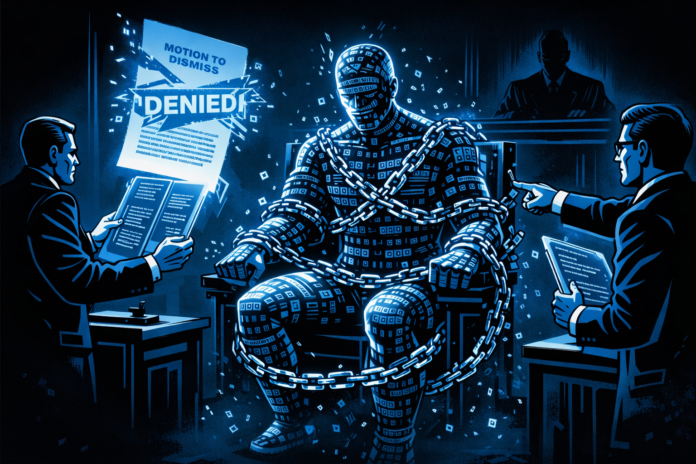
Federal prosecutors have pushed back against an attempt to dismiss charges against Roman Storm. The dispute centers on whether recent legal precedent can shield software creators from criminal liability. At the same time, the dispute is raising broader concerns about financial privacy and developer responsibility.
Tornado Cash Case Intensifies as DOJ Rejects Key Defense Claim
Attorneys from the U.S. Department of Justice urged Judge Katherine Polk Failla to reject Storm’s latest motion. Their response followed a filing from Storm’s legal team on April 2, which cited a recent Supreme Court of the United States decision.
Defense attorneys argued that the ruling reinforces the idea that providing a tool with lawful uses does not prove criminal intent. Storm’s counsel pointed to the court’s stance that “mere knowledge” of misuse is not enough for liability.
Furthermore, the counsel compared Tornado Cash to internet service providers, which can be used for both legal and illegal activities. According to the defense, the protocol functioned as neutral infrastructure, not as a system designed for unlawful activity.
Prosecutors Point to Ronin Hack as Key Evidence in Storm Case
Prosecutors dismissed the comparison in a letter released on April 7. The filing stated that the Cox Communications case involved civil copyright disputes, not criminal offenses. According to the government, that distinction makes the ruling irrelevant to charges such as money laundering, sanctions evasion, and operating an unlicensed money service.
Cox Communications enforced policies to limit illegal activity and took steps to address violations. In contrast, prosecutors argued that Roman Storm was aware of illicit transactions linked to Tornado Cash and failed to take action to prevent further misuse.
According to the letter, Storm was aware that illicit funds were flowing through the platform and continued to operate it. The letter cites the Ronin hack as an example, where hundreds of millions of dollars in stolen funds were processed through Tornado Cash while Storm allegedly had knowledge of the activity.
Furthermore, the DOJ questioned whether Tornado Cash served clear lawful purposes at scale. Prosecutors stated that available evidence does not show substantial legitimate usage. That position challenges claims from privacy advocates, who argue that financial anonymity remains a valid and necessary function for many users.


