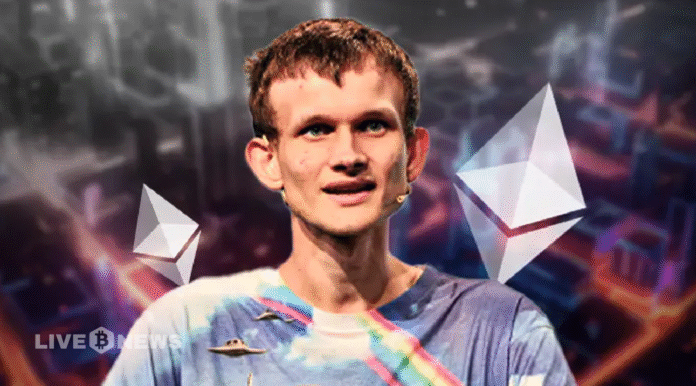

Vitalik Buterin says Ethereum can serve as a global shared memory layer using public data storage, ETH payments, and smart contracts.
Vitalik Buterin outlines Ethereum’s role as a global shared memory layer during discussions around cryptography and blockchain infrastructure.
His comments followed participation in Real World Crypto events focused on security and cryptographic research.
The discussion examined how blockchain networks can support broader digital systems.
Buterin explained that Ethereum can function as a public infrastructure layer for secure data and decentralized applications.
Ethereum Described As a Public Data Layer
Buterin said Ethereum can function as what cryptographers call a public bulletin board.
This concept refers to a system where users can publish and read data openly. Such systems are important for many digital security protocols.
He explained that applications such as online voting and certificate management require shared public records.
These records must remain accessible and verifiable by anyone. Blockchain networks can provide this type of open data structure.
I was recently at Real World Crypto (that's crypto as in cryptography) and the associated side events, and one thing that struck me was that it was a clarifying experience in terms of understanding *what blockchains are for*.
We blockchain people (myself included) often have a…
— vitalik.eth (@VitalikButerin) March 12, 2026
Buterin also noted that this role does not always require complex computation. In many cases, the main requirement is reliable data availability.
The network simply stores information that other systems can reference.
Ethereum has recently increased its data capacity through network upgrades.
The PeerDAS upgrade expanded the amount of data available for the network by about 2.3 times. Developers also expect additional scaling improvements in the future.
The upgrade allows Ethereum to store larger volumes of public data. This capability can support applications that require open data distribution and verification.
Payments and Sybil Resistance Support Open Applications
Buterin also described the role of payments in decentralized digital systems.
Some applications require payments to prevent spam or misuse. Charging small fees can discourage automated abuse.
He explained that blockchain payments can serve as a permissionless payment system.
Developers can design services that accept small digital payments without relying on centralized providers. This structure supports open access systems.
Ethereum also supports payment channels that use zero knowledge technology. These channels allow users to process transactions while maintaining privacy.
Developers are studying ways to apply this model to online services and application programming interfaces.
Payments can also help prevent large scale spam activity in digital networks. For example, a messaging platform may require small deposits before users can upload large files.
This approach can reduce automated attacks that attempt to overload systems.
Buterin said ETH can act as a basic economic tool in these systems. The asset can provide a simple method to support payments and participation.
Related Reading: Vitalik Reveals Plan to Stake 72,000 ETH With New DVT-Lite System
Smart Contracts Enable Programmable Digital Systems
Ethereum smart contracts provide another function in the broader infrastructure design.
Smart contracts allow developers to create automated agreements that run on the blockchain. These agreements can enforce rules without central control.
Buterin explained that one use case involves security deposits. Users can lock ETH into contracts that enforce certain conditions.
If those conditions are violated, the locked assets can be automatically removed or destroyed.
Smart contracts also support payment channels and decentralized services. Developers can build applications that combine payments, identity systems, and digital assets.
Another use case involves digital objects linked to external entities.
Smart contracts can store references that allow these digital objects to interact with each other. This structure supports decentralized networks and financial applications.
Buterin also said smart contracts act as a shared programming layer. Developers can build systems that interact with the same blockchain infrastructure.
He described Ethereum as a form of global shared memory. According to Buterin, the network can function as a public system for data, payments, and programmable digital coordination.