
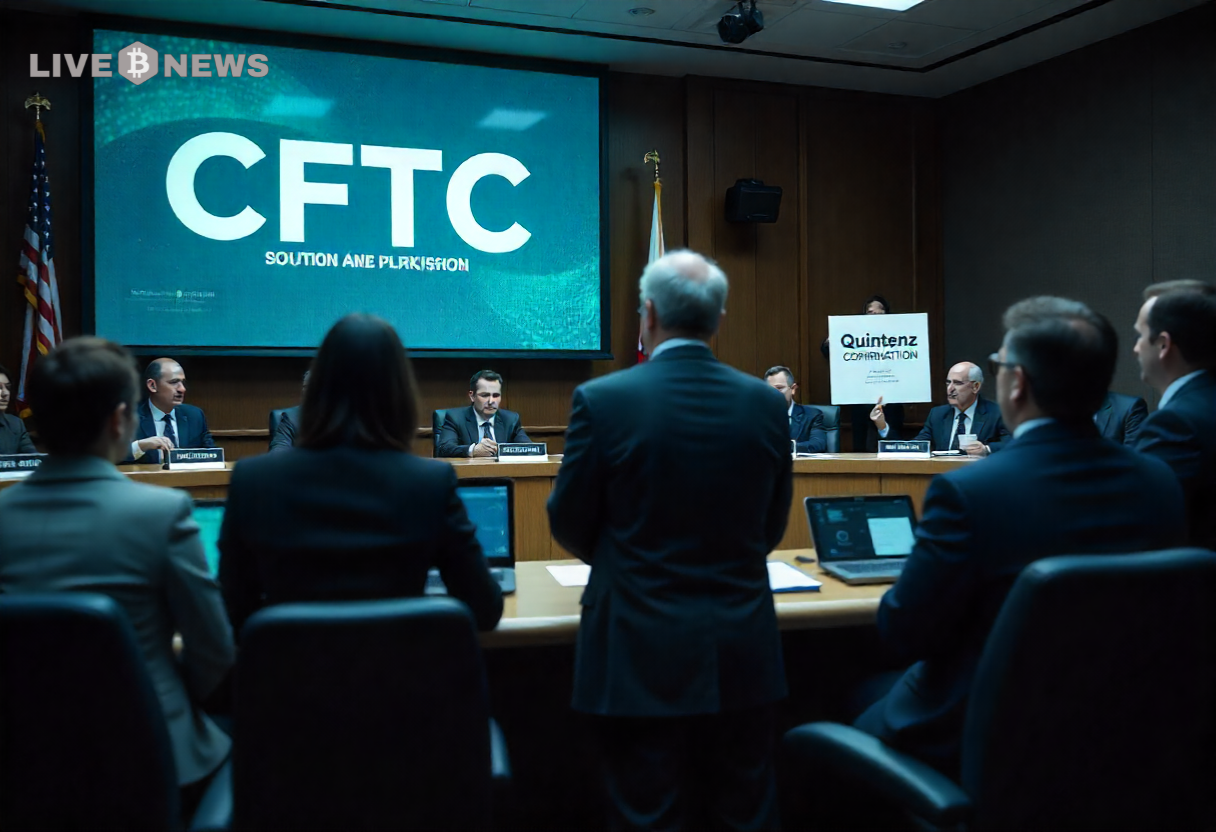
The CFTC has proposed its first framework for regulating prediction markets. Here’s what it means for sports, elections, and beyond.
The U.S. Commodity Futures Trading Commission has taken its first major step toward regulating prediction markets. The agency officially proposed a new framework on Wednesday to evaluate which event contracts are legal.
CFTC Chairman Michael Selig announced the move on X, describing it as a push for “durable, transparent rules of the road.” The proposal now enters a 45-day public comment period before any decisions move forward.
Read also:
Hyperliquid Launches New Prediction Markets Based on Real-World Events
CFTC Lays Out a Framework for Event Contract Review
The proposed rules set up a multi-step process for reviewing prediction market contracts. According to reports, regulators will first confirm whether a contract is tied to an actual event.
They then check if that event falls under categories outlined in the Commodity Exchange Act. A public interest analysis follows before any contract gets blocked.
The categories under review include terrorism, assassinations, war, gaming, and conduct that is illegal under state or federal law. The CFTC did not issue blanket bans on any event type. Instead, the agency chose a case-by-case approach. That decision drew attention from market participants who had been watching closely.
Chairman Selig said the CFTC would:
“protect the integrity of our regulated markets without standing in the way of responsible innovation.”
He confirmed in his X post that further rulemakings on prediction markets are expected. The agency acknowledged in its release that Wednesday’s rules were limited in scope.
I'm pleased to announce that today, the @CFTC is officially seeking public comment on a structured framework for evaluating the types of events that may underpin contracts traded on prediction markets.
This proposal would give the CFTC durable, transparent rules of the road to…
— Mike Selig (@ChairmanSelig) June 10, 2026
Sports Contracts Get Partial Green Light Under New Rules
Sports-related contracts have been at the center of the prediction market debate for months. The CFTC addressed them directly in Wednesday’s proposal.
The Wall Street Journal reported that the agency aims to allow most sports-related bets while blocking contracts that invite obvious manipulation.
The commission said it will permit contracts tied to aggregate sports outcomes with objective data and solid integrity infrastructure. However, contracts based on injuries, officiating calls, individual player actions, altercations, or pre-collegiate events will not be allowed.
Pure-chance games also fall outside what the CFTC is willing to approve.
The agency also tackled the definition of gaming. It settled on a definition describing it as recreational, rule-governed, and based on measurable outcomes from skilled activity.
Using that definition, the CFTC concluded that election contracts do not qualify as gaming. Elections are not recreational or for entertainment purposes, the commission noted.
Prediction Market Regulation Sparks Broader Debate
Prediction markets have grown rapidly over the past year. That growth triggered a regulatory scramble at both the state and federal levels.
Several states have argued that sports-related contracts amount to betting, placing them under state jurisdiction. The CFTC has pushed back, arguing that all such contracts are swaps and fall under its exclusive authority.
Congress has also weighed in. The reports noted that bipartisan lawmakers have raised concerns about insider trading risks on these platforms.
No formal legislation has been introduced yet, but the pressure on regulators has been building. Wednesday’s proposal marks the first concrete federal response to those concerns.
The 45-day comment period gives market participants, state officials, tribal leaders, and the public a chance to respond. Selig confirmed the agency values that input.
The CFTC has signaled that this rulemaking is only the beginning of a longer process to bring structure to a fast-growing and still loosely governed space.





Leave a Reply
You must be logged in to post a comment.