
 Peter Mwenda·2d ago
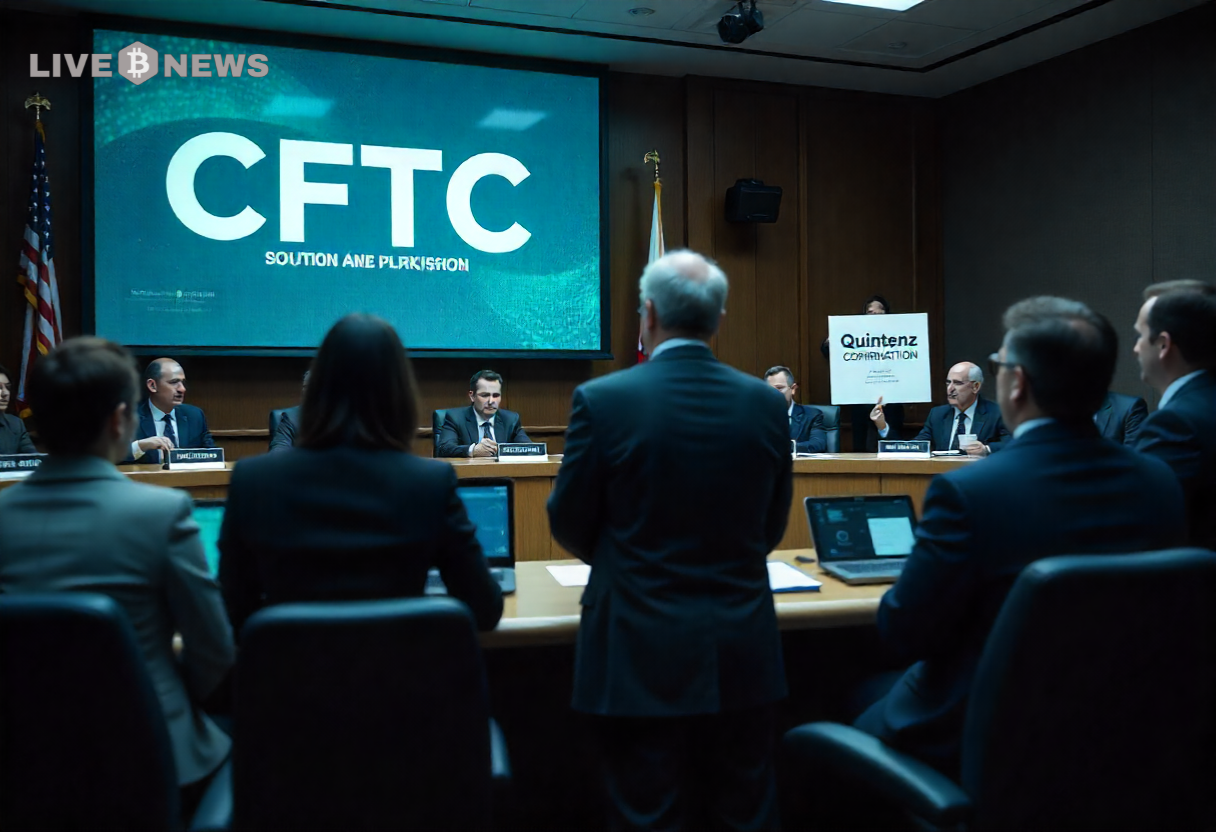
In a significant regulatory move, federal agencies are opening the floor to market participants to redefine digital asset derivatives rules.
The CFTC and SEC jointly released a request for public comment to clarify key definitions for derivatives.
Therefore, this effort aims to update the current “regulatory landscape” created by Title VII of the Dodd-Frank Act.
Market structures and trading practices have evolved dramatically since the Dodd-Frank Act rules were originally implemented.
The regulators are thus asking whether existing definitions are appropriate for how digital instruments are traded today.
In particular, the joint agency request emphasizes the need to consider potential exclusions, mixed swaps, and complicated jurisdictional matters.
According to officials, the comment window will remain open for exactly 60 days following federal publication.
In the meantime, CFTC Chair Michael Selig said the request is intended to clarify an ambiguity that’s existed in the legislation.
SEC Chief Paul Atkins also stated that it is long overdue for the market participants to understand these rules.
Finally, this collaborative record will assist both agencies in considering products affecting both commodities and securities.
This sudden public comment request came immediately after CME Group launched a major lawsuit against the regulators.
CME Group filed a complaint against the CFTC on Thursday, challenging the agency’s decision to accept Kalshi’s offering of perpetual futures (perps) trading in the United States, which the agency defined as futures contracts.
The powerful derivatives exchange claims that the agency overlooked a number of critical provisions of Congress.
Additionally, CME believes that cryptocurrency perpetual futures should be considered and regulated as swaps rather than regular futures.
Derivatives exchange charges that regulator has built an illegal “short-cut” for retail-focused derivatives competitors.
Recently, companies like Kalshi and Coinbase have been granted permission to add these perpetual products to their exchange platforms.
Consequently, CME Chief Executive Terrence Duffy confirmed the legal action to protect their market share.
The exchange notes that these non-expiring contracts directly compete for mainstream retail derivatives customers nationwide.
Unlike traditional futures contracts, perpetual futures do not expire, and traders can maintain a leveraged position against them without rollover.
If regulators eventually treat these crypto perps as swaps, platforms will face entirely different clearing rules.
On the other hand, if they are not traded under futures rules, there are venues which can list them by expediting the process.
The agencies also sought public feedback on event contracts and prediction market structures, in addition to perpetuals.
This niche is of great importance because recently, the trading volume of decentralized prediction platforms has grown significantly.
These new products come under heavy fire for being a form of gambling or a valid financial product, though.
The CFTC has challenged platforms several times in the past, insisting it has jurisdiction over all aspects of the event contract.
Concurrently, the SEC has expressed deep interest in whether certain event contracts resemble traditional securities products.
Related News
Explore more