 Antony Jackson Srithar·1d ago
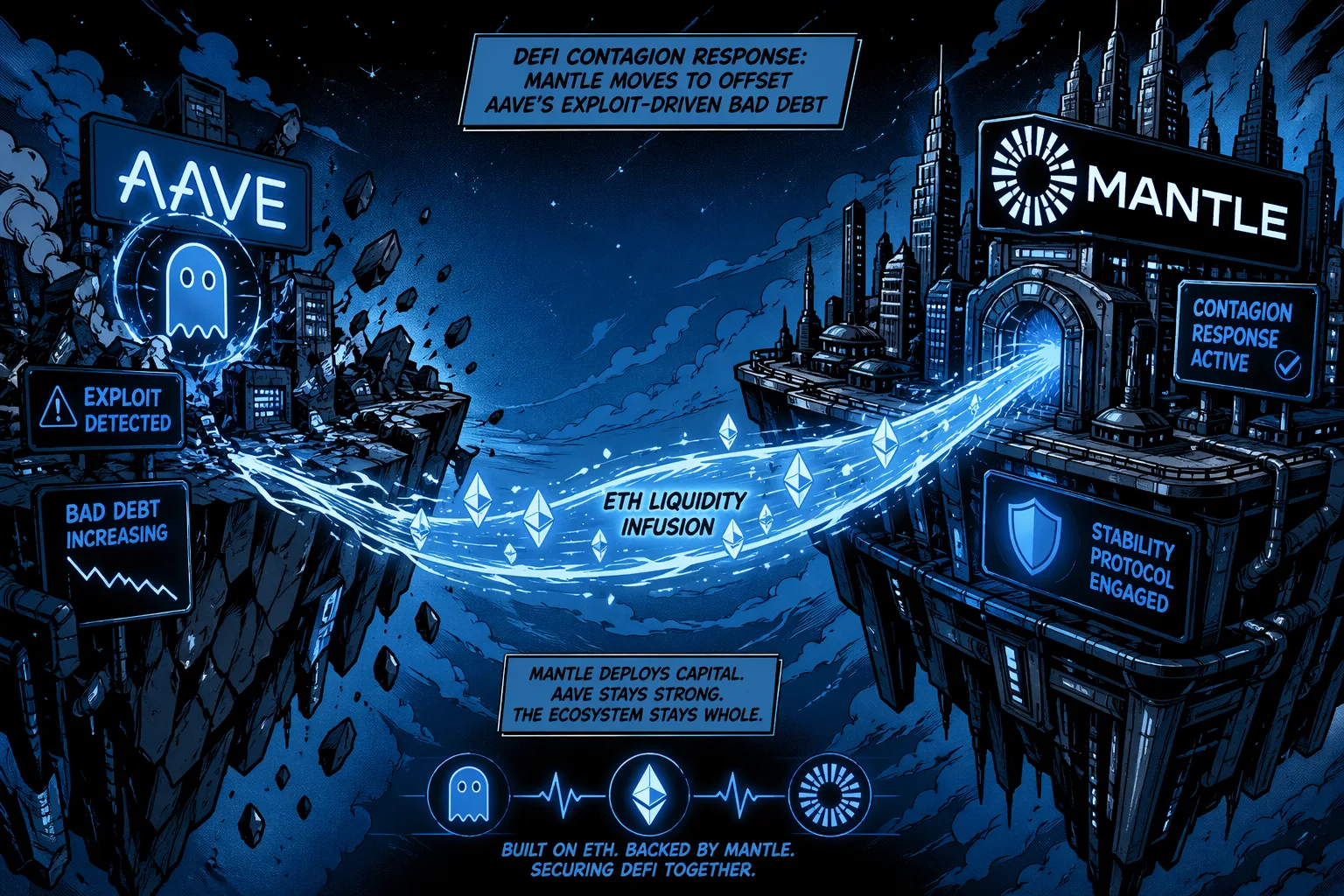
Mantle offers 30K ETH support to contain Aave’s bad debt after a $292M exploit exposed systemic DeFi risk
Stress from a major exploit continues to ripple across decentralized finance, pushing protocols to coordinate responses. Liquidity gaps and bad debt risks have placed lending markets under pressure. In response, one major Ethereum Layer 2 project has stepped forward with a structured support plan.
Mantle has proposed a loan of up to 30,000 ETH to Aave DAO to address losses tied to the recent exploit involving Kelp DAO. The proposal, labeled MIP-34, outlines a credit facility designed to absorb bad debt linked to compromised rsETH collateral on Aave V3.
Details in the proposal indicate that Mantle Treasury would provide the ETH with a maturity of up to 36 months. Interest terms are expected to track Lido staking yields, with an added 1% premium. Early repayment would remain an option, giving Aave flexibility in managing liabilities.
Moreover, Mantle said the plan would turn idle treasury funds into a yield-generating position while also backing a key DeFi partner. Closer ties with Aave could help expand Aave’s presence on the Mantle network. In turn, interest earned from the loan would return to Mantle’s treasury, where it could support ecosystem funding or token programs.
Following this week's rsETH incident involving @KelpDAO and @LayerZero_Core, a proposal has been put forward for Mantle to contribute a loan facility to @aave's coordinated relief effort.
The loan would form part of a wider coordinated framework, structured to minimize…
— Mantle (@Mantle_Official) April 24, 2026
At the same time, risk controls remain a core part of the structure. A multisig wallet would hold the collateral, with Mantle keeping first-priority rights over it. In addition, Aave would commit 5% of its revenue and at least $11 million in AAVE tokens as backing. If obligations are not met, the loan would become immediately due.
Support for the plan has already come from Bybit, a major backer of Mantle. CEO Ben Zhou pointed to past moments when the industry came together during crises. He added that similar cooperation is still important in times of stress.
The issue traces back to an April 18 exploit involving a cross-chain bridge powered by LayerZero. Attackers manipulated parts of the system to mint about 116,500 rsETH tokens without approval, worth around $292 million. Investigators also linked the attack to methods tied to Lazarus Group, including node compromise and coordinated disruption.
Contagion spread quickly once stolen assets entered Aave. The attacker deposited approximately $221 million in rsETH as collateral and borrowed large amounts of ETH-based assets. That activity left Aave exposed to significant bad debt when the underlying collateral lost integrity.
Internal assessments from Aave outlined two possible outcomes, with losses ranging between $124 million and $230 million depending on recovery paths. Such scenarios raised concerns about solvency buffers within lending pools and highlighted systemic risks tied to cross-protocol dependencies.
Meanwhile, blockchain analysts reported that the attacker has already converted a large portion of stolen ETH into Bitcoin using THORChain and similar platforms. Asset movement across chains complicates recovery efforts and reduces the likelihood of reclaiming funds.
Related News
Explore more