 James Godstime·September 26, 2026

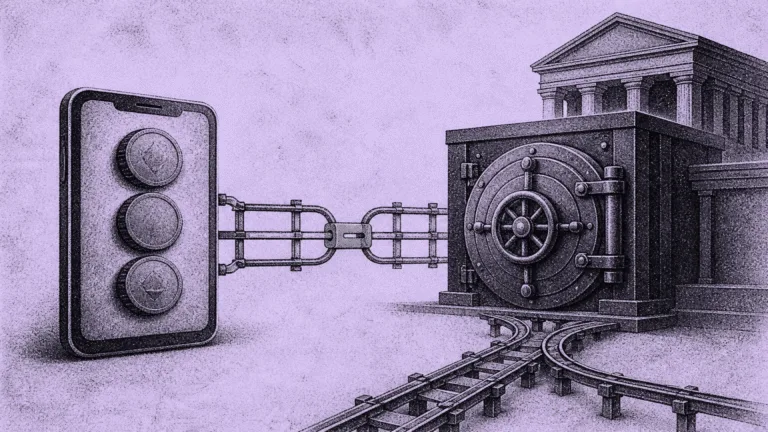
ZK circuits used by Lighter, a perpetual decentralized exchange on Ethereum, have cleared a critical trust barrier.
L2BEAT, the blockchain research organization, independently regenerated all ZK circuits from source code for the first time.
The verification confirmed that Lighter’s deployed desert verifier contract matches its published sources.
Users no longer need to rely solely on the Lighter team to access emergency withdrawals. This development directly strengthens the security foundation of Lighter’s Layer 2 network.
L2BEAT runs a ZK Catalog that tracks verifier contracts across Layer 2 networks. Its process involves regenerating Solidity files directly from source code to confirm deployed contracts are legitimate.
The organization also publishes independent regeneration steps so anyone can repeat the process themselves.
As recently as April 2026, the desert mode circuit source code was not publicly available, and L2BEAT research found that full state reconstruction from Layer 1 data alone was not feasible.
For the first time, all ZK circuits used by Lighter perp DEX L2 were regenerated from sources by L2BEAT!
Now you don’t have to trust the Lighter team to perform a permissionless emergency exit.
👇Learn more in the thread👇 pic.twitter.com/VueN61QqjP
— L2BEAT 💗 (@l2beat) May 19, 2026
That created a serious problem for users who needed to exit without operator help. Without verified sources, no one could generate a valid withdrawal proof independently.
If the sequencer stalls or censors, users can submit priority operations on-chain or exit via the emergency Desert Mode that relies on Ethereum data.
That exit route, however, was effectively inaccessible. The missing circuit sources meant the desert verifier could not be trusted or independently confirmed by anyone outside the Lighter team.
Lighter’s desert verifier consists of circuits proving valid L2-to-L1 withdrawals in Desert Mode. Each user generates a ZK proof locally on their own machine during an emergency exit.
That proof is then checked against the desert verifier contract sitting on Ethereum Layer 1. If that contract is unverified or malicious, the proof fails and funds remain locked.
The Lighter team eventually published the circuit sources. L2BEAT then confirmed the published code matches the contract already deployed on Ethereum.
As the organization stated, the emergency hatch now works. That single confirmation removes the need to extend blind trust to any one team.
Users can run the build_circuits.sh script with default settings to construct all circuit layers from the ground up, generating an updated verifier contract that matches the deployed version. Developers can then compare that output against the live contract on Etherscan.
Lighter proves every order match, risk check, and liquidation with zero-knowledge proofs, and users can now verify the emergency exit layer sits on equally solid ground.
The trust risk that once shadowed Lighter’s safety mechanism has been independently resolved.
Related News
Explore more