
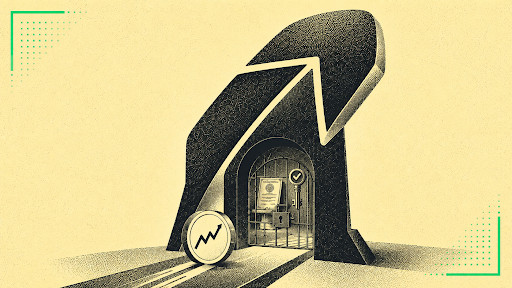
Robinhood Chain supports Stock Tokens and RWAs, with $3.1B weekly DEX volume, $300M stablecoins, and $13M Stock Tokens.
Robinhood Chain is gaining attention as an Ethereum Layer 2 built for tokenized real-world assets. The network launched in July 2026 and uses Arbitrum technology.
Wu Blockchain reported that the chain supports Stock Tokens, ETFs, DeFi, perpetual futures, and AI-agent applications. However, early usage still shows a mixed picture.
A Bernstein report cited by Wu Blockchain placed seven-day DEX volume near $3.1 billion. The network also held about $300 million in stablecoins and $13 million in Stock Tokens.
The main question for users is not only what can be traded. It is also what Stock Tokens actually represent.
Robinhood Chain Builds on Arbitrum
Robinhood Chain is designed as an Ethereum Layer 2 using Arbitrum technology. It supports EVM tools, ETH gas, wallet access, and bridging. This gives developers a familiar base for building applications.
Arbitrum Developers said Robinhood Chain can support real-world asset infrastructure. The network includes Stock Tokens tied to companies such as NVIDIA, Google, and Apple. These tokens use standard ERC-20 formats with on-chain price feeds.
Robinhood Chain by @RobinhoodCrypto is the infrastructure for tokenized real-world assets, including Stock Tokens tied NVIDIA, Google, Apple, and many more.
That opens up opportunities for devs to build:
– Trading & portfolio applications
– Lending markets backed by equity… pic.twitter.com/KlP0nVrPs8— Arbitrum Developers (@ArbitrumDevs) July 23, 2026
That structure may support trading apps, portfolio tools, and lending markets. Developers may also build tokenized indexes, yield products, and derivatives platforms. Still, adoption depends on user demand, liquidity, and regulatory treatment.
Stock Tokens Offer Exposure, Not Ownership
Stock Tokens provide economic exposure to stocks, according to the guide cited by Wu Blockchain. However, they do not represent direct ownership of the underlying shares. Users also do not receive normal shareholder rights.
Ten Questions and Answers: A Comprehensive Guide to Robinhood Chain
Robinhood Chain is an Ethereum Layer 2 launched by Robinhood in July 2026 and built with Arbitrum technology. The network is designed for tokenized real-world assets (RWAs), including Stock Tokens and ETFs, as… pic.twitter.com/XXNvEnOURu
— Wu Blockchain (@WuBlockchain) July 23, 2026
That means holders may not get voting rights or direct company claims. They are holding blockchain-based instruments tied to market exposure. This difference is important for users comparing tokens with regular shares.
The model may still appeal to users seeking on-chain access to equity-linked products. It can place stock exposure near DeFi tools and crypto wallets. However, users need clear terms before treating tokens like traditional securities.
Related Reading: Robinhood Launches Layer 2 Blockchain Built on Arbitrum
Early Activity Shows Risks and Limits
Robinhood Chain recorded strong early DEX activity, but much came from memecoin trading. Wu Blockchain said RWA applications remained at an early stage. This shows that tokenized stocks are not yet the main activity driver.
The guide also named several risks for users. These include regulation, liquidity, bridge design, smart contracts, infrastructure centralization, and self-custody. Each risk can affect access, pricing, or fund safety.
Robinhood Chain’s next test is whether Stock Tokens gain steady real use. Developers may build more products around equity exposure and DeFi activity. Users will likely focus on ownership terms, market depth, and platform safeguards.

Leave a Reply
You must be logged in to post a comment.