 Samuel·5d ago
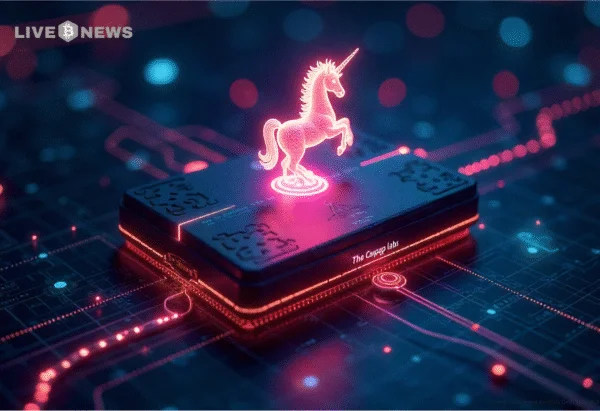
Uniswap’s fee switch is live, 100M UNI burned, and Unichain is running. Ten catalysts analysts say could push UNI toward $50 this bull cycle.
The token was sitting below $3 not long ago. It is now trading above $4 and pushing harder.
Crypto analyst CryptoPatel laid out the case on X, pointing to ten structural shifts that have quietly turned Uniswap from a governance token into something institutional desks can actually model. The post has been circulating since Sunday. Not many people caught it in real time.
One of those shifts took effect recently the fee switch. UNI now captures real protocol revenue directly, a mechanism the DAO debated for years without acting on.
One hundred million UNI tokens were removed from supply. Not going forward retroactively.
The move was part of the UNIfication proposal, which passed with 99.9% DAO approval, what CryptoPatel described on X as the strongest governance vote the protocol has ever recorded. The retroactive nature of the burn is what makes it unusual. Those tokens represented accumulated fees from the protocol’s entire history that were never distributed.
Uniswap pulled in over $1.05 billion in fees in 2025 alone. That number gets more interesting when placed next to the lifetime figure.
The UNIfication governance vote and its deflationary mechanics marked a structural shift from how the protocol had operated since 2018. The protocol’s 0.3% trading fee is now split with 0.05% flowing to the protocol for buybacks and burns.
Uniswap’s lifetime cumulative trading volume crossed $4 trillion. That is not a projection.
Weekly DEX volume share sits at 50 to 65 percent across every chain it operates on, per CryptoPatel’s analysis. No single competitor comes close to that figure consistently. The Unichain deployment added another layer of sub-second block times and gas costs roughly 95% lower than Ethereum L1.
V4 launched in January 2025. It has already processed over $110 billion in volume through more than 2,500 custom hook pools.
Multi-chain fee expansion is adding an estimated $27 million in annual revenue on top of existing figures. Per the Uniswap Foundation’s latest treasury report, the Foundation held $49.9 million in cash and stablecoins at year-end 2025 alongside 15.1 million UNI tokens.
The chart CryptoPatel shared on X tells a particular story. UNI spent years inside a descending wedge, grinding lower from its ATH near $43. The weekly candle that broke structure did so off a confirmed strong support zone around $2.70.
10 REASONS $UNI Could EXPLODE To $50 This Bull Run 🚀
1️⃣ FEE SWITCH IS LIVE – #UNI Now Captures Real Protocol Revenue
2️⃣ 100M UNI BURNED Retroactively (~10% Of Supply Wiped Out)
3️⃣ UNIfication Passed With 99.9% Approval – Strongest DAO Vote Ever
4️⃣ $27M+ Additional Annual… https://t.co/hT0iCiJWPX pic.twitter.com/Vxv8NvYaX2— Crypto Patel (@CryptoPatel) May 11, 2026
Source: CryptoPatel
That breakout, shown on the TradingView chart posted to X, projects a near-term move of roughly 47%. The longer-term targets marked on the chart sit at $20 and $50. The prior all-time high was just over $43 hit in May 2021. The $50 target would represent new all-time territory.
CryptoPatel flagged a 47% gain from the entry below $3. The token is now above $4. The remaining distance to $50 is still significant. That much is straightforward.
The cash-flow angle is what CryptoPatel on X says closes the institutional gap.
UNI now generates modelable revenue. Buybacks and burns create a supply-side dynamic analysts can quantify. That was not possible with the governance-only structure that existed before the fee switch activation.
Uniswap described itself, or rather its analysts did, as no longer just a DEX. The framing in circulation is that it functions closer to a settlement layer, the infrastructure that sits beneath tokenized asset movement across chains. Whether that framing fully holds is a separate question.
The token is up 47% from a sub-$3 entry. The protocol generated over a billion in fees last year. Someone has been using it.
Disclaimer: This article is based on technical analysis and reporting from cited sources. It does not constitute financial advice or an investment recommendation. Always conduct your own research.
Related News
Explore more