
XRP And XLM Are Sitting At The Same Coin-Flip Level
 Emily John·9hr ago
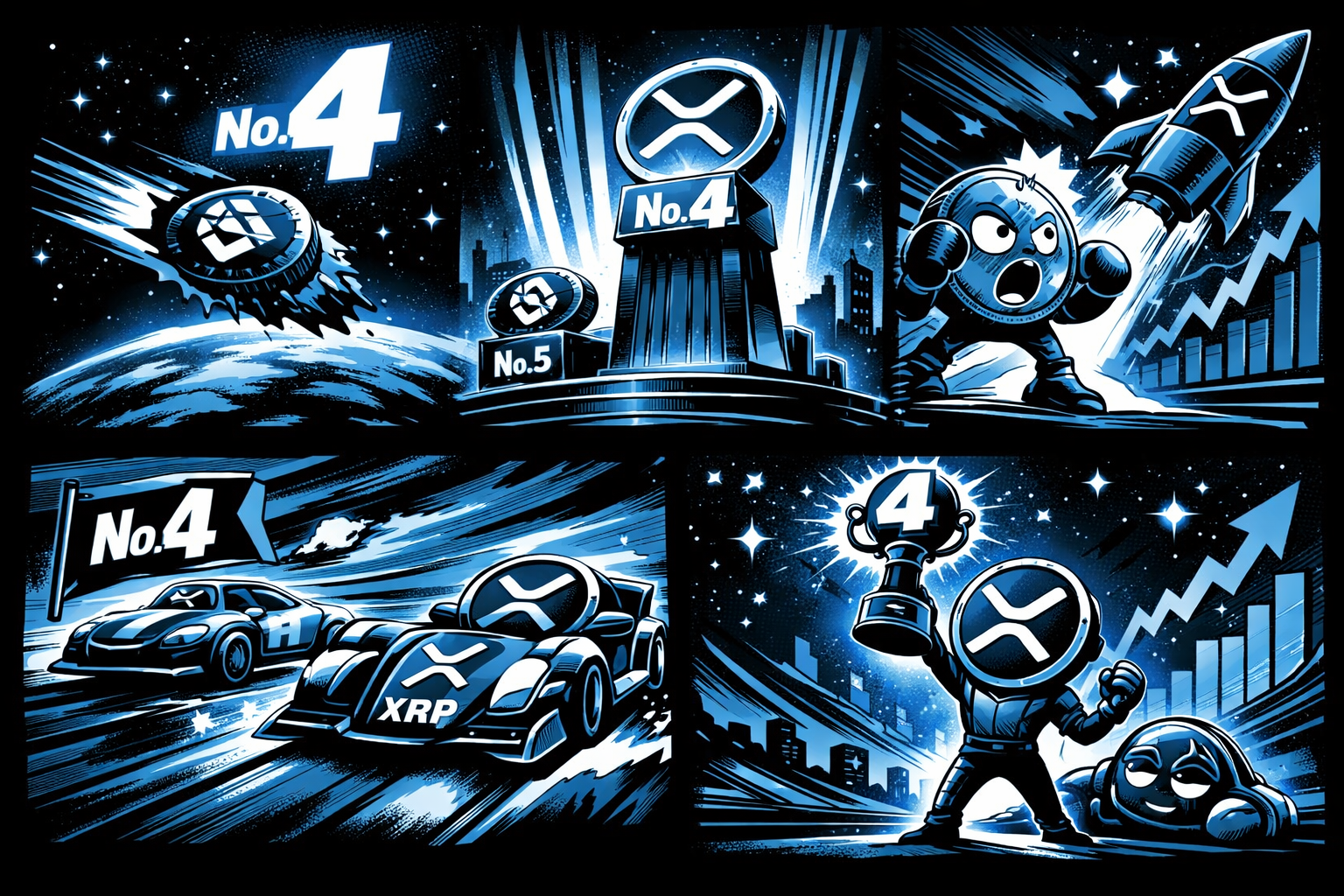
XRP regains momentum over BNB, with regulation, ETFs, and utility driving its push toward higher valuations.
XRP has reclaimed its position as the fourth-largest cryptocurrency by market capitalization, edging past BNB once again. The rivalry between the two assets has remained tight, with both trading places multiple times over recent weeks. Price action and regulatory developments have added new momentum to XRP’s recent move. Attention now shifts toward whether XRP can extend its lead and possibly challenge higher-ranked assets.
Mid-March marked a turning point when XRP briefly overtook BNB, reaching a market cap of nearly $93 billion. That lead proved short-lived as BNB regained ground on March 23, hitting $85.9 billion compared to XRP’s $85 billion. Margins stayed narrow, often under $1 billion, reflecting how closely matched both assets have become.
Current data shows XRP back in fourth place with a market cap of around $91 billion. Price has climbed roughly 10% to $1.50, giving it a slight but notable edge. Market participants now view the contest as temporarily settled, though volatility suggests more shifts could follow.
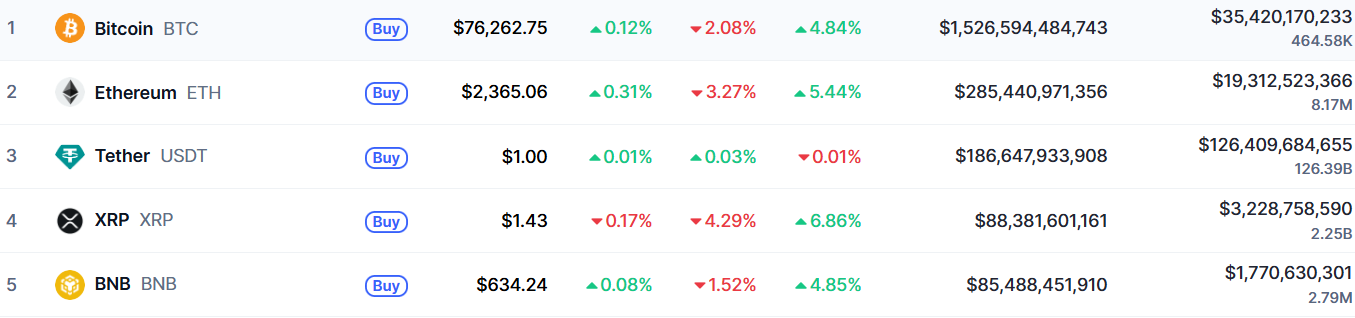
Image Source: CoinMarketCap
Over the past three years, XRP and BNB have alternated in the fourth position. XRP’s strongest moment came in 2025 when it reached $3.65 before losing momentum during broader market weakness. That pattern repeated into early 2026, though recent developments suggest a shift in underlying conditions.
Regulatory clarity played a major role in March’s rally. On March 17, U.S. Securities and Exchange Commission and Commodity Futures Trading Commission jointly classified XRP as a digital commodity. That decision changed how institutions can interact with the asset, placing it in a category similar to that of traditional commodities.
Immediate market reaction followed:
Momentum slowed the next day after the Federal Reserve maintained interest rates and raised inflation expectations. Broader crypto markets pulled back, allowing BNB to briefly reclaim fourth place. Even then, the gap between the two assets remained minimal.
Focus has now shifted toward longer-term drivers that could influence XRP’s trajectory. One of the most important factors remains pending legislation in the United States. The CLARITY Act, which passed the House in July 2025, is moving toward a review by the Senate Banking Committee. Approval would cement XRP’s regulatory status rather than leaving it open to reinterpretation.
Legal certainty often shapes institutional behavior. Large asset managers tend to avoid ambiguity, especially in emerging markets like crypto. A clear framework could encourage greater participation, potentially increasing demand for XRP.
Meanwhile, six XRP exchange-traded funds already exist in the U.S., though current ownership remains heavily retail-driven. About 84% of holdings are held by individual investors, leaving institutions with a relatively small share.
Historically, institutional flows quickly dominated after launch, coinciding with a major price rally. A similar shift in XRP ETF ownership could significantly influence its valuation over time.
Meanwhile, real-world use continues to grow through Ripple’s On-Demand Liquidity (ODL) service. Unlike speculative trading, ODL generates transaction-driven demand tied to cross-border payments.
Key aspects of ODL adoption include:
Growth in this area introduces steady activity that does not rely on market sentiment alone. Increasing transaction volume could support price stability over time, especially if adoption scales further.
Despite recent gains, catching Ethereum remains a steep challenge. XRP’s current market cap sits near $91 billion, while Ethereum stands at around $295 billion. Matching that valuation would require XRP to reach approximately $4.79, implying a gain of over 200%.
Such a move would likely depend on several factors aligning. Passage of the CLARITY Act, stronger macro conditions, and sustained ETF inflows would all play a role. At the same time, Ethereum would need to remain below previous highs, adding another layer of uncertainty.
A more realistic scenario for 2026 points toward XRP reaching the $3.00 to $4.00 range. That outcome would still represent a substantial increase in market value, even under normal conditions. For now, XRP holds the advantage over BNB, but the broader question centers on how far that momentum can extend.
Emily John·9hr ago
 Peter Mwenda·10hr ago
 Samuel·September 11, 2026