Tether-Backed Orionx Shuts Down After $7M Customer Asset Shortfall

Latest in Collapses
Tether-Backed Orionx Shuts Down After $7M Customer Asset Shortfall
Zondacrypto Mystery Deepens as Founder Vanishes and CEO Stays Abroad
Binance Founder CZ Says He Does Not Sympathize with SBF but Opposes Harsh Prison Terms
Bitcoin vs Altcoins: Why BTC Dominated While Crypto Investors Lost
Crypto Fear Persists for 38 Days, Matching Terra Collapse Levels
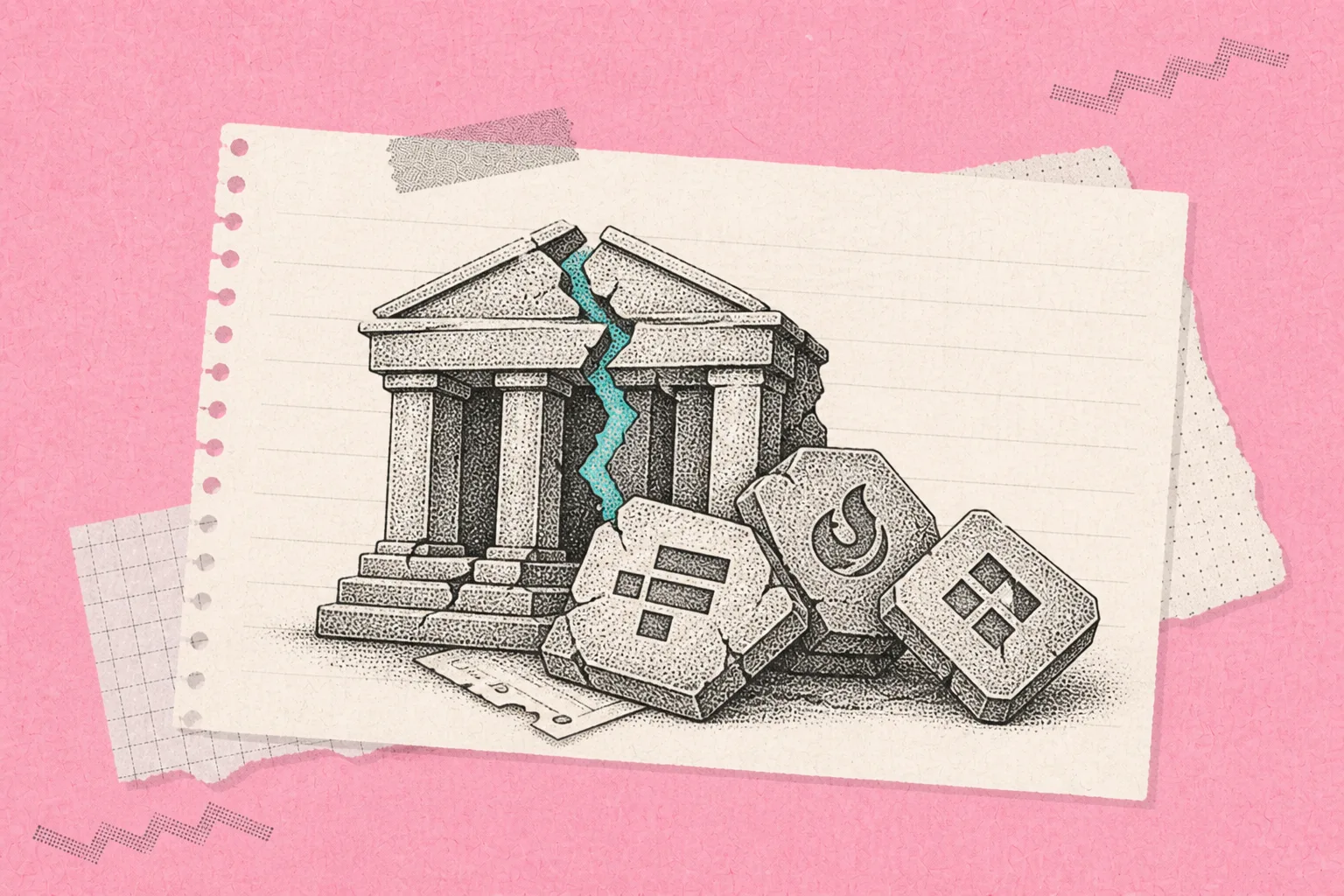
Crypto collapses are events; disappearance is a process. A trading screen can go dark in hours while estates, claims, successor companies, and distributions stay alive for years. A platform collapse is not a hack and not a rug pull, and “100% recovery” usually means a court-valued claim, not your original coins restored.
TradeHill, Mt. Gox, Cryptsy, QuadrigaCX, Celsius, Voyager, FTX, Prime Trust, Haru: venue-trust failures, creditor afterlives, and what “gone” means when the withdrawal button dies.
Collapse is an event. Disappearance is a process. A platform can stop trading in hours and remain financially alive for a decade.
Four supposedly dead crypto companies kept producing money and court headlines in 2026. On July 31, the FTX Recovery Trust started a fifth distribution of roughly $900 million, pushing several claim classes past 100% of allowed bankruptcy claims. Mt. Gox, which stopped operating in 2014, still listed October 31, 2026 as the deadline for remaining BTC and BCH repayments. Cryptopia, liquidated after a 2019 failure, was still sending major customer crypto distributions years later. Hodlnaut and Vauld, frozen in 2022, still ran liquidator and scheme machinery into 2026. Rooms invent a verb for the crash weekend: they got FTX’d. Then the quieter horror arrives. The app is dark, and the estate is very much awake.
People search FTX, SBF, and Sam Bankman-Fried for the spectacle. The durable job is wider than one rescue-turned-catastrophe. Crypto platforms have failed for almost every reason a financial intermediary can fail: stolen customer assets, weak custody, hidden shortfalls, payment-processor failure, lost banking access, founder fraud, accounting errors, unsustainable incentives, proprietary trading losses, leverage, concentrated counterparty exposure, liquidity mismatch, regulatory shutdown, lost wallet access, and extreme key-person concentration. The history is not simply Mt. Gox → Celsius → Voyager → FTX. It is a decade and a half of new intermediaries arriving faster than custody standards, risk management, law, and insolvency precedent could mature.
This is the dark evolution of venue trust in crypto.
The crash moment is short. The afterlife is long.
FTX latest news in 2025 and 2026 has often meant process news, not rebirth news. After the FTX Recovery Trust’s Chapter 11 plan became effective in early 2025, convenience-class payouts began, including an initial batch for creditors with claims under $50k, followed by subsequent waves for broader claim classes. Bahamas repayments ran on a parallel track after FTX started repaying creditors, with Bahamas claimants on their own schedule. By the fifth distribution on July 31, 2026, Dotcom and U.S. customer entitlement claims sat near 105% of allowed claims, with convenience claims near 120%. Those percentages measure legal claims with interest, not a return of the original November 2022 coin stack.
Mt. Gox stopped trading in 2014. Bitcoin and Bitcoin Cash repayments only began in 2024. The Japanese Rehabilitation Trustee still published an October 31, 2026 deadline for remaining base, early lump-sum, and intermediate repayments. Cryptopia’s 2019 liquidation produced major customer crypto distributions in 2024 and after. A decade between “gone” and “paid” is not a glitch in the story. It is the story.
Celsius halted withdrawals in June 2022. Founder Alexander Mashinsky took a 12-year sentence in May 2025 (DOJ). In July 2026 the FTC announced $16.5 million in settlements with Celsius co-founders. The restructuring produced Ionic Digital; creditors received equity, and the miner later pursued a Nasdaq listing. Voyager froze after Three Arrows Capital exposure, yet liquidation distributions and plan litigation were still live years later. Vauld’s Singapore Scheme of Arrangement and Hodlnaut’s liquidation machinery were still working claims in 2026. Platform dead. Estate alive. Claims alive.
Before the eras, name the machines. A crypto collapse is not one genre. It is a set of ways an intermediary fails when customers arrive together.
| Failure type | What breaks | Landmark examples |
| Banking/payment-rail failure | Fiat on-ramps and bank relationships | TradeHill, Bitfloor, Silvergate (as the bank) |
| Hack-to-insolvency | Theft the venue cannot absorb | Flexcoin, BitGrail, Cryptopia, Gatecoin |
| Concealed shortfall | Balances displayed after the hole exists | Cryptsy, Mt. Gox-era hidden losses |
| Founder/key-person collapse | One person controls keys, books, or both | QuadrigaCX, Moolah/MintPal, Thodex |
| Accounting/incentive failure | Unsustainable economics without a mega-hack | FCoin |
| Lender/yield insolvency | Duration mismatch and credit risk | Cred, Celsius, Babel, Hodlnaut, Haru |
| Counterparty concentration | One borrower or rescuer sinks the book | Voyager, CoinFLEX, Zipmex, BlockFi |
| Protocol/issuer shock (context) | Market stress that triggers lender runs | Terra → 3AC cascade |
| Custodian/infrastructure collapse | Lost wallets, fiat shortfalls | Prime Trust |
| Regulatory/economic wind-down | Ordered exit without a giant missing pile | Bittrex U.S. |
Hack ≠ necessarily bankruptcy. Bankruptcy ≠ zero recovery. Website closure ≠ legal death. Founder conviction ≠ estate closed. Orderly commercial shutdown ≠ collapse.
Key Takeaway: learn the failure type before you inherit the wrong moral.
| State | What it usually means |
| Trading halted | The interface stops |
| Withdrawals halted | Customers lose access |
| Insolvent | Obligations cannot be met on time |
| Receiver/liquidator appointed | Court or regulator takes control |
| Chapter 11/civil rehabilitation/scheme | Court-supervised restructuring or compromise |
| Brand dead | Product disappears |
| Legal entity alive | Estate still pursues assets |
| Recovery trust/successor company | Distributions or equity replace the old app |
| Distribution underway | Cash, crypto, or shares are still moving |
| Estate closed | Only then is the corporate story near its end |
Key Takeaway: “My balance,” “my crypto,” “my legal claim,” and “my recovery” can be four different things.
Major exchange collapses often start with a safety brand and end with customer-asset misuse, governance failure, and fire sales of illiquid bets when withdrawals rush. Paper portfolio “what it could be worth later” is not solvent liquidity under a run, a point that From Billionaire to Betrayal and the illiquid $50B portfolio autopsy both hammer. The anatomy that matters is venue failure across Mt. Gox, Cryptsy, Quadriga, Celsius, Voyager, FTX, and their peers.
A red candle can hurt open positions. A collapse removes the venue itself.
| Label people use | What it usually is |
| Platform/exchange collapse | Venue cannot meet redemptions; insolvency, fraud, or credit hole |
| Hack/exploit | Unauthorized control of keys, contracts, or hot wallets |
| Rug/Ponzi/exit scam | Fraud designed in from day one |
| 100% claim recovery | Court-valued claim paid (often in dollars) |
| Founder conviction | Criminal track parallel to, not a substitute for, distributions |
| Orderly wind-down | Commercial or regulatory exit without a giant customer hole |
Takeaway: collapse is not a hack, and it is not a rug. It is what happens when a going concern that sold safety fails under a run, and customers become claimants.
“Crypto Was a Subculture Before It Was an Industry”
Era Focus: Fragile exchanges, payment processors, and receivership before billion-dollar brands.
An academic study of 80 Bitcoin exchanges founded between 2010 and 2015 found that nearly half later closed. Not every closure was fraud. Many were simply platforms that could not survive banking, custody, or operational stress.
TradeHill was one of the largest early Bitcoin exchanges. It shut in 2012 amid payment-processor and financial problems. Later revival attempts ran into banking and regulatory friction again.
Why did it matter? A crypto exchange can trade decentralized assets while still being existentially dependent on centralized banks and payment processors.
Bitcoinica launched in 2011 as a platform for leveraged Bitcoin trading. Repeated 2012 security incidents led to customer claims, lost records, and receivership. Bitcoinica later became a creditor of Mt. Gox: one failed crypto company holding a claim against another.
Why did it matter? Repeated losses → platform stops → customers become claimants → receivership. The pattern predates modern Chapter 11 theater.
Bitfloor suffered a major 2012 Bitcoin theft, reopened, and worked toward repayments. It shut permanently in April 2013 after losing its U.S. banking relationship.
Why did it matter? The final failure mechanism can be different from the original crisis. Theft opened the wound. Banking closed it.
Key Takeaway: Fragility existed before billion-dollar crypto companies.
“Custody Failure Becomes a Decade”
U.S. prosecutors allege attackers gained access to Mt. Gox wallet infrastructure beginning around September 2011 and stole roughly 647,000 BTC through 2014 (DOJ). For this story, the mechanism that matters is what followed: exchange dominance, long-running hidden asset loss, withdrawal failure, bankruptcy, Japanese civil rehabilitation, customer claims, and BTC/BCH/cash repayments still running into 2026 (Mt. Gox trustee).
Why did it matter? A platform can die in 2014 and still be distributing value in 2026.
Flexcoin shut immediately after hackers stole 896 BTC, saying it lacked resources to cover the loss. Vircurex had absorbed earlier hacks with reserves, then froze withdrawals in March 2014 while battling insolvency.
Why did it matter? Flexcoin is loss → immediate closure. Vircurex is loss → freeze to prolong survival. The second pattern becomes common later.
Moolah acquired MintPal in 2014, then collapsed into inaccessible customer funds and later criminal proceedings around the operator. Keep the fraud mechanics short here. The venue lesson is older than 2019: founder control can erase customer access overnight.
“Account Balance ≠ Backed Assets”
DOJ later alleged that a major Cryptsy wallet compromise occurred in 2014 and that founder Paul Vernon continued running the exchange after learning of the breach without fully disclosing the situation to customers. A receiver took control in 2016. Vernon was indicted years later (DOJ).
Why did it matter? A platform can keep displaying balances and accepting customers after a hole already exists. That bridge runs from Mt. Gox-era operational failure to later founder and shortfall cases.
Quadriga first looked like a missing-private-keys story after founder Gerald Cotten died in 2018. The Ontario Securities Commission later concluded the collapse was primarily caused by fraud committed by Cotten (OSC report): fictitious accounts, fake balances traded against customers, losses covered with customer assets, personal diversion.
Why did it matter? A decentralized asset can sit inside an extremely centralized company.
British Columbia regulators sought a receiver for Einstein Exchange in 2019 after customers were unable to access their funds. The receiver found under $45,000 against more than $18 million in customer liabilities.
Why did it matter? The dashboard can look like wealth while the vault is empty.
“Theft Becomes Law”
BitGrail lost more than 11 million Nano/XRB in 2018 and could not return customer assets; the technical loss became bankruptcy and operator-liability fights. Gatecoin’s winding-up became a major crypto-property and trust precedent. Cryptopia’s 2019 hack-to-liquidation produced customer crypto distributions years later.
Why did it matter? For this beat, the important question is not the exploit writeup. It is what happens when theft exceeds the platform’s ability to absorb the loss: customers become claimants, courts invent property answers, and distributions arrive on legal time, not exchange time.
“Yield Without a Balance Sheet”
Cred’s 2020 bankruptcy showed centralized crypto lending could fail before Celsius became a household word.
FCoin disclosed a shortfall above $100 million tied to accounting and incentive-system failure rather than a single external heist.
Why did it matter? Not every collapse needs a villain with a stolen key. Some platforms invent their own hole through incentives and books.
“It Was a Network, Not One Domino”
Terra/Terraform Labs’ protocol and issuer collapse stressed markets and helped break Three Arrows Capital. 3AC then sat as a hidden counterparty behind multiple lender failures. Celsius, Babel Finance, CoinFLEX, Voyager, Vauld, Hodlnaut, and Zipmex did not fall in a tidy line. They fell as a credit graph.
Terra belongs here as trigger context, not as a co-equal venue autopsy. The focus stays on centralized venues and lenders that sold access, yield, or custody.
Why did it matter? Contagion taught crypto that counterparties are not decorative. One borrower’s default can freeze someone else’s withdrawal button.
Celsius halted withdrawals on June 12, 2022, with roughly $4.7 billion of customer crypto still on the platform, according to DOJ charging materials. A bankruptcy court later held that Earn deposits became property of Celsius under the Terms of Use. Mashinsky pleaded guilty and received 12 years. Creditors later received crypto, cash, and equity in successor miner Ionic Digital.
Why did it matter? Ownership language on a marketing site is not ownership language in court.
Voyager’s large 3AC loan default led to a withdrawal freeze, Chapter 11, and years of liquidation work. It is the classroom case for credit concentration: the customer thought they held an exchange balance; the exchange held a giant loan to a hedge fund.
“The Lifeboat Was the Iceberg”
FTX filed Chapter 11 on November 11, 2022. The SEC alleged Sam Bankman-Fried diverted customer assets to Alameda and gave Alameda extraordinary customer-funded credit access (SEC). Bankman-Fried was convicted and sentenced to 25 years (DOJ). Appeals kept SBF news in the cycle, including when Sam Bankman-Fried moved to appeal the 25-year sentence. The Second Circuit later affirmed.
FTT and affiliated tokens mattered for collateral and confidence. They were not the whole explanation. Do not reduce the collapse to “Binance sold FTT.” The withdrawal run exposed a balance-sheet and customer-fund problem with deeper roots. Caroline Ellison’s cooperation track remains part of the same accountability archive that From billionaire to betrayal still documents.
Then FTX became a recovery estate. By July 31, 2026, the Recovery Trust commenced its fifth distribution of about $900 million.
Why did it matter? The firm that marketed itself as a rescuer of the 2022 credit system became the largest retail trust shock of the era.
“The Rescuer Became the Risk”
BlockFi suffered stress during the 3AC period and later relied on financial support from FTX. After FTX collapsed, BlockFi filed Chapter 11. Its later plan targeted full recovery of eligible allowed dollar claims. That is not the same as restoring the original crypto stack.
Genesis Global Capital entered Chapter 11 in January 2023 after 3AC losses and FTX-era stress reached institutional lending and Gemini Earn retail customers. New York’s attorney general later secured a settlement worth up to $2 billion for harmed Genesis investors (NYAG).
Why did it matter? A retail customer may be several counterparties removed from the institution that took the credit risk.
AAX froze withdrawals in November 2022 and effectively stopped operating soon afterward. Hong Kong police later arrested executives and discussed liquidity issues and alleged misuse of “maintenance” as the freeze explanation. Confidence contagion can kill platforms even without Voyager-style direct balance-sheet ties.
Silvergate Bank was a major banking partner to crypto companies. After enormous deposit withdrawals following 2022 turmoil and FTX, it entered a voluntary wind-down in 2023; parent Silvergate Capital later filed bankruptcy. TradeHill and Bitfloor lost banks. A decade later, the crypto-focused bank itself faced a run. Use it as the rhyme, not the center.
“Custody, Korea, and Useful Contrasts”
Nevada’s Financial Institutions Division petitioned to place Prime Trust into receivership in June 2023 after finding it insolvent and operating unsafely. Filings described more than $85 million in fiat obligations against under $3 million of cash, a crypto shortfall, an equity deficit, and loss of access to legacy wallets (Nevada FID).
Why did it matter? Custody failure can be an operational and accounting problem, not only an external hack.
Haru Invest suspended withdrawals in June 2023 and later became a major Korean fraud prosecution involving roughly 1.4 trillion won in customer cryptocurrency, according to Reuters reporting. Delio froze shortly after Haru; rehabilitation failed, bankruptcy followed in November 2024, and by 2026 prosecutors were seeking a long sentence for the CEO over alleged customer-asset misconduct. Contagion was not unique to 3AC and Voyager.
Bittrex ended U.S. operations in 2023 and later entered bankruptcy as a wind-down. Bankruptcy itself does not prove a giant customer-asset hole or founder fraud. The contrast matters when every Chapter 11 headline starts to sound identical.
Thodex froze in 2021 and became a founder-disappearance criminal saga. Founder flight is one more meaning of “gone,” parallel to insolvency estates that stay painfully present.
After Chapter 11-style collapses, repayments arrive in court-approved stages with claim tiers and long waits. “First distributions started” is not the same as everyone made whole overnight, whether you are reading the two-year wait for FTX payouts or the first under-$50k batch. Treat repayment headlines as process updates, not instant recovery. Mt. Gox’s decade-long rehabilitation, Cryptopia’s delayed crypto distributions, Vauld’s scheme waves, and Hodlnaut’s ongoing liquidation are the same grammar in different courts.
Founder sentences and appeals keep collapse stories in public memory for years. Mashinsky, Bankman-Fried, and the Thodex/Haru/Delio tracks show criminal time running beside estate time. Institutional allocators can face fiduciary litigation after venue losses. Ontario Teachers’ Pension Plan’s lawsuit over FTX losses is one public example. Collapse risk is retail and institutional; due diligence failures become their own track.
Read the Terms of Use before you need a liquidator. Earn programs, omnibus wallets, and “title transfer” clauses can turn a marketed deposit into estate property. Celsius made that lesson expensive. Custodial exchanges can be IOUs dressed as balances. Successor equity (Ionic Digital) can replace coins with shares in a different business. Schemes of arrangement and civil rehabilitation can rewrite timelines without rewriting the loss.
The platform collapses. Then the bankruptcy itself becomes a phishing theme. Treat “crypto recovery” and “bitcoin recovery expert” ads as a separate crypto scam threat aimed at waiting claimants. Nothing here sells recovery services.
Key Takeaway: 100% of an allowed claim ≠ 100% of your original crypto portfolio.
Allowed claims are often valued in dollars as of a petition date or plan formula. Crypto prices move. Interest and convenience classes can push percentages above 100% of allowed claims while still leaving holders short of the November 2022 coin stack. BlockFi’s “full recovery of eligible allowed dollar claims” language and FTX’s 105%/120% claim-class headlines teach the same caution. The illiquid $50B portfolio writeup remains the clearest reminder that paper marks were never cash.
A crypto platform collapse is a venue-trust failure: the exchange, lender, or custodian that held customer balances cannot meet redemptions when the crowd arrives together. Insolvency, withdrawal freezes, custody shortfalls, and customer-asset gaps are the usual mechanics.
No. Theft and exploits are crypto hacks: unauthorized control of keys, contracts, or hot wallets. Some sagas mix both claims. Separate the mechanisms before you inherit the wrong moral. Mt. Gox mixes custody theft with exchange failure, which is why it still teaches both stories.
No. Rugs and Ponzis are fraud-from-inception patterns. If the story is a yield machine or a liquidity exit designed that way, read it as a Ponzi scheme or rug pull, not as venue insolvency.
Those percentages usually measure allowed legal claims (often dollar-valued, sometimes with interest), not a return of the original coin stack from November 2022. Process news is not time travel.
Mt. Gox failed in 2014. Japanese civil rehabilitation produced BTC and BCH repayment waves beginning in 2024, with remaining deadlines still published in 2026. The brand died early. The estate did not.
After looking like a lost-keys tragedy, OSC concluded founder fraud by Gerald Cotten caused the collapse: fake accounts, trading against customers, and diverted assets. Key-person concentration made the fraud possible.
After Chapter 11, Celsius distributions included crypto, cash, and equity in successor miner Ionic Digital. Earn deposits had been treated as estate property under the Terms of Use. “My coins” became a claim package.
Voyager is the clean classroom case for counterparty concentration: a large loan to Three Arrows Capital helped freeze customer access and force bankruptcy. Contagion is a balance-sheet graph, not a mood.
A custodian can become insolvent through operational failure, fiat shortfalls, and lost wallet access without fitting the classic external-heist story. Custody is infrastructure risk.
No. Bittrex U.S. shows a regulatory and economic wind-down can use bankruptcy without the FTX moral. Read the facts before you inherit the scandal template.
Treat paid recovery pitches as a second crypto scam, not as the official claims process. Use estate portals and court channels.
No. Crypto created new intermediaries faster than custody, risk management, and insolvency law matured. When they failed, customers learned that balance, coin, claim, and recovery are not synonyms.
New technologies change the surface. The underlying psychology often stays the same. Safety branding, yield costumes, rescue narratives, and “not your keys” lectures after the fact keep returning because venues keep selling convenience as custody.
The strange thing about crypto collapses is not that platforms fail. Financial intermediaries have always failed. The strange thing is how often the interface dies while the estate refuses to. Trading can halt in a weekend. Distributions can outlive a presidency.
Crypto did not remove financial intermediaries. It created new ones faster than the rules around them. When those intermediaries failed, customers discovered that “my balance,” “my crypto,” “my legal claim,” and “my recovery” could be four different things.
And the signature line still holds: a crypto platform can stop trading in hours and remain financially alive for a decade.
Explore more