
 James Godstime·September 16, 2026
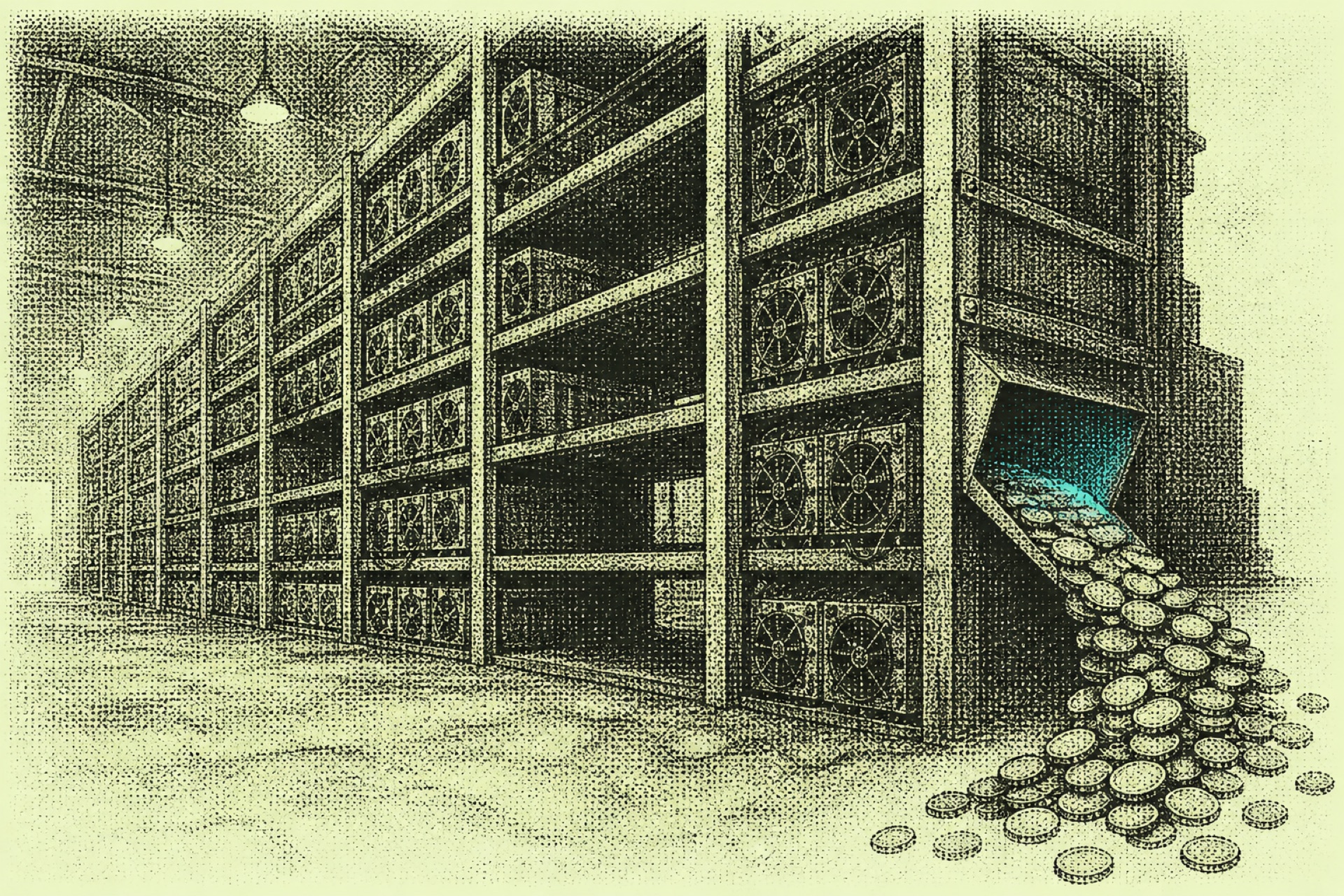
Public Bitcoin mining companies dumped $1.78 billion in tokens this year, heightening current market weakness across major exchanges.
First, listed mining firms drastically reduced their combined reserves by 28,000 BTC, down to roughly 99,000 BTC from 127,000 BTC. This is one of the largest “treasury draws” in recent years. This resulted in huge additions to the spot market in the early stages of the year on a day-to-day basis.
Publicly traded miners have dumped 28,000 Bitcoin and added $1.78 billion of selling pressure in 2026
"I told you how Riot Platforms yesterday did a $9 billion plus deal with Anthropic, and how miners are all now effectively just becoming AI data center providers"
"Well, one… https://t.co/55ukHgM0J4 pic.twitter.com/aiZOLxfmsa
— The Wolf Of All Streets (@scottmelker) August 12, 2026
In addition, in a low-liquidity market setting, persistent miner sales have a significant influence on prices. Thin order books have a dramatic effect on selling orders, which immediately lead to price declines. Therefore, traders must watch these treasury balance trends very closely going forward.
In the meantime, the operators of the institutions are constantly juggling operating costs and assets held. A high amount of network hashes requires more energy and makes it harder to find blocks. As a result, active treasury management determines how long it takes to turn earned block rewards into cash.
Besides that, the average production costs skyrocketed to about $74,300 per coin after the protocol changes. Operating margins were significantly compressed as prices fell by almost 27% over this time period. In the end, the smaller operations give up and the larger ones liquidate assets to keep cash flowing.
In simple terms, Bitcoin mining helps to protect the decentralized ledger by solving proof-of-work cryptographic puzzles. Massive computing power, specialized ASIC hardware, and huge electrical power are needed for proof-of-work. This means that miners are given block subsidies and transaction fees to cover these costs.
Mining companies, however, sell reserves at a discount to pay their debts, energy costs, and upgrade their hardware. The post-halving economics reduced the block reward revenues by half, thus limiting profit margins considerably. Thus, the survival of operators depends on having a sufficient cash buffer, achieved by making strategic market sales.
Moreover, the growing trend among industrial operators is to shift compute to higher-margin AI workloads. The cost of AI data centers involves capital expenses, which means companies need to sell digital assets as soon as they can. Thus, the changes in operations directly influence the continuous decline of the treasury balance.
In addition, network hash rate dropped significantly as unprofitable mining equipment went offline across the globe. The mining difficulty dropped by approximately 18% from the previous highs to accommodate block times. During this time of consolidation, this means that a few more margins are captured by remaining miners.
In addition to miner liquidations, there is still significant market sell pressure from massive ETF outflows of more than $4.4 billion. Spot market supply overhang and institutional investor capital withdrawal took place over time. As a result, miner reserves and fund withdrawals work against each other to put pressure on the price level.
Furthermore, low spot market depth will prevent quick price recoveries in liquidation situations. The traded volume is so small that buyers digest thousands of coins over time, maintaining relatively high volatility. Therefore, market recovery will require more general macroeconomic changes and re-entry into the market by institutions.
Meanwhile, the total issued supply recently crossed yet another milestone with its 20 million coin mark. The protocol has a hard cap of 21 million coins, meaning that only 1 million are yet to be mined. So, while there may be short-term headwinds in liquidation, the long-term headwinds in structural scarcity remain.
Ultimately, market participants must monitor hardware efficiency metrics and treasury reports carefully. If the miner sales, plus the institutional spot fund redemptions, are not absorbed, then there will be no sustainable price growth. So, it is still important to keep an eye on exchange inflows to gauge the near-term trend of the market.
Related News
Explore more