Ethena Taps Binance for Equity Perpetuals as ENA Price Jumps 57% in a Week
Latest in All Altcoins
Ethena Taps Binance for Equity Perpetuals as ENA Price Jumps 57% in a Week
Zcash Price Analysis: ZEC Tagged $1,680 and Gave Back 12% in One Day
Solana Price Analysis: The Liquidity Map That Shows Where SOL Goes Next
Cardano Liquidation Data Exposes A Trap Under ADA’s Bounce
Altcoins Are Back: 70% Reclaim 200-Day Average as Bitcoin Mirrors 2022 Price Action
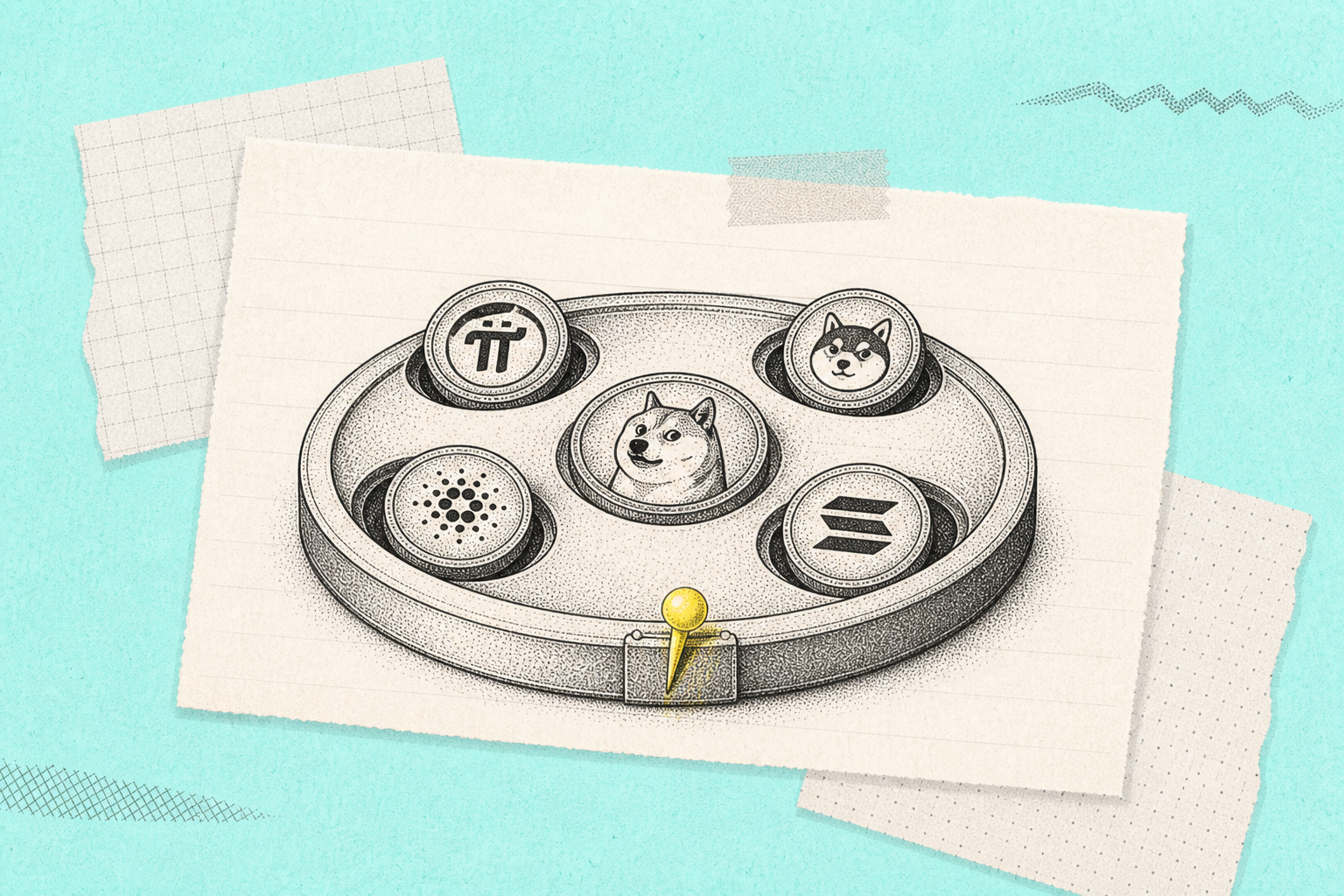
Bitcoin was the first cryptocurrency, but it’s no longer the only one that matters. Any cryptocurrency that isn’t Bitcoin is called an altcoin. Ethereum, XRP, Solana, Cardano, and Litecoin are some of the best-known examples. CoinGecko currently tracks more than 18,000 cryptocurrencies across the market.
The word “altcoin” is short for “alternative coin.” It came into use after Bitcoin took off, as developers began building new coins with features Bitcoin didn’t have. Some focused on faster payments, others on smart contracts, lower fees, or entirely new blockchain use cases.
Altcoins now play a central role in crypto. Some move money across borders. Others power decentralized finance (DeFi), gaming, artificial intelligence (AI), stablecoins, and tokenized real-world assets. This guide explains what altcoins are, how they work, why they matter, and how they differ from Bitcoin.
This section covers what an altcoin is, why it exists, and why altcoins aren’t all the same — a distinction that clears up one of the most common misunderstandings in crypto.
An altcoin is any cryptocurrency other than Bitcoin. Merriam-Webster traces the word to two parts: “alternative” and “coin.” In short, an altcoin is an alternative to Bitcoin.
Developers built altcoins to solve problems Bitcoin didn’t address — quicker transactions, lower fees, smart contracts, or decentralized applications. Each one serves a specific purpose.
The term altcoin caught on around 2011, when Bitcoin was still the only cryptocurrency most people knew. As new coins like Namecoin and Litecoin launched, people started calling them “alternative coins,” or altcoins for short.
Thousands of altcoins exist today. Some handle payments. Others power blockchain networks, games, DeFi platforms, AI projects, or stablecoins.
No. Calling something an altcoin doesn’t make it better or worse than Bitcoin — it just means it isn’t Bitcoin.
Some altcoins have earned significant popularity. Ethereum is widely used for smart contracts. XRP is known for fast cross-border transactions. Solana stands out for high speed and low fees.
Every altcoin has a different purpose, and not every project succeeds. Before investing, it’s worth understanding what a project does, how it works, and whether people actually use it. That context makes it easier for beginners to make informed decisions.
Bitcoin and altcoins are both cryptocurrencies, but they serve different goals. Bitcoin is often called digital gold — a store of value and payment network. Altcoins emerged after Bitcoin to offer new features, faster transactions, and different blockchain applications.
| Feature | Bitcoin (BTC) | Altcoins |
| Launch Year | 2009 | 2011 onwards |
| Definition | The first cryptocurrency | Any cryptocurrency other than Bitcoin |
| Consensus Mechanism | Proof of Work (PoW) | Proof of Stake (PoS), PoW, and other methods |
| Supply Model | Fixed supply of 21 million BTC | Fixed or unlimited, depending on the project |
| Main Use Case | Store of value and digital payments | Smart contracts, DeFi, payments, gaming, AI, stablecoins, NFTs, and more |
| Transaction Speed | Around 10 minutes per block | Usually much faster, depending on the blockchain |
| Transaction Fees | Can rise sharply during busy periods | Usually lower than Bitcoin |
| Energy Use | High, due to mining | Usually lower, especially on Proof-of-Stake networks |
| Market Capitalization | Largest cryptocurrency, often over 50% of total crypto market value | Combined market value of all other cryptocurrencies |
| Examples | Bitcoin (BTC) | Ethereum (ETH), XRP, Solana (SOL), Cardano (ADA), Litecoin (LTC), Dogecoin (DOGE), Avalanche (AVAX) |
Bitcoin is the largest and most established cryptocurrency. It has run continuously since 2009 and remains the most valuable and most traded digital asset. That track record is why investors typically measure other cryptocurrencies against it.
Unlike most altcoins, Bitcoin has a hard cap of 21 million coins. It’s also the primary choice for large companies, institutional investors, and Bitcoin ETFs. That combination is what makes Bitcoin the benchmark for the broader crypto market.
Bitcoin’s price heavily influences the rest of the crypto market. When Bitcoin rises, many altcoins tend to rise with it. When Bitcoin falls, many altcoins fall too — largely because Bitcoin shapes overall investor sentiment and confidence.
Altcoins don’t always move in lockstep with Bitcoin, though. New partnerships, network upgrades, product launches, and rising adoption can push individual projects higher on their own. During these stretches, investors sometimes shift money from Bitcoin into altcoins, which can cause altcoins to outperform Bitcoin for a while.
Bitcoin usually sets the overall tone, but an altcoin with strong technology and real traction can still move independently.
Altcoins exist for different reasons. Some move money, others power blockchain applications, support decentralized finance (DeFi), or protect user privacy. Understanding these categories makes it easier to compare projects and grasp how different cryptocurrencies actually work.
Smart contract platforms are blockchains built for decentralized applications (dApps). Smart contracts are self-executing programs that run automatically once certain conditions are met.
Ethereum (ETH): Launched in 2015, Ethereum introduced smart contracts to crypto. It now hosts thousands of decentralized applications, NFTs, DeFi projects, and stablecoins, and remains the largest smart contract blockchain by total value locked (TVL).
Solana (SOL): Solana is built for speed and low cost. It can process thousands of transactions per second, typically for under $0.01 in fees, and is widely used for DeFi, gaming, NFTs, and payments.
Cardano (ADA): Cardano runs on an energy-efficient Proof-of-Stake system and emphasizes security, academic research, and long-term development. Developers use it to build decentralized apps and digital identity tools.
Stablecoins are cryptocurrencies designed to hold a steady price, most often pegged one-to-one with the U.S. dollar. That stability is why they’re widely used for trading and payments.
USDT: Tether is the largest stablecoin by market capitalization. It’s heavily used for crypto trading, exchange transfers, and international payments.
USDC: USDC is backed by cash and short-term U.S. Treasury securities. Businesses favor it for the transparency that comes with regular reserve reports.
DAI: Unlike USDT and USDC, DAI is decentralized. Ethereum smart contracts — not a central company — keep its value pegged near $1.
Payment coins exist for fast, low-cost transactions or to power blockchain networks. They’re built around practical use rather than speculation alone.
XRP: XRP is used mainly for cross-border payments. Transactions typically settle in three to five seconds for a fraction of a cent, and financial institutions use it to move funds internationally.
Litecoin (LTC): Litecoin launched in 2011 and is sometimes called “the silver to Bitcoin’s gold.” It confirms new blocks every 2.5 minutes — four times faster than Bitcoin’s ten-minute block time.
Meme coins originate from internet jokes, memes, or online communities. Their prices often move with social media trends and community sentiment rather than fundamentals.
Dogecoin: Dogecoin launched in 2013 as a joke and has since become one of the best-known cryptocurrencies in the world. It’s commonly used for tipping and within online communities.
Shiba Inu: Shiba Inu launched in 2020 on Ethereum and has since expanded into a broader ecosystem that includes decentralized exchanges, NFTs, and other blockchain products.
Privacy coins protect the details of financial transactions that would otherwise be visible on public blockchains.
Monero: Monero automatically hides the transaction amount, sender, and receiver, making it one of the most privacy-focused cryptocurrencies available.
Zcash: Zcash gives users a choice between public and private transactions, using zero-knowledge proofs — an advanced cryptographic method — to protect user data.
Governance tokens let holders vote on key decisions in decentralized finance (DeFi) projects, including future upgrades and protocol changes.
UNI: UNI is the governance token for Uniswap, one of the largest decentralized exchanges. Holders vote on upgrades, fee structures, and treasury spending.
AAVE: AAVE is the native token of the Aave lending platform. Holders can vote on protocol upgrades, stake tokens for rewards, and help secure the network.
Exchange tokens are issued by crypto exchanges and typically offer perks like lower trading fees, staking rewards, and early access to new products.
BNB Chain: BNB Chain launched in 2017 and powers the BNB ecosystem. BNB is used to pay trading and network fees and to participate in DeFi applications, and it ranks among the largest cryptocurrencies by market value.
OKB: OKB is the utility token of the OKX exchange. Holders get trading discounts, access to platform programs, and other perks across the OKX ecosystem.
Layer-2 networks are built on top of existing blockchains, mainly Ethereum, to process transactions faster and more cheaply while relying on the security of the base chain.
Arbitrum: Arbitrum uses optimistic rollup technology to process transactions more efficiently. It powers a wide range of DeFi applications and helps lower fees on Ethereum.
Optimism: Optimism is another Ethereum Layer-2 network. It can cut transaction fees by up to 90% compared with the Ethereum mainnet while offering faster transaction speeds.
These categories show how varied altcoins really are — some built for payments, others for smart contracts, DeFi, privacy, or scaling. Thousands of altcoins exist as of 2026, but only a fraction have real adoption, active developers, or genuine use cases.
Developers create altcoins in two main ways: forking an existing blockchain or building an entirely new one from scratch. A third common approach is launching tokens on top of existing networks like Ethereum, BNB Chain, or Solana. Thousands of new projects launch each year through these token standards and blockchain platforms.
Developers choosing between forking and building from scratch weigh cost, technical difficulty, security needs, and long-term goals.
Forking means copying an existing blockchain’s open-source code and modifying it to create a new cryptocurrency. Because the underlying code is already tested, forking saves time and lets developers tweak features like transaction speed, block size, fees, or consensus. The tradeoff is that a forked blockchain doesn’t inherit the original network’s security — it has to build its own base of validators or miners from scratch.
There are two types of blockchain forks:
Hard Fork: creates a separate blockchain and cryptocurrency entirely. Bitcoin Cash (BCH) and Ethereum Classic (ETC) are examples.
Soft Fork: updates a blockchain’s rules without creating a new cryptocurrency.
Building a blockchain from scratch is far more demanding. Developers have to write new code, create a genesis block, design a consensus mechanism, build out tokenomics, and secure the network from day one. It’s slower and more expensive, but it gives developers complete control over every feature.
Several successful cryptocurrencies started as forks. Litecoin launched in 2011 using Bitcoin’s code but cut block generation time to 2.5 minutes from ten. Bitcoin Cash, also a hard fork of Bitcoin, focused on larger block sizes to support faster payments.
Not every altcoin runs on its own blockchain. Some are native coins; others are tokens built to meet a blockchain’s technical standards.
A native blockchain manages its own network, validators, security, and transaction processing, and it has its own coin for paying fees and securing the network — think ETH on Ethereum, BNB on BNB Chain, SOL on Solana, or ADA on Cardano.
| Feature | Forking | Building From Scratch |
| Development Time | Faster | Longer |
| Cost | Lower | Higher |
| Flexibility | Moderate | Complete |
| Security | Uses proven code | Requires full testing |
| Examples | Litecoin, Bitcoin Cash | Ethereum, Solana, Cardano |
Building tokens on an existing blockchain is often faster and cheaper than launching a new network, which is why many developers choose that route. These tokens follow technical standards that make them compatible with wallets, exchanges, and decentralized applications.
The most common token standards include:
ERC-20: Ethereum’s standard for fungible tokens, and the foundation behind thousands of DeFi projects.
BEP-20: BNB Smart Chain’s token standard, known for lower fees and faster transactions.
SPL: Solana’s token standard, built for fast, low-cost applications.
Ethereum remains the largest smart contract platform, hosting thousands of ERC-20 tokens across DeFi, gaming, NFTs, and stablecoins. Solana’s SPL standard has also grown quickly thanks to fast processing and low fees.
Launching an altcoin takes more than writing code. Successful projects typically publish a whitepaper, raise funding, distribute tokens, and build a community before trading opens to the public.
A whitepaper is a project’s core technical document. It explains the problem the project solves, the technology behind it, token supply, governance model, and roadmap. Bitcoin’s 2008 whitepaper set the template, introducing the idea of decentralized digital currency.
Most projects raise money through an Initial Coin Offering (ICO) — selling tokens to investors before they’re listed on exchanges. ICOs surged in popularity during the 2017 bull market, raising over $6 billion for blockchain startups globally. Today’s legitimate ICOs generally involve stronger legal compliance, security audits, and regulatory oversight.
Initial DEX Offerings (IDOs) are another fundraising route. Unlike ICOs, IDOs happen directly on decentralized exchanges, so traders can buy and trade tokens immediately after launch. This improves liquidity and price discovery while reducing reliance on centralized platforms.
Many modern projects also use a crypto launchpad to organize a secure token sale. Launchpads vet project teams, audit smart contracts, and assess tokenomics before presenting projects to investors. Popular launchpads include Binance Wallet Launchpad, CoinList, DAO Maker, Seedify, and Polkastarter.
Altogether, developers build altcoins by forking existing blockchains, building new ones, or launching tokens on established networks — then use whitepapers, fundraising, and launchpads to bring projects to market. The result is a market with thousands of cryptocurrencies supporting new ideas in payments, DeFi, gaming, AI, and digital assets.
Several factors shape an altcoin’s value, but utility, tokenomics, market sentiment, and ecosystem growth matter most. As a project attracts more users, developers, and real-world use cases, demand tends to grow. Broader market conditions and Bitcoin’s performance also play a role.
Utility is how useful an altcoin actually is in the real world. Coins with practical use tend to hold value better than projects with little real activity.
Altcoins power blockchain applications, DeFi, NFTs, gaming, and payments. Ethereum, Solana, and Cardano, for example, each host thousands of decentralized applications, and demand for their native tokens grows as users pay transaction fees on those networks.
Adoption adds further value. As more businesses, developers, and users join a blockchain, demand for its token tends to rise. Stablecoins alone now settle trillions of dollars in transactions each year — a clear sign of how deeply blockchain technology has embedded itself in everyday finance.
Tokenomics describes a cryptocurrency’s economic design — how many coins exist, how they’re created, and how supply changes over time.
Some cryptocurrencies cap their supply; others mint new coins continuously. BNB has a total supply of 200 million tokens, for comparison, while Bitcoin is capped at 21 million.
Some projects reduce supply by burning tokens — permanently removing them from circulation. Ethereum’s 2021 EIP-1559 upgrade, for instance, burns a portion of every transaction fee. Higher network activity means more ETH burned, which can shrink supply over time.
Staking affects value too. Proof-of-Stake blockchains require users to stake coins to help secure the network and earn rewards. Since staked coins are locked up, effective circulating supply falls — which can support prices.
Altcoin prices react strongly to market sentiment. Positive news and rising investor confidence tend to push demand up; negative news or economic uncertainty can send prices down quickly.
Bitcoin shapes sentiment across the entire market. When Bitcoin’s price surges, buyers typically move into it first. Many later shift profits into Ethereum and other altcoins — a pattern known as altcoin season, or altseason.
Altcoins often lag while Bitcoin dominates. But in sideways Bitcoin markets, smaller cryptocurrencies can sometimes outperform it.
Developer activity is another key signal. Active developers keep improving the technology and shipping new features.
Developers build decentralized applications, strengthen security, and release updates. More applications tend to bring more users, which drives more network activity and more demand for the native token.
Leading platforms like Ethereum, Solana, BNB Chain, and Cardano each have thousands of developers building wallets, DeFi apps, games, NFT marketplaces, and other blockchain services. A strong developer community is one of the best long-term signals for a project’s staying power.
Many investors lump all altcoins into a single category, but that approach can be misleading. Large-cap altcoins carry different risk, growth potential, and market behavior than long-tail altcoins. Understanding that difference leads to better decisions.
| Feature | Large-Cap Altcoins | Long-Tail Altcoins |
| Examples | Ethereum (ETH), BNB, Solana (SOL), XRP | Small-cap DeFi, AI, gaming, and meme tokens |
| Market Value | Usually above $10 billion | Often below $500 million |
| Liquidity | High trading volume and easy to buy or sell | Lower trading volume and limited liquidity |
| Risk | Lower risk with smaller price swings | Higher risk with larger price swings |
| Growth Potential | Steady long-term growth | Higher potential returns but greater losses |
Large-cap altcoins benefit from bigger communities, stronger developer support, and higher trading volume, which helps them recover faster during downturns. Ethereum and BNB, for example, process millions of transactions and host thousands of decentralized applications.
Long-tail altcoins are smaller projects with limited adoption. Some post strong returns during bull markets, but many decline quickly due to weak demand, thin liquidity, or outright project failure. Some smaller tokens go inactive shortly after launch.
Large-cap altcoins trade on most major exchanges with billions of dollars in daily volume, so investors can buy or sell without moving the price much. Long-tail altcoins typically have much lower trading volume, which makes large trades harder to execute.
Large-cap altcoins generally track the broader crypto market. Long-tail altcoins can swing far more sharply and quickly, driven by news, social media trends, or thin liquidity. In a bull run, some small-cap tokens gain 100% to 500% or more — but they can also lose 80% to 90% when the market corrects.
Rather than treating all altcoins the same, it helps to group them by size, liquidity, and use case. Large-cap altcoins tend to be more stable; long-tail altcoins carry more risk but more upside. Separating the two gives a clearer view of a portfolio and makes risk easier to manage.
Altcoin strength usually comes from capital rotation rather than every coin rising together. In most cycles, money flows into Bitcoin first. As Bitcoin slows down or trades sideways, some investors shift gains into Ethereum, then into other large altcoins. Bitcoin Dominance and the Altcoin Season Index help track this pattern, though neither can predict exactly when an altcoin season will start. Some cryptocurrencies also manage to perform well even while Bitcoin still dominates.
New money entering crypto typically goes into Bitcoin first, since it’s the largest and most established cryptocurrency. Institutional investors and Bitcoin ETFs tend to establish Bitcoin positions before looking at anything else.
As Bitcoin’s momentum slows or stalls, investors often rotate some profits into Ethereum — the second-largest cryptocurrency and typically the next stop for capital.
As confidence builds, investors start buying large-cap altcoins like Solana, XRP, BNB, and Chainlink — coins known for high trading volume, active development, and established ecosystems.
In strongly bullish conditions, capital can flow into smaller AI, DeFi, gaming, and meme coins. These carry higher potential upside, but also significantly more risk.
Altcoin season — or altseason — is a stretch when many altcoins outperform Bitcoin. Investors move funds out of Bitcoin and into Ethereum and other cryptocurrencies, and altcoins often see sustained gains over weeks or months relative to Bitcoin.
Not every altcoin rises during an altseason, though. Some projects thrive; others keep losing value regardless of the broader trend.
Altcoin seasons don’t follow a fixed schedule, but several market indicators help traders gauge the timing.
Bitcoin Dominance (BTC.D) tracks Bitcoin’s share of the total crypto market. When it falls, investors are typically buying more of other cryptocurrencies — though a lower BTC.D alone doesn’t guarantee an altcoin season.
The Altcoin Season Index is another widely followed metric. By convention, an altcoin season is underway when 75% of the top 50 altcoins have outperformed Bitcoin over the trailing 90 days. It’s useful for spotting trends, but it isn’t a forecasting tool.
Altcoin seasons usually follow a major Bitcoin bull run. As Bitcoin’s momentum slows or flattens, some investors take profits and rotate them into Ethereum, then into large-cap altcoins, then smaller ones.
Crypto markets have gone through several notable altcoin seasons.
During the ICO boom, Bitcoin approached $20,000 before many investors rotated into altcoins. Bitcoin dominance fell from roughly 70% to 38%. Ethereum topped $1,000, and XRP hit an all-time high of $3.84.
DeFi became one of the biggest crypto trends of 2020. As investors bought DeFi tokens, Bitcoin dominance dropped from about 66% to 57%. Over the same stretch, total value locked (TVL) in DeFi grew from roughly $1 billion to more than $10 billion in just a few months.
Investors piled into smart contract platforms and meme coins in early 2021. Bitcoin dominance fell from around 70% to 39%, and Ethereum, Solana, and Dogecoin all posted strong gains as interest spread across the market.
Thousands of projects raised money through ICOs in 2017, and many altcoins posted big gains. The market turned in 2018, and many investors pulled back into Bitcoin, which they viewed as the safer option.
DeFi and NFTs brought millions of new users into crypto in 2020 and 2021. Many altcoins, including Ethereum, gained significant ground, and Bitcoin dominance fell as money flowed into altcoins.
Spot Bitcoin and Ethereum ETFs drew in more institutional capital. Most of that money went into Bitcoin and Ethereum rather than smaller altcoins, marking a shift in how capital moves through the market.
New launch platforms made it easy for anyone to create a meme coin. Some grabbed massive attention quickly — and many faded just as fast once the hype cooled.
Heading into the rest of 2026, investors are still debating when the next altcoin season will begin. Meanwhile, regular token unlocks continue adding new supply to the market each month, which can dampen price gains even in otherwise healthy conditions.
Tracking altcoin news and market signals helps investors read changing conditions. No single indicator reliably predicts prices, but combining several trusted tools improves decision-making and reduces risk. Traders typically rely on market data, on-chain data, and news together.
The Altcoin Season Index is one of the most widely used gauges of overall altcoin performance. Rather than predicting prices, it shows whether altcoins are outperforming Bitcoin over a set period.
It compares the top 100 cryptocurrencies against Bitcoin over the trailing 90 days. If 75% or more outperform Bitcoin, the market is considered to be in an Altcoin Season. If 25% or fewer do, it’s typically called Bitcoin Season.
The index is useful, but it shouldn’t be the only signal investors rely on.
Bitcoin Dominance (BTC.D) measures Bitcoin’s share of total crypto market cap — one of the clearest indicators of capital rotation.
Historically, BTC.D has ranged from about 35% to more than 70%. When it rises, investors are typically moving money into Bitcoin as the safer asset, and altcoins tend to underperform. When it falls, money often shifts into Ethereum and other altcoins — sometimes marking the start of stronger altcoin performance, particularly in bull markets.
The ETH/BTC ratio compares Ethereum’s price to Bitcoin’s and is watched closely as an early signal of a potential altcoin rally.
A rising ratio suggests Ethereum is outperforming Bitcoin, often reflecting growing demand for smart contract platforms and altcoins more broadly. A falling ratio usually means investors favor Bitcoin. The ratio is trackable on TradingView, CoinMarketCap, and CoinGecko.
Not every altcoin sector moves at once. Money tends to rotate from one sector to another across each market cycle, so knowing which sector is drawing the most attention helps investors focus their research.
Today’s market spans dozens of sectors — Artificial Intelligence (AI), Decentralized Finance (DeFi), Real-World Assets (RWA), Layer-2 scaling, DePIN, gaming, infrastructure, privacy coins, and meme coins among them.
Watching trading volume, price growth, and developer activity within the leading sectors helps identify where momentum is building; sector leaders often outperform the broader market during bull runs.
CoinMarketCap lists more than 18,000 cryptocurrencies across these sectors, but only a handful typically drive each market cycle. Tools like CoinMarketCap and CoinGecko let investors filter by category to compare market value, trading volume, and price change. Looking for sectors with rising 24-hour volume and strong price gains is one way to spot early momentum, and platforms like LunarCrush can track social media buzz around a sector as another signal.
A few patterns tend to define a leading sector: trading activity growing faster than the broader market, new price records across multiple projects, larger projects moving first followed by smaller ones in the same category, and steadily increasing developer activity and new launches. DeFi followed this pattern in 2020 and 2021; AI and RWA projects picked up similar momentum more recently as tokenized assets gained traction.
Altcoin season isn’t guaranteed. Many people assume altcoins automatically rise once Bitcoin does, but that’s not always true. Strong altcoin rallies sometimes follow Bitcoin’s gains — and sometimes they don’t. Some analysts argue altcoins need their own catalysts, like new technology, growing adoption, or favorable market conditions, before prices move broadly higher.
Rather than relying on chatter about an upcoming altcoin season, investors should track real signals: Bitcoin Dominance (BTC.D), the Altcoin Season Index, trading volume, market liquidity, and major crypto news. These indicators can suggest capital is flowing into altcoins, but none of them can confirm that a true altcoin season has begun.
Not all altcoins fit the same mold — some are large and established, others are small and high-risk. Understanding these categories makes it easier to compare projects and make decisions.
Large-cap altcoins are the biggest, most established cryptocurrencies outside Bitcoin, with substantial trading volume and user bases.
Ethereum (ETH), Solana (SOL), XRP, and BNB fall into this category. These coins tend to be the first to recover when capital rotates out of Bitcoin, and they’re generally less volatile than smaller altcoins.
Mid-cap altcoins are growing projects with active communities and promising technology, often in areas like AI, DeFi, gaming, or real-world assets (RWA).
They can offer more upside than large-cap altcoins, but their prices depend heavily on investor interest and broader market trends.
Small-cap altcoins have lower value and thinner trading volume than larger coins, and meme coins often fall into this group.
They can rise — and fall — very quickly. Because fewer people trade them, even modest buying or selling can move their price significantly.
Some altcoins serve a genuine function on their blockchain — paying transaction fees, supporting staking, or enabling governance votes. These are utility tokens.
Others are driven mostly by hype and community interest, with prices tied more to social media trends than actual use. Understanding a token’s real utility — or lack of it — makes the difference between a considered investment and a speculative bet.
Altcoins offer the potential for high returns, but they carry more risk than Bitcoin. Smaller market caps, thinner trading volume, and shorter track records all add to that risk, which is why thorough research matters before investing in any project.
Altcoin prices can move fast. In bull markets, many altcoins rally harder than Bitcoin — but they can also fall much further during downturns. In past bear markets, some altcoins dropped 90% or more. Bitcoin has fallen sharply too during these periods, but it has generally recovered more consistently over time.
Popular altcoins often ride specific trends — DeFi, NFTs, AI, gaming, or meme coins. When investor attention shifts to a new narrative, older projects can lose users, volume, and value fast. A compelling story alone isn’t enough to sustain a project.
Some smaller altcoins have very thin trading volume, which makes it hard to trade large amounts without moving the price. A high market cap doesn’t necessarily mean high liquidity; some coins are difficult to exit quickly, especially during a downturn.
Crypto regulation keeps evolving worldwide. New laws or policy changes can affect how altcoins are traded or used, and exchanges sometimes delist tokens over regulatory concerns, which can hurt volume and investor interest.
Not every altcoin project is legitimate. Some are built purely to attract investor money before the developers disappear with it — a scheme known as a rug pull.
Before investing, check for these warning signs:
Taking the time to research these red flags helps investors avoid costly mistakes and make better decisions when trading altcoins.
Token unlocks are a risk shared across most altcoins. Unlike Bitcoin’s fixed supply, many altcoin projects release new tokens on a schedule, gradually increasing circulating supply.
When a large unlock hits, early investors, team members, or advisors may choose to sell, which can add selling pressure and weigh on price. That’s why checking a project’s token unlock schedule before investing matters — unlocks don’t always trigger a price drop, but they’re a key part of understanding an altcoin’s future supply and potential market impact.
Picking the right altcoin takes more than watching the price. Of the thousands of cryptocurrencies on the market, only a small number have meaningful adoption and active development as of 2026. Before investing, it’s worth reviewing the team, the project’s mission, token supply, community, and on-chain activity.
An experienced, credible team builds confidence in a project.
A worthwhile altcoin solves a real problem.
Tokenomics covers how a token is created, distributed, and used.
An active community and development team are both good signs.
On-chain data offers a direct read on a blockchain’s health.
Total Value Locked (TVL): measures the funds deposited in a blockchain’s DeFi applications. Higher TVL generally signals greater usage, and it can be tracked on DefiLlama.
Active Addresses: counts the wallet addresses active on a network each day. More active addresses generally mean more real usage, trackable on Artemis, Glassnode, or explorers like Etherscan and Solscan.
Transaction Volume: tracks how many transactions move through a blockchain. Higher volume generally reflects more network activity, and it’s available through Artemis, Token Terminal, or blockchain explorers.
No single metric can confirm whether an altcoin is a good investment. Weighing team, technology, adoption, tokenomics, and on-chain data together gives the clearest picture before making a decision.
These are the top altcoins as of August 6, 2026. Ethereum, Tether, and BNB lead the list. Market caps change often, prices update in real time, and full rankings refresh every 24 hours on trackers like CoinMarketCap.
| Rank | Name | Category | Market Cap | Key Use Case |
| 1 | Ethereum (ETH) | Smart Contracts | ~$230.32B | Decentralized finance, NFTs, and Layer-2 scaling |
| 2 | Tether (USDT) | Stablecoin | ~$183.39B | Digital dollar liquidity and cross-border settlement |
| 3 | BNB (BNB) | Layer-1 / Exchange | ~$79.26B | Ecosystem utility and transaction fee discounts |
| 4 | USD Coin (USDC) | Stablecoin | ~$71.92B | Fully collateralized digital fiat transactions |
| 5 | XRP (Ripple) | Payments | ~$65.62B | Institutional liquidity and cross-border payments |
| 6 | Solana (SOL) | Layer-1 | ~$49.68B | High-throughput decentralized retail and consumer apps |
| 7 | TRON (TRX) | Layer-1 | ~$31.44B | Low-cost high-volume value transfer |
| 8 | Dogecoin (DOGE) | Memecoin | ~$22.10B | Peer-to-peer digital cash and community tipping |
People often use “altcoin” and “token” interchangeably, but they’re not the same thing. Altcoins run on their own blockchain; tokens are built on top of an existing one.
Altcoins run on their own blockchain.
Litecoin (LTC), XRP, Cardano (ADA), and Solana (SOL) are examples.
Tokens are minted on an existing blockchain, such as Ethereum, BNB Chain, or Solana.
Tether (USDT), Chainlink (LINK), and Shiba Inu (SHIB) are examples.
Crypto projects evolve. BNB, for instance, started as a token on Ethereum before moving to its own blockchain and becoming a native coin. Shifts like that are part of why the terms “coin” and “token” often get mixed up.
Altcoins now play a significant role in crypto, spanning payments, DeFi, gaming, AI, and real-world assets (RWAs). Each one is different, so understanding a project before investing is essential.
Before buying an altcoin, weigh its use case, team, tokenomics, community, and on-chain activity — and stay aware of risks like volatility, thin liquidity, scams, and shifting regulation. Careful research and reliable market data lead to better decisions than chasing hype.
Any cryptocurrency other than Bitcoin is called an altcoin. Some altcoins are tokens built on existing blockchains, while others run on their own blockchain. They’re used for payments, smart contracts, gaming, DeFi, AI, and more.
Bitcoin is the largest and first cryptocurrency, mainly used as a payment network and store of value. Many altcoins add extra functionality, like smart contracts, staking, faster transactions, or decentralized apps.
Altcoin season is a period when many altcoins outperform Bitcoin. It typically happens when investors shift funds from Bitcoin into other cryptocurrencies, though it doesn’t occur in every market cycle.
No one can reliably predict altcoin season. Investors typically watch Bitcoin Dominance, the Altcoin Season Index, trading volume, and market liquidity for possible signals.
The Altcoin Season Index is available on sites like CoinMarketCap and BlockchainCenter. It’s also worth tracking Bitcoin Dominance (BTC.D) and overall crypto market activity alongside it.
Ethereum (ETH), XRP, Solana (SOL), BNB, Cardano (ADA), Avalanche (AVAX), Chainlink (LINK), and Polkadot (DOT) are among the most popular altcoins.
Altcoin prices are shaped by market demand, adoption, token supply, Bitcoin’s price, regulation, project updates, partnerships, and investor sentiment.
Review the project’s use case, development team, tokenomics, community, developer activity, and on-chain data, and stay aware of the risks before deciding.
Use a reputable exchange, turn on two-factor authentication (2FA), and store coins in a secure wallet. Never risk more than you can afford to lose.
Yes. Memecoins are a type of altcoin. They tend to have less real-world utility than other altcoins and are priced largely on community support and social media trends.
A token unlock is when previously locked tokens are released into circulation. A large unlock can raise circulating supply and lead to selling pressure.
The most significant risks include high price volatility, low liquidity, scams, shifting regulation, and token unlocks. Thoroughly research any project before investing.
Explore more