
 Samuel·2hr ago

The Federal Reserve Board opened two GENIUS Act proposals for comment, covering stablecoin reserves, capital charges, redemption limits, and bank applications.
Two business days. That is the longest a holder would wait for dollars from a stablecoin issuer the Federal Reserve supervises, if the new proposal survives public comment.
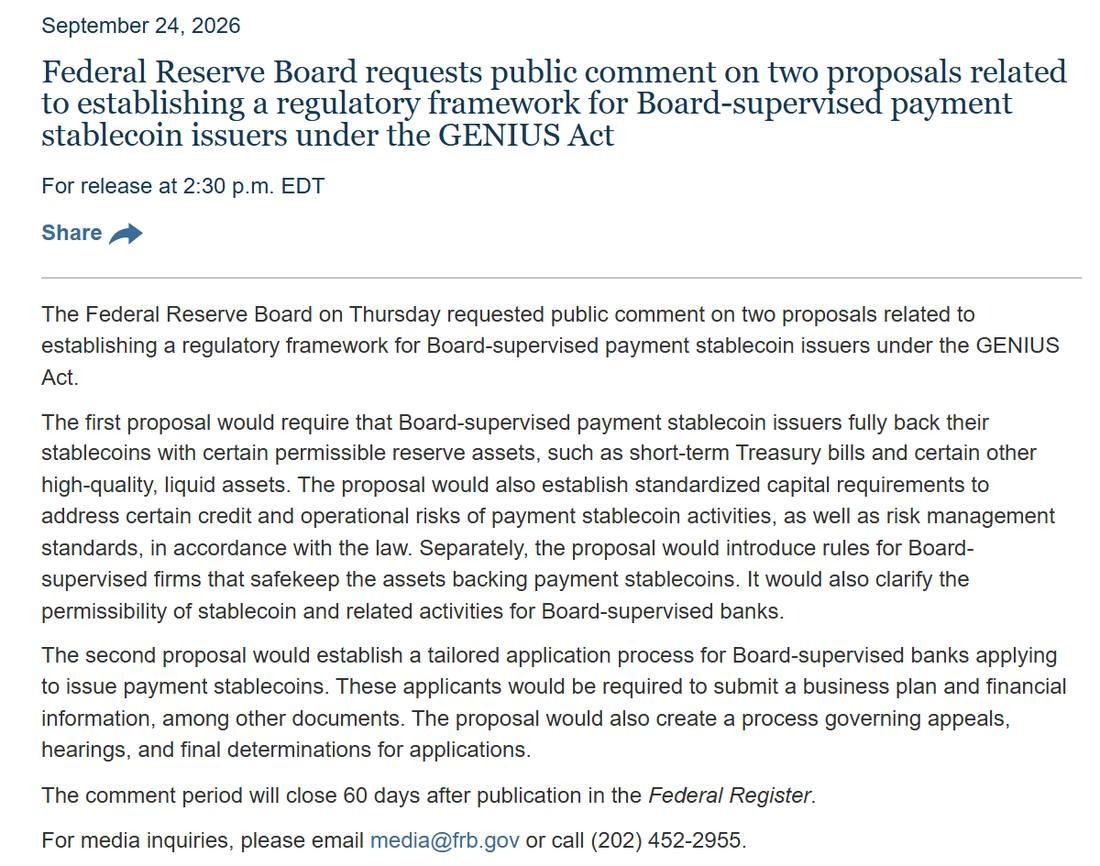
The Board put out two proposals on Thursday, both tied to the GENIUS Act. Comments stay open for 60 days after each notice appears in the Federal Register. The rules would cover issuers that are subsidiaries of state member banks, plus uninsured state-chartered issuers with $10 billion or more in coins outstanding.
Source: Federal Reserve Board press release, September 24, 2026
Every coin needs backing worth at least its face value, at all times. Allowed assets include dollars, balances at Federal Reserve Banks, demand deposits at insured banks and Treasury bills with 93 days or less left to run. Overnight repo and funds holding only those assets make the list too. Tokenized versions of some of them count as well, and Wall Street keeps pushing more holdings onchain, as BlackRock and Ondo showed the same day.
Issuers would also have to spread the risk. Piling uninsured deposits into one bank, or repo exposure into one counterparty, is the kind of concentration the proposal wants limited. If an issuer falls below full backing, it must tell the Fed, then liquidate and redeem, unless a plan to recover quickly gets the Board’s approval. The two-day redemption window itself could stretch only if the Board extends it because an issuer threatens safety or financial stability.
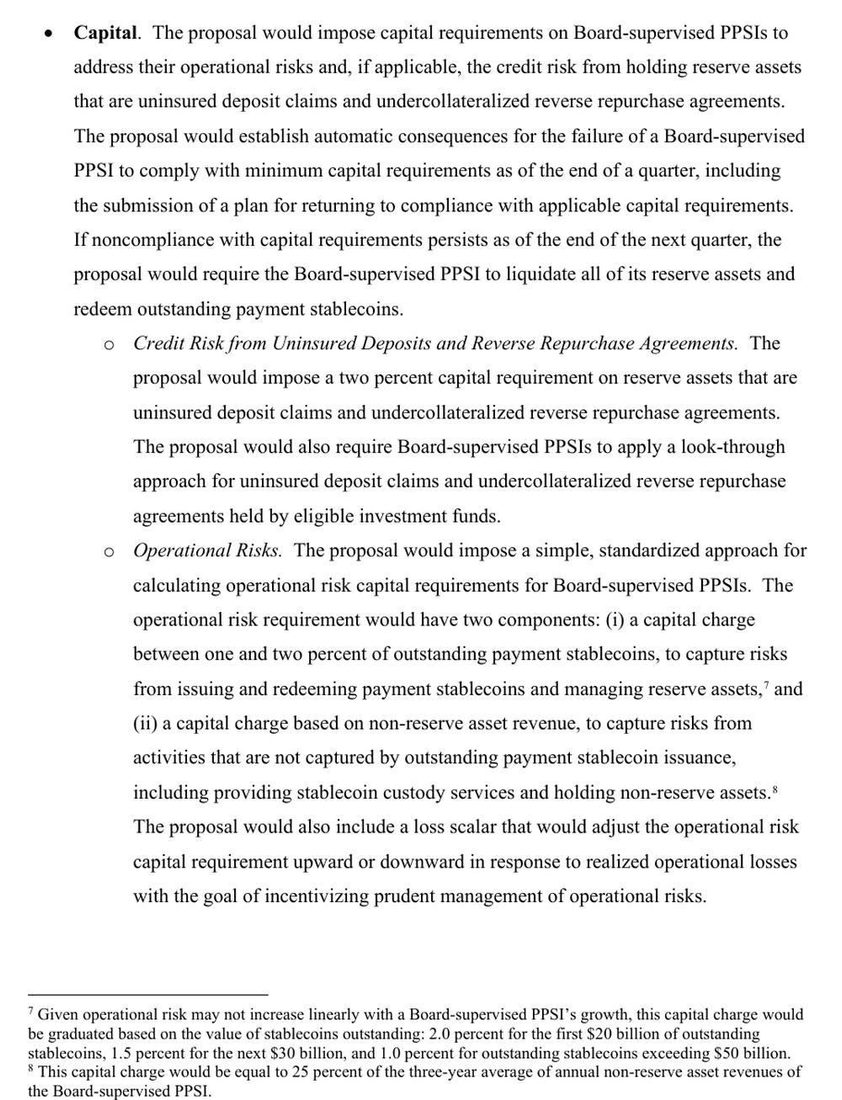
Capital gets its own formula. Credit risk on uninsured deposits and undercollateralized repo carries a 2 percent charge. Operational risk gets charged on coins outstanding too, and the rate slides as an issuer grows. Think 2 percent on the first $20 billion. Past $50 billion, it falls to 1 percent, with 1.5 percent covering the stretch between.
Source: Federal Reserve Board staff memo on the GENIUS Act proposal, page 5
Miss the minimum, and things move fast. Fall short at quarter end, and the issuer files a plan to get back in line. Miss again next quarter and everything gets liquidated, reserves and all, with every coin redeemed.
Interest is off the table. The GENIUS Act bars issuers from paying yield just for holding a stablecoin, and the proposal presumes certain third-party arrangements count as prohibited yield.
The second proposal deals with paperwork. Insured state member banks that want a stablecoin subsidiary would submit a business plan, financial information, capital structure documents, biographical reports, and certifications. Denials would get an appeals and hearing process.
Custodians pick up rules too. Firms that safekeep reserve assets, and the private keys used to issue coins, would face minimum standards. A separate anti-tying rule would stop any issuer from forcing customers to buy an extra product.
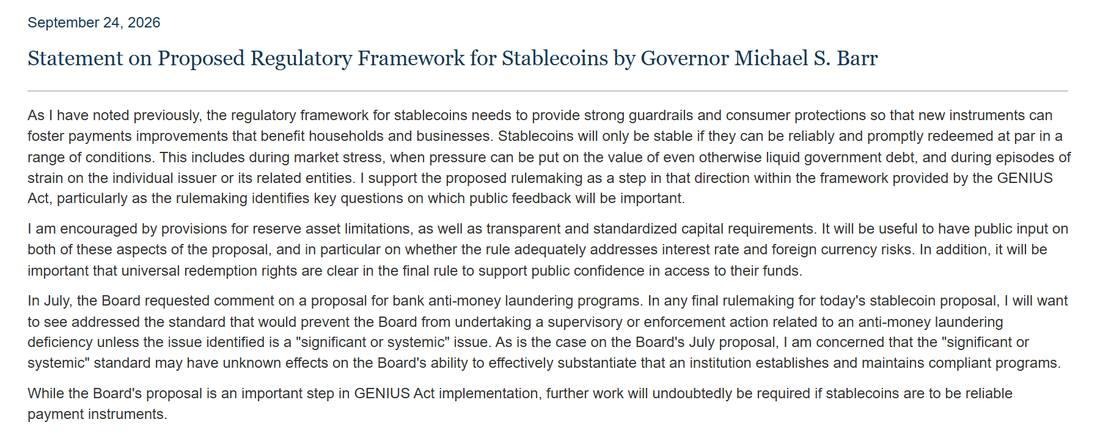
Governor Michael Barr backed the package in a written statement. He asked for clear redemption rights for everyone and wants public feedback on interest rate and foreign currency risk in the reserves.
Source: Statement by Governor Michael S. Barr, Federal Reserve Board
His objection sits elsewhere. Under the proposal, the Board could act against an issuer over an anti-money laundering failure only if the problem is significant or systemic. Barr worries that bar may weaken the Board’s ability to prove programs are compliant. Elsewhere in Washington, SEC Commissioner Hester Peirce has been pitching zero-knowledge proofs as a lighter way to run KYC checks.
Nothing bites yet, to be fair. Final rules could speed things up, but the latest the GENIUS Act starts is January 18, 2027. The OCC, FDIC, and NCUA already published their own proposals.
Related News
Explore more