
French Crypto Worker’s Family Kidnapped at Home as 4 Suspects Flee

Latest in Crypto Scams
French Crypto Worker’s Family Kidnapped at Home as 4 Suspects Flee
Visa Tightens Memecoin Payment Rules After The Block’s Crossmint Investigation
SlowMist Warns FomoPeek iOS Exploit Could Steal Crypto Private Keys
North Korean Hackers Infect 30,000 Devices, Target 7,000 Crypto Wallets
300 GPUs Seized as Mexican Authorities Probe Cartel Crypto Mining

Bitcoin was created to remove trust from finance. Instead, crypto became one of the internet’s greatest experiments in greed, belief, anonymity, and chaos.
A man dies and takes access to $190 million with him, while another accidentally throws away a hard drive now worth hundreds of millions. Meanwhile, a joke featuring a Shiba Inu dog becomes more valuable than major corporations, and an exchange founder sleeps on a beanbag chair while secretly moving billions in customer funds.
Somewhere in the middle of all this, people genuinely believed they were building a better financial system, which, even though true, has come with additional baggage.
That’s the strange thing about crypto history. The technology was revolutionary, and the culture was completely unprepared for what came next. Because crypto didn’t just create a new asset class.
It created a new kind of internet society where anonymous founders like Satoshi became cult figures, memes became markets, Discord servers moved billions of dollars worth of assets, and financial panics unfolded live on Twitter.
At first, it looked like a movement. Then it became a casino, then a religion and later something even stranger.
This article explores the moments when crypto drifted furthest from its original vision, including the collapses, cults, crypto scams, myths, and internet spectacles that reshaped the industry over time across different eras.

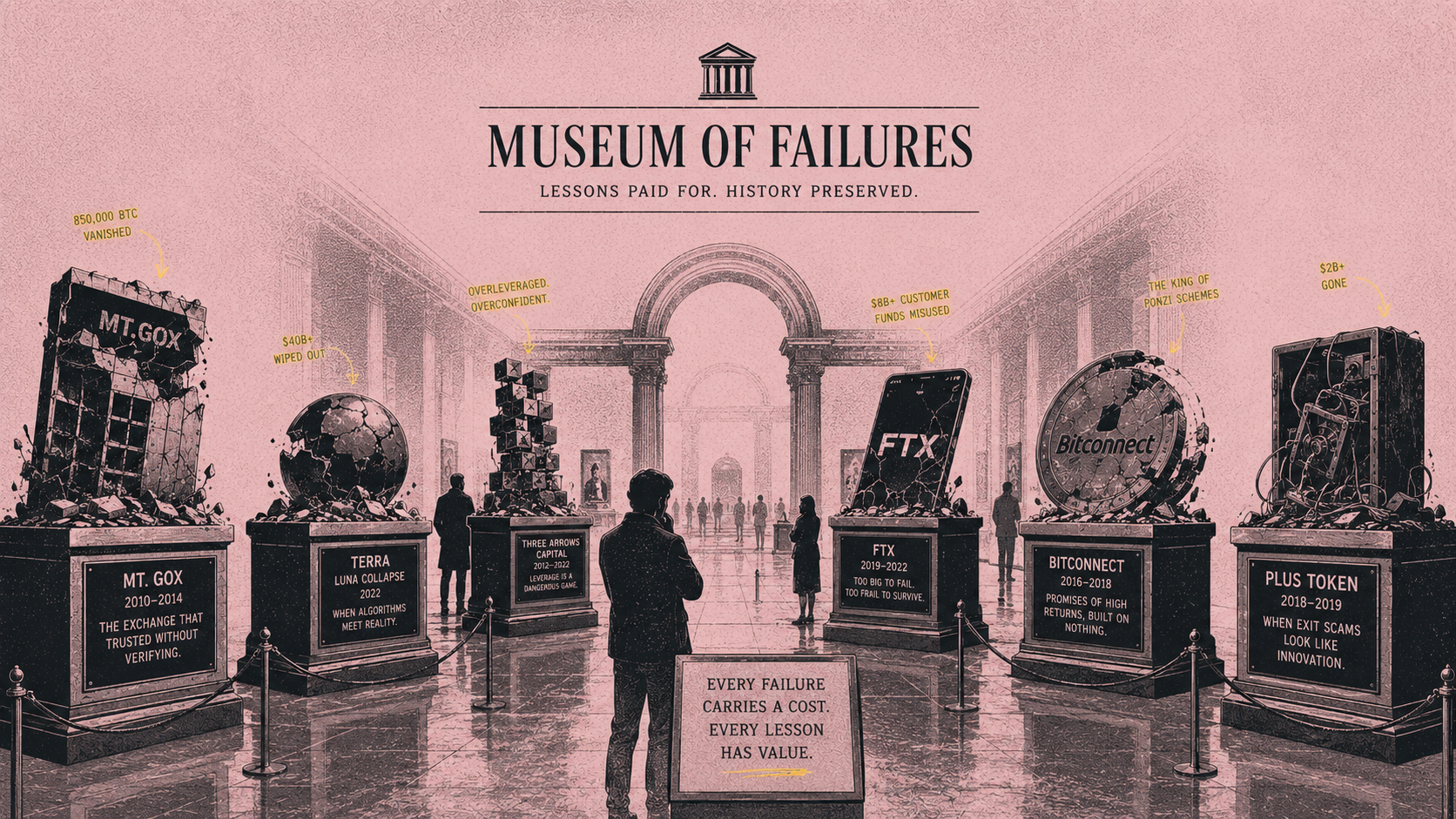
There are a few important things that need to be understood before getting into the timeline. There is a certain degree of innovativeness required to pull off these famous, or rather infamous, crypto scams, that’s why most of these scams and collapses are never all the same. Related: Who is chen zhi inside the 75b crypto scam empire. Each time, different forms of speculation and manipulation contribute to the collapse of platforms and broader financial chaos across the crypto ecosystem.
However, most of these scams have a few failures in common, mostly caused by weak infrastructure, blind faith in a project and its founders or person(s) involved, internet-driven speculation, and new forms of digital crime.
Understanding these issues and finding ways to recognize the patterns and overcome them is important to safeguard the interests of the users and the industry as a whole. A few recurring issues plaguing the sector are:

The entire crypto movement kicked off with the creation of Bitcoin, which was designed to be a trustless financial system. However, during the course of evolution, the industry continues to repeatedly recreate centralized points of failure. A few glaring reminders of this trust failure involve some of the well-known industry names, like:
These failures eventually defined an entire era of crypto exchange collapses. The collapses that revealed one of crypto’s deepest contradictions — Decentralized assets still depended heavily on centralized human systems, which makes the whole argument of creating a trustless ecosystem a moot point.
Crypto created a new type of internet celebrity culture. It made popular anonymous founders, charismatic visionaries and messianic personalities. Some of them inspired innovation, others built belief systems that collapsed under their own myth.
From Do Kwon to Sam Bankman-Fried, the crypto world has repeatedly learned how dangerous founder worship could become. Over time, scandals surrounding founders have evolved into one of the industry’s most destructive recurring patterns.
Every major crypto cycle eventually evolved into a speculation machine. Be it ICOs in one season, NFTs in another and the memecoins cycle that soon followed. Communities rushed into assets driven less by utility and more by momentum, identity, and the fear of missing out (FOMO).
Such an environment has encouraged the creation of entire ecosystems around referral loops, celebrity promotions, speculative manipulations and crypto rug pulls. In many cases, when the claims and market movements were too good to be true, people realized the risks, and yet, fell victims as they believed that they could exit before everyone else, with handsome gains.
Cryptocurrency, with the introduction of Bitcoin led to the development of a new class of financial instrument. The segment evolved with the help of an entirely new financial infrastructure supported by smart contracts, cross-chain bridges, algorithmic systems and more. With each layer, new vulnerabilites were introduced to the ecosystem.
Cross-chain bridges, yield systems, and algorithmic stablecoins have repeatedly exposed how fragile the decentralized financial infrastructure could become during major DeFi collapses. Failures, either arising due to weak code, security flaws or bad governance, can potentially bring down projects in no time, with the aftereffects felt across the entire sector.
As the industry expanded, crypto stopped trading primarily based on fundamentals and started trading on attention. As a result, memes became assets, and virality became liquidity. Utility and potential real-world applications were thrown out of the window.
As memecoins and online speculation increasingly behave like financial infrastructure, powered entirely by internet attention, communities have become market-moving forces, and the internet itself has evolved into a financial system.
Crypto evolved within anonymous online communities marked by speculation, anonymity, and internet lore. Naturally, it fuelled conspiracy theories, mysterious wallets, legendary traders, lost fortunes and endless speculation around identity.
Over time, crypto stopped feeling like part of the financial industry and ventured into the territory of digital folklore. It developed its own mythology layer filled with anonymous founders, lost fortunes, dormant wallets, and crypto mysteries, which easily offered the obscurity needed to pull off scams.
As billions moved on-chain, crypto became one of the internet’s largest hunting grounds for cybercrime. It became the hub for dark web marketplaces, nation-state hackers, ransomware groups and sophisticated laundering networks, who transformed the crypto ecosystem into a global underground industry.
Crypto created entirely new forms of online crime, including phishing operations, impersonation scams, coordinated fraud networks, and social-engineering attacks targeting retail investors.
As a reaction, it also led to the development of new forms of digital investigations to combat rising digital crimes. These recurring patterns became the foundation of crypto’s dark evolution.
And each era intensified them in different ways.
Those were the early days of crypto, when it stopped looking like a niche cryptography experiment and began attracting people beyond the original cypherpunk movement. What began as an ideological project slowly became a financial opportunity, and that shift permanently changed the culture.
Before the Lamborghinis, celebrity endorsements, and meme coin frenzies, crypto existed in a much smaller world.
In 2009, most people had never heard of cryptocurrency, and Bitcoin was not considered an investment, but rather an in-game currency. It was usually dismissed as an internet curiosity with no practical future. The earliest Bitcoin communities comprised of people who were programmers, privacy advocates, libertarians, and open-source developers who believed that the internet needed an independent form of money.
And the timing mattered.
Satoshi Nakamoto released Bitcoin shortly after the global financial crisis, when trust in banks and governments had already been badly damaged. Embedded inside Bitcoin’s genesis block was the now-famous newspaper headline from The Times newspaper on January 3, 2009:
“Chancellor on brink of second bailout for banks.”
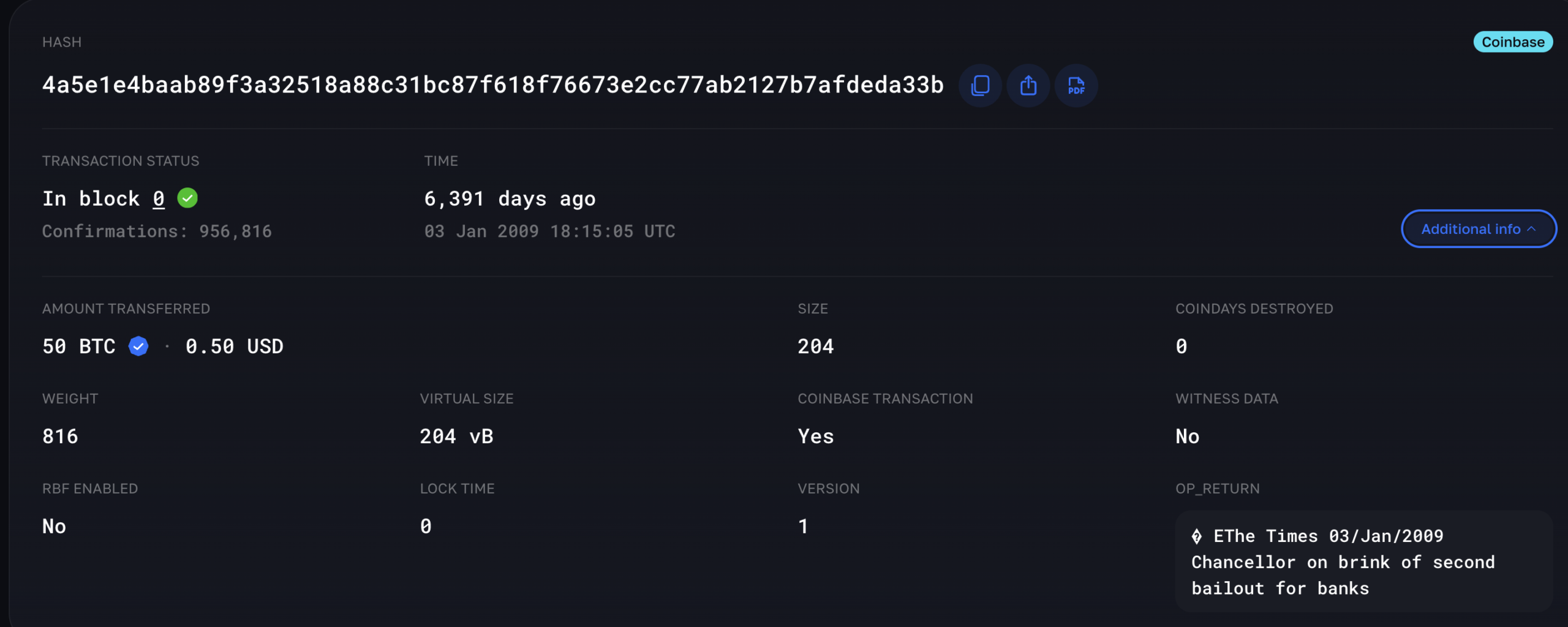
That message became foundational to crypto culture because it framed Bitcoin as more than software. Early supporters saw it as a response to centralized financial power and uncontrolled monetary expansion. At the time, the ecosystem was tiny and deeply experimental. There were no institutional investors, no exchange-traded funds, and no global crypto conferences filling stadiums. People mined Bitcoin on laptops because they found the technology intellectually fascinating, not because they expected it to create billion-dollar fortunes.
The atmosphere inside early Bitcoin forums reflected that mentality. Conversations focused on cryptography, privacy, monetary theory, and the future of digital ownership. The community often behaved more like an underground internet movement than a financial industry.
For a while, crypto still felt theoretical until it collided with the real world. Then many of the biggest crypto scams in history emerged as money flooded into poorly regulated digital markets.
Ross Ulbricht’s Silk Road marketplace became one of Bitcoin’s first major real-world use cases. Many early Bitcoin users reportedly learned how cryptocurrency actually functioned through Silk Road transactions, a pattern documented repeatedly in early Wired reporting and later U.S. Department of Justice investigations, which unintentionally turned the platform into one of the first large-scale stress tests for decentralized digital payments. The platform allowed anonymous online transactions for illegal goods and services using cryptocurrency, which quickly drew global media attention and government scrutiny.
Why did it matter?
The Silk Road introduced Bitcoin to mainstream audiences and triggered some of the earliest large-scale regulatory and law-enforcement responses to crypto.
In 2011, Silk Road emerged as one of the first major marketplaces built around Bitcoin payments. The platform operated on the dark web and allowed users to buy drugs, fake documents, and other illegal goods using cryptocurrency.
Its founder, Ross Ulbricht, described the site as a libertarian experiment built around voluntary exchange and resistance to government. Authorities saw something very different. They saw it as a borderless criminal marketplace powered by uncensorable digital money.
Silk Road transformed Bitcoin’s public image almost overnight. For many outsiders, cryptocurrency became associated with crime before it became associated with innovation. Governments began paying closer attention, media coverage intensified, and regulators started realizing that decentralized payment systems could operate beyond traditional banking controls.
But Silk Road also demonstrated something historically important — Bitcoin worked, not as a theoretical whitepaper concept, but as functioning infrastructure capable of moving value globally without banks or payment processors.
Mt. Gox was one of the earliest crypto exchanges to gain significant traction. It also became the first casualty of trust failure, offering one of the most important lessons in crypto history.
Launched in 2010, Mt. Gox had become the center of the Bitcoin economy by 2013. For many users, Mt. Gox effectively was crypto itself because the platform reportedly handled around 70% of all Bitcoin trading volume globally at its peak. That dominance made its eventual collapse feel catastrophic rather than isolated.
The first great trust failure resulted in a loss of over 850,000 BTC in 2014. Mt. Gox halted withdrawals and eventually filed for bankruptcy after years of operational failures and weak security practices. Related: Coinmarketcap removes malicious wallet popup after security breach.
Why did it matter?
The collapse permanently changed how crypto users viewed custodial risk and popularized the phrase “Not your keys, not your coins.”
The strange part is that Mt. Gox did not even begin as a crypto company. The name originally stood for “Magic: The Gathering Online Exchange,” a trading card platform that later pivoted into Bitcoin. At the time, crypto infrastructure barely existed. Most exchanges operated more like experimental internet startups than financial institutions capable of safeguarding billions in assets.
Then withdrawals slowed as the platform was plagued by bugs, hacks and gross mismanagement. Users panicked, forums filled with rumors, eventually leading to Mt. Gox’s downfall, followed by investigations.
Key Takeaway
Crypto learnt one of its first painful lessons with the downfall of Mt. Gox. The much-heralded benefits of decentralization meant very little as long as users continued to put their trust in fragile centralized intermediaries with their assets.
When Mt Gox collapsed entirely in early 2014, the fallout extended beyond mere financial loss. It shattered the confidence in centralized custody solutions and forced Bitcoin users to confront a difficult reality. It showed that centralized exchanges can go bust overnight, taking away the crypto with them. It was not an isolated incident, either, as many exchanges collapsed in the years that followed due to similar trust failures.
However, it is worth noting that it wasn’t Bitcoin itself that had failed, but humans.

As Bitcoin became increasingly associated with Silk Road and other dark web markets, governments began paying serious attention. Law enforcement agencies suddenly faced something unfamiliar — a borderless financial system that operated outside traditional banking controls.
The FBI shut down Silk Road in 2013 after investigators traced operational mistakes connected to Ross Ulbricht (U.S. Department of Justice).
Ross Ulbricht was arrested, and politicians started describing Bitcoin as a tool for criminals and money laundering, while agencies like the U.S. Department of Justice and FBI increasingly treated crypto investigations as a national security issue. Around the same time, China began restricting crypto activity, while banks around the world began closing accounts linked to exchanges.
For the first time, crypto communities developed a siege mentality. Many early Bitcoin users genuinely believed governments would eventually try to destroy the industry entirely. The fear became deeply embedded in the crypto culture, and these crackdowns further strengthened the movement. Every attempt to restrict Bitcoin reinforced the idea that decentralized money threatened existing systems.
QuadrigaCX became one of crypto’s strangest scandals because the story sounded almost too bizarre to believe. An exchange founder reportedly died overseas while allegedly controlling access to customer funds, triggering years of conspiracy theories and investigations.
The incident revolves around Gerald Cotten, the founder and CEO of one of Canada’s largest crypto exchanges, QuadringaCX. In 2018, the exchange collapsed after $190 million worth of crypto assets were allegedly rendered inaccessible after Cotten presumably died on his trip to India. It was claimed that he took the private keys to the cold wallet holding the exchange’s funds to the grave.
With access to the wallet tied to customer holdings lost, and the custodian conveniently dead, users of the platform lost their money.
Why did it matter?
The incident exposed how centralized and poorly managed some crypto businesses had become despite the industry’s decentralization rhetoric.
QuadrigaCX was once Canada’s largest crypto exchange. Its collapse created a wave of online speculation because many details surrounding the company’s operations appeared deeply irregular. Investigators later uncovered chaotic accounting systems, missing records, and suspicious fund transfers.
People analyzed death certificates, blockchain transactions, and grave photos like internet detectives. The story reflected something crypto was increasingly becoming:
A financial system where paranoia, anonymity, and online investigation often blend together.
Crypto stopped behaving primarily like a technological movement and started functioning like a speculative gold rush. Capital entered the ecosystem faster than regulation, infrastructure, or skepticism could adapt.
The turning point was Ethereum. By making token creation dramatically easier, Ethereum not only made blockchain-based decentralized applications possible, but also allowed startups to raise money directly from global internet communities. What followed was the ICO boom, one of the most chaotic fundraising periods in modern financial history.
Projects raised millions through whitepapers alone. During the ICO boom, startups collectively raised billions of dollars with minimal regulatory oversight and, in many cases, with little more than token promises and marketing. Some had prototypes or legitimate technical ambitions, but many operated almost entirely on branding, hype, and speculative momentum.
The environment became increasingly irrational. Retail investors rushed into token sales with minimal due diligence. Telegram groups coordinated pumps around obscure assets. Teenagers gave investment advice on YouTube channels reaching millions of viewers. Startups added the word “blockchain” to presentations and watched valuations explode.
For many participants, crypto no longer represented a philosophical movement about decentralized finance or internet freedom. It represented both a financial and a social escape, with the possibility of turning a small investment into life-changing wealth.
That emotional shift fundamentally changed crypto culture.

If something is too good to be true, it usually is. A phrase well-known in investment circles was found to hold true for crypto as well, all thanks to BitConnect. It was 2018, an era of cult finance and a Bitcoin price hovering near the season’s all-time high, when BitConnect collapsed.
During BitConnect’s short-lived tenure between 2016 and 2018, Bitcoin had witnessed a phenomenal rise in value, and a lot of people who missed riding the BTC wave were looking for the next best crypto that could potentially recreate the magic. At that time, BitConnect promoted unrealistic returns through a heavily marketed lending system that was driven by referral incentives and influencer promotion. It caused a lot of new and seasoned investors to fall into the trap.
Why did it matter?
The collapse became one of crypto’s clearest examples of cult psychology merging with speculative finance, eventually drawing enforcement actions and investigations from regulators, including the U.S. Securities and Exchange Commission.
The platform promised unusually high returns through a mysterious automated trading system that few people genuinely understood. Critics repeatedly questioned how the business model worked, but early investors appeared to be making money, which was enough to attract enormous attention.
The project expanded aggressively through referral incentives and influencer marketing. Supporters defended the platform with near-religious intensity, while skeptics were often dismissed as people who simply “didn’t understand crypto.” Its conferences eventually became internet memes, especially after one promoter screamed “BITCONNEEEEEECT!” on stage in a clip that spread across social media.
But the humor surrounding Bitconnect often distracted from the scale of the financial damage once the system collapsed. Thousands of retail investors lost money, and crypto learned another painful lesson.
The community learned that speculative belief systems can scale extraordinarily fast on the internet. It is also an example of how charisma, community identity and internet tribalism could overpower skepticism, allowing unscrupulous founders to scam the users.
This period also transformed crypto media itself. Twitter personalities became market-moving figures. Anonymous influencers built enormous followings, YouTubers promoted low-quality projects to retail audiences, and engagement increasingly became more valuable than accuracy.
Narratives moved markets faster than fundamentals. Some influencers genuinely believed in the projects they supported. Others treated followers as exit liquidity. In many cases, the line between promotion, entertainment, and manipulation became difficult to separate.
Traditional financial markets had always relied on media narratives to some extent, but crypto intensified the relationship dramatically because the entire ecosystem lived online. Communities coordinated in public, with speculations happening in real time and social platforms becoming inseparable from market infrastructure.
By the end of the ICO era, crypto had changed permanently. The ecosystem was no longer driven mainly by ideology or technological experimentation but by engaging narrative, speculation, user attention and momentum.
Innovative applications of blockchain technology, enabled by various protocols, led to the creation of something even more ambitious in this era. The crypto ecosystem attempted ot replicate the entire financial system on-chain, and the whole movement was labeled Decentralized Finance, DeFi in short.
The pitch sounded revolutionary. It envisioned open financial systems running on smart contracts without banks or traditional intermediaries. In theory, anyone with an internet connection could lend, borrow, trade, earn yield, or create synthetic assets directly on-chain without relying on traditional financial intermediaries.
It worked well to some extent, and for a while, it looked unstoppable. People earned absurd returns through yield farming, with some DeFi protocols advertising annual percentage yields reaching hundreds or even thousands of percent during peak speculation.
As a result, protocols exploded from zero to billions of dollars in TVL almost overnight. Crypto influencers started talking about “banking the unbanked.”
Then leverage infected everything.
Again.
Ethereum’s first major governance crisis arrived long before DeFi reached mainstream attention.
The emergence of smart contracts enabled a certain level of automation in decentralized applications. It theoretically made democratized governance possible by allowing participants to submit proposals and vote on them. Decentralized Autonomous Organization (DAO) was a step in that direction, introduced by Ethereum.
An attempt to replace institutions with code ended up in a $60 million ETH exploit. A vulnerability in the DAO smart contract allowed the hacker to drain a large amount of funds from the protocol.
Why did it matter?
The exploit triggered Ethereum’s controversial hard fork and permanently split the network into Ethereum and Ethereum Classic.
The crisis forced developers and investors to confront a difficult philosophical question, one still debated in Ethereum governance discussions and historical Ethereum Foundation archives.
If blockchains are supposed to be immutable, should catastrophic mistakes ever be reversed?
One side believed intervention was necessary to protect users. The other believed changing the chain violated crypto’s core principles.
The debate permanently shaped Ethereum governance and revealed that decentralized systems still depended heavily on human coordination.

Terra represented one of the most ambitious monetary experiments in crypto history. The algorithmic stablecoin created by the protocol appeared groundbreaking, at least on paper.
Supporters of the project believed that algorithmic stablecoins could eventually replace traditional reserve-backed systems entirely, and Terra could be the project that would make it all happen.
Terra’s stablecoin, UST, promised something incredibly ambitious – – a decentralized digital dollar without traditional reserves. The mechanism depended on a balancing relationship between UST and LUNA.
As long as confidence remained high, the system functioned. With the first few signs of trouble, confidence disappeared, leading to a dramatic collapse that unfolded live online. The result: UST lost its peg, the community panicked, and confidence evaporated completely, causing LUNA to hyperinflate into near-worthlessness.
Quick Facts
Around $40 billion in market value disappeared within days as both UST and LUNA collapsed simultaneously. The social fallout was immediate and highly public. Reddit threads, Twitter posts, and blockchain data trackers filled with screenshots showing life savings erased within days, while crisis hotlines circulated across crypto Twitter and Reddit communities. For many observers, Terra was the first time a crypto collapse felt socially devastating rather than merely speculative.
The damage spread outward. Three Arrows Capital, once one of crypto’s largest hedge funds managing billions in assets, imploded under leverage and exposure tied to the Terra collapse. Celsius froze withdrawals, and liquidity vanished across the ecosystem.
Crypto had accidentally recreated the exact systemic fragility it once claimed to replace, only faster and less regulated. The collapse also exposed how interconnected DeFi systems, stablecoins, lending platforms, and leverage had quietly become beneath the surface during major DeFi failures.
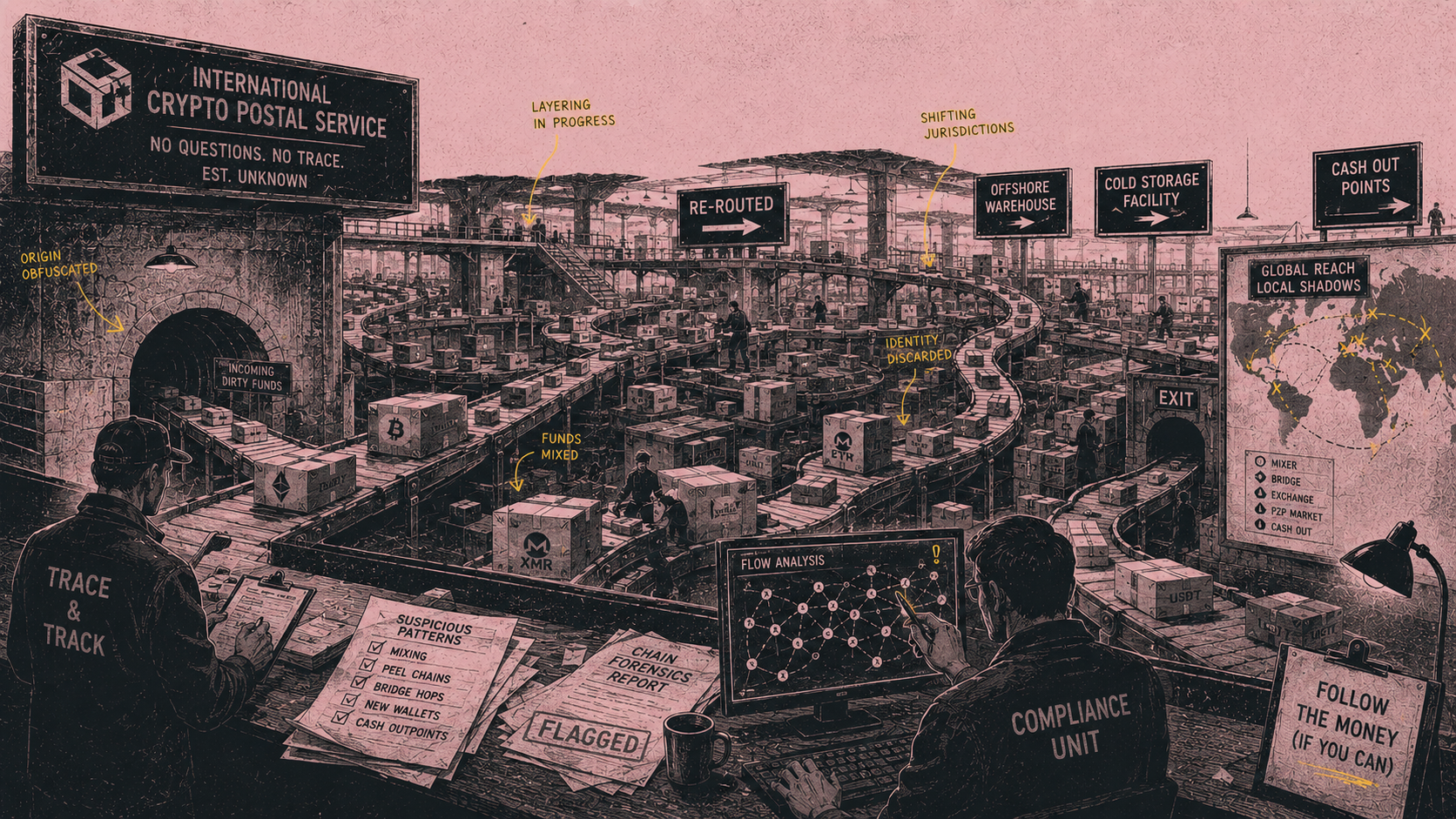
As billions of dollars flowed through blockchains, crypto became irresistible to hackers.
At first, the attacks were relatively primitive, with hackers exploiting weak passwords, poor exchange security and single points of failure. Over time, the attacks became increasingly sophisticated, and scores huge.
Crypto crime evolved from isolated hacks into professionalized cyber operations. As blockchain transactions are public, every major exploit became part financial crime, part internet spectacle.
People tracked stolen funds live. Blockchain intelligence firms like Chainalysis, TRM Labs, and Elliptic eventually built entire businesses around tracing illicit on-chain activity across global crypto networks.
Communities became amateur detectives. Entire online communities formed around tracking stolen wallets, tracing exploit movements, and investigating crypto hacks in real time. The findings, including wallet analysis, were published on Twitter and other platforms for the larger community to witness the hack as it unravels.
As billions of dollars moved into crypto markets, exchanges and protocols became increasingly attractive targets for hackers.
The Japanese crypto exchange Coincheck was hacked in 2018, thanks to its weak infrastructure. It resulted in over $530 million in NEM tokens stolen, making it one of the largest crypto thefts of its era.
Why did it matter?
The attack intensified global concerns around exchange security and digital asset custody.
Before the Coincheck hack in 2018, which gained recognition as one of the largest crypto thefts of the era, the Bitfinex hack held that distinction. Attackers exploited vulnerabilities in Bitfinex’s wallet infrastructure to steal around 120,000 BTC, worth close to $72 million at the time.
Why did it matter?
The hack became one of the most closely tracked blockchain investigations in Bitcoin history. Early crypto companies often grew faster than their security systems. Exchanges handled billions while operating with startup-level infrastructure, creating repeated opportunities for catastrophic breaches.
By late 2022, FTX had become one of the most trusted brands in the crypto space. As the third-largest crypto exchange by volume at one time, FTX had almost gained the “too big to fail” status. Further contributing to its popularity, apart from the convenience it offered was its founder, Sam Bankman-Fried’s charisma as the “poster boy” for crypto.
However, things took a turn for the worse after an article on a leading crypto news portal stated that a significant portion of FTX’s FTT token was held by Alameda Research, a company associated with FTX. Users rushed to withdraw their funds, revealing the seriousness of the issue.
The collapse of FTX was not just about a single organization, but rather a collapse of institutional trust and $8 billion in missing customer funds.
The reports and SEC complaints leading to the collapse alleged misuse of customer deposits, connected to Alameda Research trading activity.
Why did it matter?
The event triggered a global crisis of confidence around centralized crypto exchanges and intensified regulatory scrutiny worldwide. The collapse of FTX changed how the entire world viewed crypto.
The carefully constructed image of FTX revolved around informality. It included Sam Bankman-Fried, who looked very different from traditional finance executives, sleeping on a beanbag near his desk while simultaneously running one of the world’s largest crypto exchanges. The whole narrative was constructed to reinforce the public perception of a brilliant founder too focused on work to care about wealth or appearance.
SBF also pushed the idea of effective altruism in his interviews, where he spoke about earning more just to give it away to those in need. Was there even a grain of truth to it, or was it all just for show? That is something that we will never know.
His persona of someone too brilliant and mission-driven was loved by the media, politicians trusted him and celebrities partnered with the exchange.
At one point, FTX was valued at approximately $32 billion and backed by some of the largest venture capital firms in the world, including Sequoia Capital and SoftBank.
Then the illusion cracked as reports exposed the relationship between FTX and Alameda Research. At second glance, the balance sheets started looking fragile and customer funds appeared dangerously entangled. Binance, one of the significant holders of FTT announced its plan to sell the token, causing further panic among users
Ultimately, the bank run on FTX broke its back, causing it to go bankrupt.
Quick Facts
In addition to billions of dollars in customer funds going missing, an investigation into FTX revealed even murkier details. Revelations included purchase of luxury penthouses, chaotic internal operations behind FTX and Alameda Research, secret loans, communications via auto-deleting messages, executives living together and operating a financial institution in an irresponsible startup-esque fashion and more…
The damage went beyond money. It shattered crypto’s credibility for regulators, institutions and ordinary users alike. Because the scandal exposed that the industry that promised transparency had hidden massive risk behind branding and charisma.

What Changed in This Era
Crypto stopped trading mainly on:
And started trading on:
Markets became social systems, amplified by algorithm-driven feeds, influencers, livestreams, and viral internet narratives, and social systems became financialized.
Dogecoin’s rise at the beginning of this decade revealed something traditional finance struggled to understand. — Internet culture itself had become financially tradable.

Memecoins aren’t something new. They have been around since 2013, with Dogecoin (DOGE) being the primary mover. However, the year 2021 marked the beginning of the financialization of attention.
With Elon Musk drawing attention to Dogecoin in 2021 and other celebrities jumping on the bandwagon, the self-declared memecoin reached its all-time high, registering an almost 7000% YTD gain at its peak during that year.
Dogecoin’s peak market cap reached $80 billion at that time, transforming it from a meme into one of the world’s largest cryptocurrencies during the retail trading frenzy of 2021.
Why did it matter?
The rally demonstrated how online communities and social media attention could directly shape market behavior. What began as a parody evolved into one of the largest speculative movements in crypto history.
It also showcased the resilience of crypto markets. Even during the collapse cycle, the crypto culture kept mutating, especially online.
Dogecoin began as a parody of crypto speculation built around a Shiba Inu meme. Its creators never intended it to become a serious financial asset, which made its eventual rise into a multi-billion-dollar market even more surreal.
Then the internet adopted it. Elon Musk tweeted about it constantly. In several cases, individual Musk tweets triggered massive Dogecoin price spikes within minutes, a phenomenon later documented across financial media coverage and academic studies analyzing social influence on crypto markets, demonstrating how social influence alone could move billions of dollars across crypto markets almost instantly.
With Dogecoin gaining media attention, retail traders and communities coordinated online to turn the irony into a market capitalization that exceeds the valuations of several major public companies. A momentous achievement for an asset that was originally created as a joke cryptocurrency. These developments revealed that crypto no longer traded purely on utility but on attention.
The rise of meme coins and viral speculations changed how online communities interacted with financial markets. With inside jokes becoming assets and virality becoming liquidity, the internet attention itself behaves like financial infrastructure and social media platforms as trading floors.
Then things got even stranger. Platforms like Pump.fun dramatically reduced the barrier to launching new meme tokens. It kick-started a trend of speculative token creation that became increasingly automated and frictionless, accelerating speculative trading and short-lived viral asset cycles across crypto communities.
Celebrity meme coins exploded. Random internet personalities created multi-million-dollar assets overnight. Even the President of the United States couldn’t stay away from it. The line between gambling, entertainment, community and finance is completely blurred. Crypto has stopped behaving in the way markets should and acts like the internet culture itself. These developments signal significant uncertainty in the coming days.
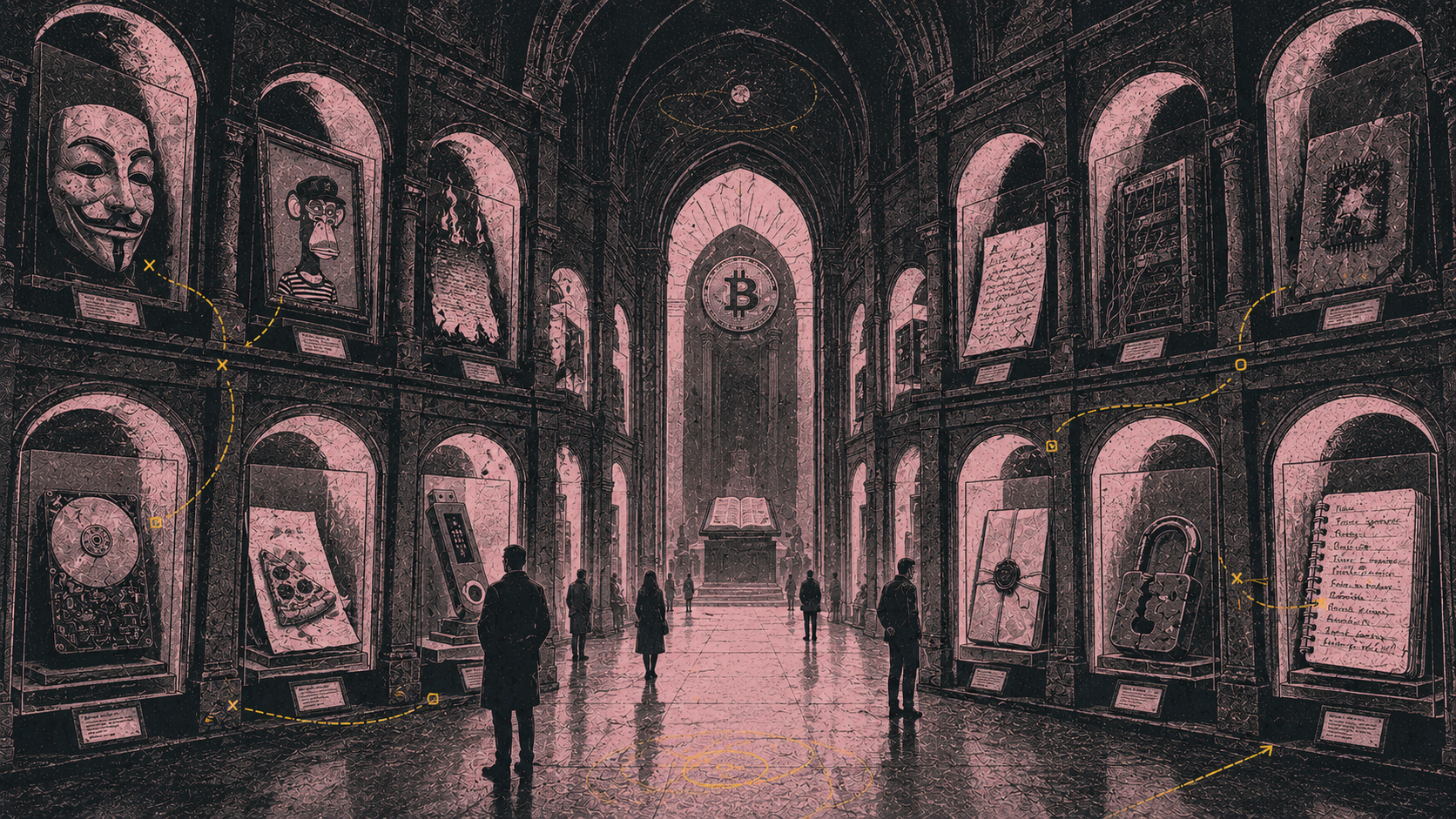
Some crypto stories feel less like finance and more like internet folklore. They may sound impossible, but they really happened.
James Howells accidentally threw away a hard drive containing thousands of Bitcoin. As Bitcoin’s value exploded over time, the story became so famous that reported recovery proposals eventually included AI-powered robots, environmental scanning systems, and investment-backed excavation plans designed to search the landfill for the missing drive.
At the time, it barely mattered, but years later, the lost Bitcoin became worth hundreds of millions. He spent years trying to convince local authorities to let him search a landfill for it.
The story sounds almost fictional: a modern treasure hunt where the missing fortune exists only as digital keys buried somewhere beneath a landfill. Yet it perfectly captured the strange economics of early Bitcoin, when assets that once seemed worthless suddenly became life-changing fortunes.
The story became symbolic of early Bitcoin itself. Nobody recognized its value until it was too late.
Then came NFTs, and the internet collectively lost its mind again.
In 2021, digital artist Beeple sold an NFT collage at Christie’s for roughly $69 million, making it one of the most expensive digital artwork sales in history. Suddenly, people who had ignored crypto for years were asking how much someone paid for a JPG instead of realizing that NFTs are really about internet-native ownership, status, identity, speculation, community membership and more, all rolled into a digital asset.
One token was launched using the popularity of Netflix’s Squid Game. It came with all the obvious warning signs, starting with no option for buyers to sell the tokens, and the website that looked suspicious to begin with. On top of everything, the project barely made sense. However, people still flocked to it and bought into it, causing the token price to surge.
Then the developers disappeared with the funds while people watched the collapse happen in real time. And the craziest part? Many buyers already knew it looked like a scam. They just believed they could exit before everyone else. It has become one of crypto’s darkest recurring patterns, the same psychology repeatedly fuelling rug pulls, Ponzi schemes, and speculative internet scams across multiple cycles.
What Changed in This Era
Crypto stopped feeling like a technology sector and started feeling like a permanent internet civilization with its own myths, tribes, language, and belief systems.
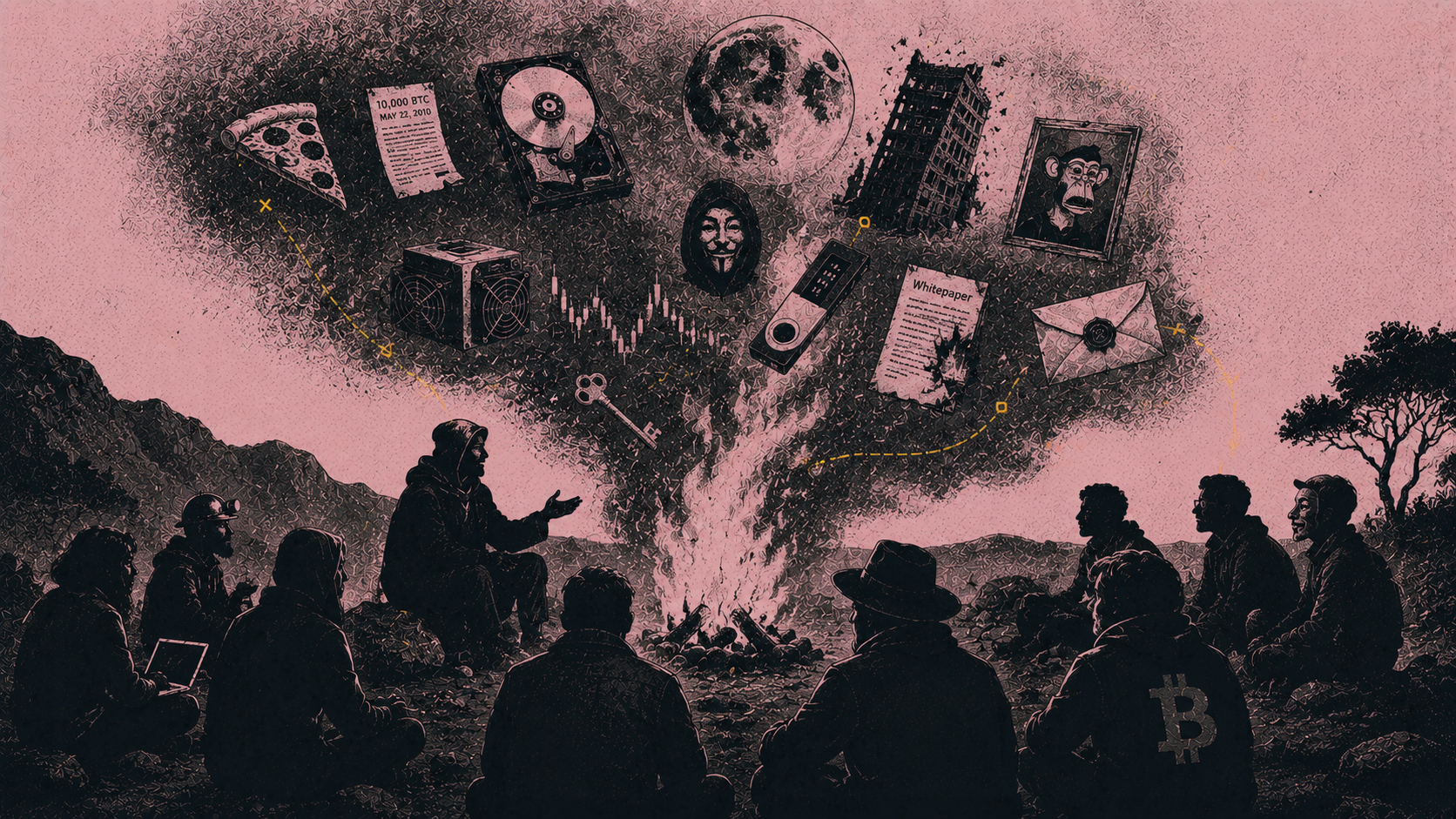
Over time, crypto developed something most financial systems never really had—Lore.
Satoshi Nakamoto’s disappearance transformed him into a myth, with people still debating his identity endlessly. Is it Hal Finney? Nick Szabo, or someone else? Then there are government interpretations and conspiracy theories, adding more drama to the mix.
While the creators of Bitcoin remain a mystery, millions in Bitcoin is permanently lost from circulation, thanks to forgotten passwords, destroyed hard drives and dormant wallets left untouched for decades. Prominent blockchain analytics firms and independent researchers estimate that a significant portion of Bitcoin’s total supply may now be permanently inaccessible due to various factors.
However, with no absolute way of knowing whether dormant wallets with large amounts are ever going to be revived, there is a fear of crypto whales always hovering over the markets. Massive anonymous wallets, a few well-known, others unknown and some even dormant, can instantly impact the heavily capitalized crypto markets by moving funds. To anticipate such events, communities continuously track blockchain activity like internet detectives, relying on wallet-monitoring tools, public blockchain explorers, and analysis by firms specializing in on-chain intelligence.
Over time, crypto mysteries have become part financial analysis, part internet folklore and part collective online investigation. And eventually, crypto communities themselves turned tribal with Bitcoin maximalists, Ethereum loyalists, Solana defenders and other communities treating ecosystems like ideological factions. Crypto is now more than just technology. It had evolved into a hybrid of market system, ideological movement, online culture, and internet-native mythology.
Even after some of the most famous crypto scams, exchange collapses, billion-dollar hacks, and repeated market crashes in internet history, crypto continues to produce new forms of controversy and speculation.
Some patterns keep returning:
New technologies change the surface of the industry. But the underlying psychology often stays the same. This section can evolve over time as new scandals, collapses, and internet-driven financial chaos emerge across the crypto ecosystem.
Short-term speculative communities built around politics, internet identity, and viral attention.
Deepfake videos, fake trading bots, phishing campaigns, and automated fraud systems.
Ongoing debates around proof-of-reserves, liquidity, and custodial risk.
Influencers, livestream trading, coordinated pump groups, and viral token speculation.
North Korean hacking groups, sanctions evasion, ransomware activity, and cross-border laundering.

This is the strange paradox underneath the entire industry. Even after exchange collapses, billion-dollar hacks, founder scandals, rug pulls, criminal investigations and repeated market crashes, crypto still survives. What makes the ecosystem so resilient?
The answer to this question is partially technological. Blockchain infrastructure genuinely introduced new possibilities with programmable money, borderless transfers, decentralized ownership and internet-native assets. And that’s not all, as there is a deep cultural component involved as well.
Crypto has become the symbol of anti-establishment sentiment, distrust in traditional finance, internet identity, speculative ambition and financial opportunity. It represents freedom to some, rebellion to others and hope to those who feel shortchanged by today’s financial system. Once those beliefs spread globally online, the industry became extremely difficult to kill.
Every collapse destroyed projects, but rarely the broader narrative. That’s because crypto evolved beyond technology to become an internet-native belief system.
Most crypto collapses weren’t due to the failure of technology, but rather humans repeating familiar patterns inside unfamiliar systems. These patterns repeat across eras, driven by greed, unchecked influence of personalities, leverage spreading through opaque systems and online tribalism suppressing skepticism until collapse becomes imminent.
Yet strangely, the crypto ecosystem has been resilient, emerging stronger from every disaster. For example, the Mt. Gox disaster created the self-custody culture, the DAO hack forced governance debates, Terra exposed algorithmic fragility, and FTX accelerated demands for proof of reserves and transparency.
Every collapse stress-tested the industry, sometimes catastrophically. But the history of crypto scams isn’t really just about coins. It’s about belief systems colliding with money at internet speed, and maybe that’s why the space still fascinates people after all the scandals.
Not because crypto removed human nature from finance, but because it exposed human nature more clearly than ever before.
The real dark evolution is the realization that once finance became global, anonymous, social, and permanently online, chaos stopped being a bug. It became part of the architecture.
Explore more