
Latest in Pi Network
161
Total stories
10
Writers
Pi Network Unveils New App-Building Tools as $PI Gains 5% in a Month
September 5, 2026
Pi Network Unveils Major Staking Upgrade for 60M Users
June 19, 2026
Pi Network Sparks Comeback Hopes With Major KYC Update
May 13, 2026
Pi Network Pushes Forward With Major Mainnet Protocol Upgrade
April 15, 2026
Pi Network (PI): KYC, Utility, Security, Price, and News
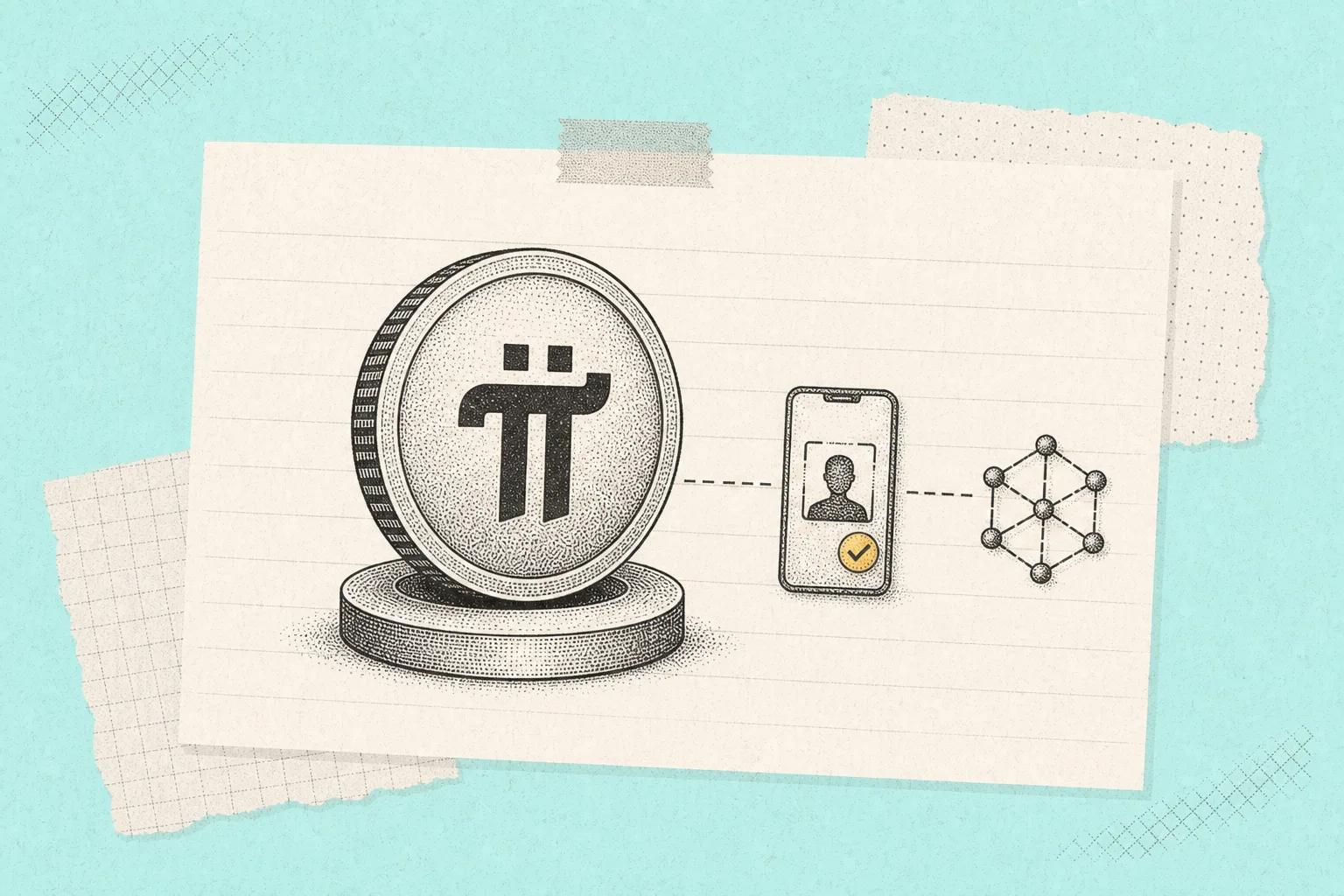
Pi Network is a mobile-first crypto project built around one core idea. You prove your identity and the network pays you for it. The blockchain’s native asset is Pi coin. From mining to migration to mainnet, it is all about identity verification.
This guide will cover what Pi Network is and what the Mainnet phase is. This is why KYC and validation are prominent in the conversation.
You will also discover the utility roadmap, which includes protocol improvements, smart contracts, and App Studio. Migration risk, exchange-listing claims, price framework, and news sense-making complete the picture.
The stakes are high because Pi has a large user base, in reality. The platform has been running since 2019, with more than 60 million users already registered.
But just a small part of this base has been verified, and coins have been moved to a live blockchain. Much of the current debate is about that difference between registered users and verified, migrated users.
There is a divide in the Pi community, the Pi Army, between believers and skeptics. It is a divide that can be seen in almost all Pi news comment sections.
The first “soft rule” is: Identity and security controls come first. Do not do that until you have heard a breakout price claim.
Pi is on a mobile mining journey, a long KYC line, and a continuous roadmap for the utility. If you read any one of the Pi headlines individually, that’s the context that you’re missing.
KYC Queues, Migration Claims, and Impersonation Scams Around Pi
Three threads dominate Pi Network discourse right now. KYC status, utility shipping claims, and scam pressure all move together.
KYC and Migration Status
Pi Network completed its first KYC validator rewards distribution on April 3, 2026. Over one million human validators processed more than 526 million validation tasks. Combined with AI processing, that work verified roughly 18 million identities worldwide.
The reward pool reached 26.568 million Pi, boosted by a 10 million Pi contribution from the Pi Foundation. The price per validation landed at 0.0504179 Pi, about 21 to 22 times the base mining rate.
Each KYC application required an average of 20 separate validations before reaching finality. That count reflects the privacy-preserving design, which splits a single application into liveness checks, document verification, and photo-matching tasks.
As of mid-2026, Pi Network claims more than 60 million registered users. Roughly 19 million have completed KYC, and more than 16 million have migrated balances to Mainnet.
AI processing has considerably sped up the queue. Pi’s 2026 KYC framework cut manual document-review workloads by roughly half and trimmed approval times to a window of three to fourteen days.
January 2026 brought Palm Print Authentication and AI-powered Fast Track onboarding. Pi also compliantly unblocked roughly 2.5 million previously restricted accounts under updated jurisdictional standards covering more than 200 countries.
Utility Path: Protocol Upgrades, Smart Contracts, and App Studio
Pi’s utility narrative depends on infrastructure milestones: protocol upgrades that prepare Mainnet nodes, smart-contract tooling on test environments, and App Studio features that help people build and support apps. Label these correctly. A protocol version bump or Testnet contract activation is not the same event as a CEX listing or a guaranteed price recovery.
Scam and Impersonation Pressure
Fake payment requests remain the single biggest threat during migration windows. Scammers scan the public blockchain for large balances, then send deceptive requests that look legitimate.
Pi Network mandated two-factor authentication for both first and second Mainnet migrations in early April 2026. The update requires a trusted email backup before any transfer completes, per Pi’s official 2FA guidance.
Writer rule for updates: replace examples when the market moves, but keep these three threads intact. That keeps the SEO structure and story shape stable across revisions.
Mobile Mining to Open Network: Pi Network’s Long Road to Utility Claims
Pi Network’s story runs in clear phases. Each phase changed what a Pi headline actually meant.
2019-2020: Mobile Mining Launches on the Enclosed Network
Stanford PhDs Dr. Nicolas Kokkalis and Dr. Chengdiao Fan launched the Pi Network app on March 14, 2019, timed to Pi Day.
The app let anyone “mine” Pi by tapping a button once every 24 hours. No specialized hardware or heavy energy draw was required, unlike Bitcoin mining.
This period ran on an enclosed, Testnet-like network. No open, tradable Mainnet existed yet, and that gap is where most of Pi’s early believer-versus-skeptic discourse took root.
Growth during this stretch came almost entirely through referrals. Pioneers invited friends and family into their mining circles, which quickly built a large but largely unverified user base.
2021-2023: KYC Rollout and Migration Waves Begin
Pi Network began mass KYC verification during this period. Waves of users cleared identity checks and queued for phased migration toward Mainnet.
KYC and validation totals became the project’s headline adoption metric here. That pattern continues today, with cumulative KYC figures still doing most of the marketing work.
Pi’s KYC design leaned on human validators rather than a single automated system. That distributed-review approach shaped the multi-year timeline and later became the basis for validator reward payouts.
2024-2025: Open Mainnet, Protocol Upgrades, and Smart-Contract Testing
Pi’s Open Mainnet launched on February 20, 2025, at 8:00 AM UTC. PI became externally transferable and tradeable for the first time.
The price spiked to roughly $2.10 on launch day, then climbed further to an all-time high near $2.99 by late February 2025. Intraday volatility also briefly pushed the price down to about $0.049 the same launch day.
Protocol upgrades followed, culminating in Protocol 20 in March 2026. That upgrade built the structural foundation smart contracts would eventually run on.
Separate that Testnet groundwork from live, ordinary-user smart contracts on Mainnet. Those are two different milestones, even when headlines blur them together.
Pi’s blockchain forked from Stellar’s consensus protocol at launch, with a longer-term plan to move toward its own proof-of-stake design. That technical lineage shaped how quickly node upgrades could roll out network-wide.
2025: App Studio, Builder Tooling, and Ecosystem Expansion
Pi App Studio launched during Pi2Day 2025 as a no-code, AI-powered platform. It reportedly enabled more than 21,000 user-created apps within the ecosystem.
Pi also launched a $100 million ecosystem fund to support startups building on the network. The fund aimed to seed real applications rather than speculative listings.
Verify how many apps stay active versus how many were simply announced. Tooling capability and live, used products are not the same claim.
Founders Kokkalis and Fan made a rare public appearance at Consensus 2026 in Miami. Their presence renewed industry discussion around Pi’s long-term roadmap, including decentralized identity and AI-related applications.
That appearance mattered because the founders rarely engage with the broader crypto industry press. Their visibility signaled a deliberate push to court credibility with institutional and developer partners beyond Pi’s own community channels.
2025-2026: Security Incidents and Payment-Feature Pauses
In late December 2025, Pi Network paused its wallet payment-request feature after a large-scale theft. Reports put the losses at more than 4.4 million Pi tokens, stolen through social engineering rather than a protocol breach.
One suspect wallet reportedly received 700,000 to 800,000 Pi per month since July 2025. That pattern pointed to an organized, sustained scam operation.
Pi Network confirmed no core protocol failure occurred. Scammers instead tricked users into authorizing transfers themselves, which the chain then processed exactly as instructed.
What Pi Network Is
Pi Network is a mobile-first cryptocurrency project built around identity verification and phone-based mining. Pi coin is its native asset.
Two different “Mainnet” terms confuse most newcomers. The enclosed Mainnet ran as an internal, non-tradable environment, while the Open Mainnet, live since February 2025, allows real transfers and exchange trading.
That distinction determines what a given headline actually means. A milestone tied to the enclosed period carries far less market weight than an Open Mainnet event.
KYC dominates every Pi discussion because it gates participation directly. Only verified users can migrate their mined balances and transact on Mainnet.
Pi Network Inc. traces back to Social Chain Inc., founded by Stanford PhDs Kokkalis and Fan. Their academic backgrounds are in distributed systems and computational anthropology.
Pi’s mining model differs from Bitcoin’s or Ethereum’s in a fundamental way. Users don’t solve computational puzzles; they verify identity and build trust connections instead, closer to proof-of-participation than proof-of-work.
That design choice explains both Pi’s rapid growth and its skeptic problem. A referral-driven, tap-to-earn app resembles multi-level marketing structures on the surface, even though no upfront payment is required to join.
Independently verifiable facts support Pi’s legitimacy claims. The founders carry public, checkable Stanford credentials, and the project has shipped a functioning, tradable blockchain since February 2025.
Listings, Compliance Claims, and Exchange Prep
Search interest around Pi listings splits into two very different things. A market-data tracking widget is not the same as a confirmed spot trading pair.
PI already trades on OKX, Gate.io, MEXC, Bitget, and Kraken, across 17 exchanges and 26 markets. Binance and Coinbase have not listed the token as of August 2026.
A Binance community vote in February 2025 drew roughly 226,000 votes, with 86.8% in favor of listing. No listing followed that vote.
Exchanges cite concrete reasons for staying out. Pi reportedly requires a Know Your Business process from partner exchanges, alongside limited public tokenomics disclosure and unresolved questions about token concentration.
Upcoming token unlocks add further caution. Roughly 775 million PI remains scheduled to unlock, and large exchanges weigh that supply overhang before committing shelf space.
A September 2025 partnership with Sign Protocol, a Binance-backed digital identity platform, briefly lifted listing speculation. No official Binance listing date has followed.
Treat any “coming soon” listing claim as a rumor until a named exchange confirms it directly. Compliance and regulatory statements need venue-level verification, not community screenshots.
Not every rejection reads the same way. Bybit’s CEO publicly labeled the project a scam in early 2025, citing warnings from Chinese authorities, a far harsher stance than most exchanges have taken.
Other platforms simply cite unresolved compliance questions rather than legitimacy concerns. That distinction matters when you’re weighing how much any single exchange’s absence should worry you.
Pi Price Claims Versus Migration and Listing Reality
Pi coin price behaves as a function of several forces at once. Exchange access, circulating-supply unlocks, migration progress, and broader altcoin sentiment all pull in different directions.
According to CoinGecko, PI hit an all-time high near $2.99 on February 26, 2025. By August 2026, the token traded in the roughly $0.085 to $0.093 range, a decline of more than 96% from that peak.
Market cap ranged from $950 million to $1.03 billion in early August 2026, according to CoinMarketCap. Fully diluted valuation, using the full 100 billion max supply, ran closer to $1.5 billion.
Supply overhang explains much of that gap. Roughly 11 billion PI circulated out of a 100 billion max supply by mid-2026, meaning about 90% of eventual supply had not yet entered the market.
Of that 100 billion cap, 65 billion is reserved for community mining rewards. The Core Team holds 20 billion, with the remaining 15 billion split across ecosystem and other allocations.
Price moved on real catalysts too. PI jumped nearly 10% in early August 2026 as the Protocol v26 upgrade deadline approached, alongside excitement over a rumored RoboPay partnership.
Single-indicator “target” posts remain entertainment, not forecasts. A price framework built on supply schedule, listing status, and utility progress beats any one dated call, and no target is guaranteed.
Supply continues to enter the market each month, which caps upside even during rallies. Roughly 127.5 million PI tokens were scheduled to unlock in August 2026 alone, adding fresh sell pressure near the Protocol v26 deadline.
Historical context helps frame the swings. PI settled around $1.01 by the end of its February 2025 launch day, then climbed to its $2.99 peak days later before a sustained, multi-month decline set in.
That decline reflects a structural mismatch, not just sentiment. A small share of the eventual 100 billion max supply was liquid at launch, so each new unlock wave tested demand that tier-1 exchange access still hasn’t fully unlocked.
Daily trading volume gives a useful health check alongside price. Pi’s trading volume has ranged from roughly $9 million to more than $100 million per day, depending on the news cycle and listing activity that week.
KYC, Utility Claims, and Scam Alerts in Pi Headlines
Most Pi news sorts cleanly into four buckets. Learning to sort fast saves you from chasing noise.
KYC and utility headlines cover validation totals, protocol upgrades, and App Studio milestones. These describe onboarding scale and infrastructure progress, not price direction.
Security headlines cover theft reports, phishing patterns, and payment-feature pauses. Treat these as incident responses, not as proof that the network has failed.
Listing-rumor headlines cover exchange speculation, community votes, and partnership announcements. Confirm any listing claim against the exchange’s own announcement before repeating it.
Price-noise headlines cover single-day moves and short-term targets. These age fast and rarely hold up a week later.
Discard clearly promotional posts dressed up as news. For day-to-day coverage, check LiveBitcoinNews’ live, dated Pi Network posts, which update as each thread develops.
A useful test before sharing any Pi headline: does it cite an official Pi Network channel, a named exchange, or a verifiable on-chain figure? If not, treat it as unverified community chatter.
This evergreen framework should age well regardless of which specific event triggers the next news cycle. The four buckets stay the same even as the details inside them change weekly.
KYC and Validation Are Central to Pi’s Growth Story
Pi Network markets identity throughput as a core metric: large KYC/validation counts and verified-user totals describe how many people cleared onboarding gates. That is useful for understanding the project’s mobile-first, identity-heavy design. It is not, by itself, a price model. When Pi headlines mix KYC milestones with “breakout” language, separate verification scale from tradable-market outcomes
Reading a Pi KYC Milestone Headline Correctly
A validation-count or KYC-total milestone confirms onboarding scale. No matter how the headline is worded, it does not indicate the direction of a price or when a listing will occur.
Even KYC scale can be considered a real adoption signal that can be reported. Just don’t read it as a forecast dressed up as an update.
Look at KYC totals in comparison to previous years, not just previous months. When the number of new users rises steadily month after month, it’s a positive indicator of a healthy onboarding process, but a sharp increase in new members coinciding with a reward announcement could simply be a one-time effort.
Utility Path: Protocol Upgrades, Smart Contracts, and App Studio
Three infrastructure tracks enable the utility narrative for Pi. Protocol upgrades are made for Mainnet nodes, smart-contract tooling advances on test networks, and App Studio features assist individuals in building and managing apps.
When writing and reading about these, label them correctly. A protocol version bump or Testnet contract activation is not a CEX listing or guaranteed price recovery.
Protocol Upgrades and the Smart-Contract Rollout
Protocol 20 brought together Pi’s Mainnet nodes on version 20.2 and set up the structure for contracts. In May 2026, Protocol 23 built on top of that foundation by creating a live, programmable layer-1 blockchain.
The milestone of activating smart contracts on Testnet is meant for developers. A real ecosystem of users trading with deployed contracts is a much later and independent phase.
App Studio and the Builder Ecosystem
App Studio enables developers (and now non-technical creators) to integrate existing apps with Pi’s payment system and verified user base. The May 2026 update introduced “vibe-coded” apps, which are those created with AI.
Do not consider this a developer tutorial. The tooling is important because it reduces distribution and identity friction, but that doesn’t mean any particular app will be successful.
Migration and Payment Scams Are a First-Class Pi Risk
Pi users face social engineering risks during migrations and wallet operations. Fake 2FA links and authorization tricks can drain balances even when the chain itself is described as intact, and payment features may be paused after large thefts. Durable advice: complete security steps only inside official Pi surfaces, never via random external “verification” links, and treat payment freezes as incident response rather than a mysterious “Pi is dead” signal.
How Fake 2FA and Migration Scams Work
Scammers create external “verification” pages that resemble the official Pi branding and language. Then they push users to these pages when there is most urgency, during active migration windows.
Your strong checklist remains unchanged even in the event of the latest scam wave. Only complete KYC and 2FA in the official Pi Network apps or in verified official domains, never via a shared link.
Do not share your wallet password with anyone, even those who pretend to be Pi support. That phrase is never asked for by legitimate support channels, and giving it away means giving away full, irrevocable control of your money.
Be aware of fake QR codes and staking-site clones when there is high traffic, such as during upgrade deadlines or migration waves. There is a tendency for scams to ramp up whenever official Pi Network announcements are made.
Why a Payment Freeze Is Not “Pi Is Dead”
A payment suspension following a theft incident is not a network failure; it is incident response. The December 2025 freeze was not a protocol hack, but a social engineering attack, Pi Network said.
Consider a payment pause as a security team gaining time to establish protections. This is something that is far removed from the coin or network collapsing.
Other migration problems besides scams also occur frequently, such as KYC mistakes, 2FA failures, and wallet-sync issues. The core team of Pi has announced such bugs publicly and released backend patches via new app versions.
A stuck migration is a nuisance, but it’s typically a technical glitch, not lost money. Try to get the latest version of the app first, and only reach out to support via official in-app channels.
FAQ
What is Pi Network?
Pi Network is a mobile-first cryptocurrency project that lets users mine Pi coin through daily phone-based participation. It launched in 2019 and moved to a tradable Open Mainnet in February 2025.
What is Pi Network KYC?
Pi Network KYC is the identity-verification process that gates Mainnet migration. Users complete document checks, liveness checks, and photo matching before their mined balance can move to Mainnet.
Are Pi Network smart contracts live?
Smart-contract infrastructure went live on Mainnet with Protocol 23 in May 2026. Full, everyday developer access is still expanding in stages, so confirm the current rollout phase before assuming broad availability.
Protocol upgrades since then, including v26, have added contract safety and state-management improvements. Treat each version bump as infrastructure progress, not a signal of a finished DeFi ecosystem.
Is Pi coin listed on a major exchange?
PI trades on OKX, Gate.io, MEXC, Bitget, and Kraken as of August 2026. Binance and Coinbase have not listed the token, despite years of community speculation and partial partnership news.
How do Pi Network migration scams work?
Scammers scan the public blockchain for large Pi balances, then send fake payment requests or fake 2FA verification links. Once a user authorizes the request, the transfer executes instantly and cannot be reversed.
What drives Pi coin price?
Pi coin price moves with exchange listing status, circulating supply unlocks, migration progress, and overall altcoin market sentiment. No single indicator or headline reliably predicts where it goes next.
Where can I read about other altcoins?
LiveBitcoinNews covers the broader market, with dedicated pages for Cardano, Dogecoin, Solana, Hedera, and Shiba Inu. Each sibling page owns its own coin’s news and price coverage.
Key Takeaways
- Pi Network is a mobile-first, identity-heavy project; Pi coin is the network asset tied to KYC-gated migration.
- Large KYC and validation totals, over 526 million validations and 18 million verified identities by April 2026, describe onboarding scale, not a price model.
- Utility depends on protocol upgrades, smart-contract tooling, and App Studio; label Testnet activity separately from live Mainnet products.
- Migration and fake 2FA scams are a first-class risk; complete security steps only on official Pi platforms.
- Market-data tracking is not the same as a confirmed spot listing; Binance and Coinbase still have not listed PI as of August 2026.
- Price frameworks beat single-indicator forecasts; PI trades far below its February 2025 all-time high near $2.99, with no guaranteed targets ahead.
- Sibling hubs (ADA, DOGE, SOL, HBAR, SHIB) and the Altcoins pillar cover their own coins; this page stays focused on Pi Network.
- Protocol upgrades keep shipping on a steady cadence, from Protocol 20 through v26; each one prepares infrastructure without guaranteeing a listing or a price move.
Explore more
A Brief Introduction to Bitcoin Wallets & Security
AI & Meme Token Presales: How to Read Hype, Fair Launches, and “Best Meme Coin” Searches
Altcoins Explained: Altcoin Season, News, and the Full Coin Map
Bitcoin Basics: Bitcoin ETF, Institutional & Corporate Adoption
Bitcoin Basics: Bitcoin Investing & Valuation
Bitcoin Basics: Bitcoin Mining & Supply Economics