 Peter Mwenda·August 29, 2026
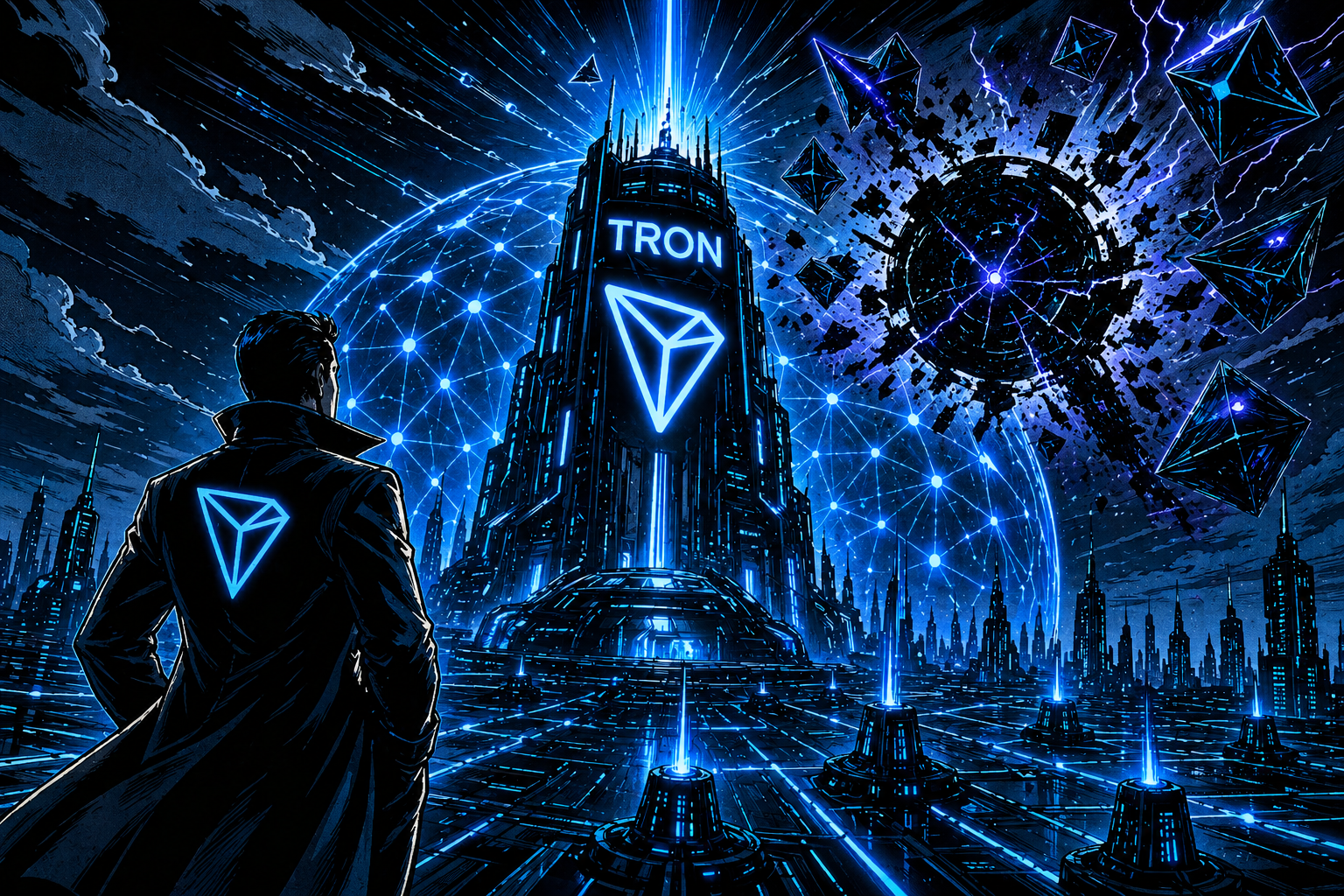
Quantum progress is accelerating, pushing TRON and others to fast-track post-quantum security upgrades.
Quantum computing is no longer a distant concern for crypto markets. Recent breakthroughs are pushing long-standing security assumptions closer to real-world testing. As progress accelerates, blockchain networks are beginning to respond with concrete timelines and upgrades. TRON is now stepping forward, positioning itself early in the race toward quantum-resistant infrastructure.
In an X post, Sun said TRON will launch a quantum-resistant network on testnet in Q2, followed by a mainnet rollout in Q3. He framed the initiative as a direct response to the risks posed by AI and quantum computing. According to him, protecting user funds in an AI-driven era depends heavily on post-quantum cryptography.
作为主要加密货币的创始人,我们应在专注AI应用好处的同时,高度关注AI发展带来的风险,量子计算的破解就是最核心的关键。波场将于今年二季度在测试网上线抗量子网络,三季度上线主网,成为全球首个抗量子网络,抗量子区块链网络是AI使用的第一诉求!波场用户的资金在AI时代将会是安全的! https://t.co/6ydNOTwFbJ
— H.E. Justin Sun 👨🚀 🌞 (@justinsuntron) April 26, 2026
His remarks follow a milestone achieved by independent researcher Giancarlo Lelli. Lelli successfully cracked a 15-bit elliptic curve key using publicly accessible quantum hardware. The feat earned him a 1 BTC reward from Project Eleven, marking the largest public quantum attack demonstration to date.
Elliptic curve cryptography underpins wallet security across networks such as Bitcoin and Ethereum. It allows users to prove ownership of funds without exposing private keys. Classical computers cannot realistically reverse a public key into a private key. However, quantum systems introduce new possibilities through Shor’s algorithm.
Despite the achievement, experts stress that a 15-bit key falls far short of real-world crypto standards. Bitcoin uses 256-bit encryption, which represents an exponentially larger problem.
Still, the pace of progress is notable. The previous public demonstration broke only a 6-bit key in 2025, making Lelli’s result a 512-fold jump in complexity within months.
Resource estimates for cracking full-scale encryption are also falling. A recent Google Research paper suggests that fewer than 500,000 physical qubits may be enough to break 256-bit elliptic curve cryptography.
Earlier projections placed that requirement in the millions. While such machines do not yet exist, the downward trend is drawing attention across the industry.
Meanwhile, risk exposure is not uniform across all wallets. Addresses with publicly visible keys are more vulnerable under a quantum attack model. Estimates suggest roughly 6.9 million BTC fall into this category, including long-dormant holdings linked to early adopters.
Project Eleven Awards 1 BTC Q-Day Prize for Largest Quantum Attack on Elliptic Curve Cryptography to Date
Researcher breaks 15-bit ECC key on publicly accessible quantum hardware in a 512x jump from the previous public demonstration.
Project Eleven today awarded the Q-Day…
— Project Eleven (@projecteleven) April 24, 2026
Developers have already begun discussing migration paths. Bitcoin’s proposed BIP-360 introduces quantum-safe address formats. Other networks, including Ethereum, Ripple, and StarkWare, have also outlined transition strategies.
Sun’s stance positions TRON as an early mover among major chains. He argued that quantum-resistant infrastructure will become a core requirement as AI systems scale. In his view, waiting until quantum computers reach full capability would expose users to unnecessary risk.
Related News
Explore more