 Peter Mwenda·5d ago
AI-powered RWA markets are emerging as a potential turning point in how capital flows through both crypto and traditional finance.
For years, the industry cycled through narratives, ICOs, DeFi summers, NFT booms, and memecoin frenzies. Each wave attracted capital but left structural gaps.
The convergence of AI agents and real-world assets addresses something none of those cycles touched: a fully autonomous, always-on capital market operating on regulated yield.
The RWA market has already reached $30 billion, and that figure reflects real assets, tokenized US Treasuries, corporate bonds, private credit, and real estate.
Importantly, these are not protocol-native tokens. They carry yield tied to actual governments and businesses operating outside the blockchain ecosystem.
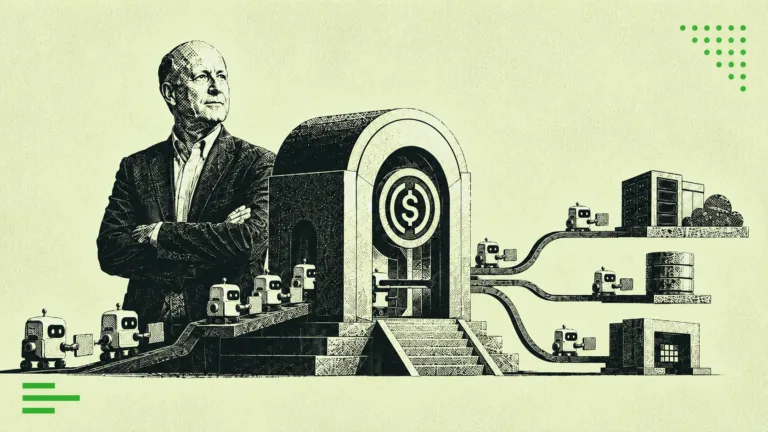
However, what changes the trajectory is the addition of autonomous AI agents. These systems make allocation decisions, execute trades, manage portfolios, and optimize yields continuously without human input.
Combined with on-chain RWAs, they form something the market has not seen before: a capital layer that never sleeps, never waits for banking hours, and never pays intermediary fees.
As @2xnmore noted in a widely circulated post: “An AI agent holding stablecoins detects better yield in a tokenised treasury vault. It allocates instantly. It collects real-world interest. It redeploys capital the moment a better opportunity appears.”
Everyone is building AI agents to trade crypto.
Nobody is building them to manage real money.
That is about to change.
The convergence nobody has fully priced yet: AI agents autonomously allocating, managing, and settling Real World Assets.
Tokenised treasuries. Private… pic.twitter.com/RNBHCBTBtv
— 2xnmore (@2xnmore) June 7, 2026
That shift, from speculative trading infrastructure to regulated capital management, is what separates this moment from prior crypto narratives.
Earlier cycles built tools for price exposure. This cycle is building tools for yield management at machine speed.
DeFi‘s defining limitation was its yield model. Returns were largely built on token emissions, protocols minting their own assets and distributing them as rewards.
Initially, that model attracted liquidity in bull markets but collapsed structurally when incentives dried up. It was circular by design.
RWA yield does not share that weakness. Interest from US Treasuries, rent from real estate, and returns from private credit exist independently of crypto market conditions.
As a result, they do not require a bull market to sustain. That makes them a fundamentally different anchor for capital allocation.
Macro investor Raoul Pal has framed this trajectory plainly, the next economy will be largely invisible to humans, with agents transacting trillions daily across compliant, stable asset classes. RWAs provide exactly that stability layer.
The remaining obstacles are acknowledged: regulatory clarity for autonomous agents, oracle reliability at scale, and institutional-grade guardrails.
However, the teams building through those constraints are constructing durable advantages. Most of the market still views AI agents as faster trading bots.
Meanwhile, the teams building allocation rails into regulated real-world yield are operating well ahead of where consensus attention currently sits.
Related News
Explore more