 Nasim Akthar·15hr ago

Algorand is gaining ground as a foundational layer for AI-driven financial infrastructure. Coinbase’s x402 payment standard and Google’s Agentic Payments Protocol have both positioned the network as a compatible rail for machine-to-machine transactions.
As AI agents become active economic participants, the demand for fast, low-cost, and reliable payment infrastructure is accelerating.
Algorand’s technical characteristics are drawing direct attention from two of the most prominent names in technology and crypto.
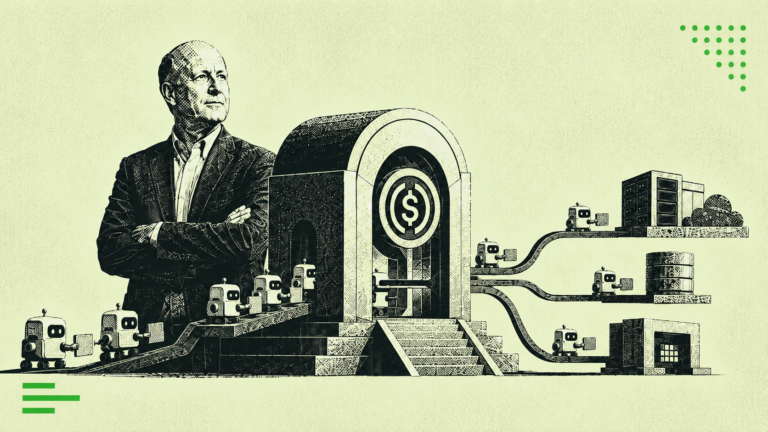
Coinbase’s x402 protocol is designed to let software agents pay for services directly over the internet. There are no subscriptions, no logins, and no API keys required in the process.
Instead, agents execute payments autonomously, in real time, without human intermediaries involved.
Algorand’s support within x402 places it among the networks capable of powering this emerging transaction model.
🧵 Algorand, Google Quantum AI and the Future of Machine Payments@Google Quantum AI mentioned @Algorand.
Coinbase’s x402 supports Algorand.
Google’s AP2 lists Algorand as a partner.
Over the past few months, Algorand has quietly appeared in three conversations that could… pic.twitter.com/45HK6FMhLr
— Marco Salzmann 🇩🇪🇻🇪 (@MarcoSalzmann80) June 7, 2026
AI agents operating at scale cannot absorb unpredictable fees or slow settlement windows. Each delay or cost spike compounds across thousands of simultaneous transactions.
Algorand’s fees sit at approximately 0.001 ALGO per transaction, keeping costs stable and negligible. Combined with near-instant finality, the network fits naturally into the x402 architecture.
The x402 model reflects a broader shift in how digital services will be monetized. Rather than billing cycles or account-based access, services become pay-per-use at the software layer.
Algorand’s throughput and cost structure support that kind of granular, continuous payment activity. That compatibility is not incidental, it reflects deliberate infrastructure alignment.
Machine economies require rails that behave more like the internet than traditional banking systems.
x402 is an attempt to build those rails. Algorand’s inclusion in that standard puts the network inside a payment framework that could scale alongside AI adoption across industries.
Google’s Agentic Payments Protocol targets autonomous payment flows where AI systems transact continuously and without human oversight.
Algorand appears as a listed partner in AP2, signaling direct compatibility with Google’s vision for agent-driven commerce.
That participation extends Algorand’s presence into one of the most forward-looking payments frameworks currently in development.
AP2 is built around the assumption that AI agents will soon function as independent economic actors. They will book services, access data, purchase resources, and settle payments in real time.
Networks supporting that activity must deliver speed, certainty, and low operational costs consistently. Algorand’s architecture meets each of those requirements.
Transaction finality on Algorand is immediate, with no probabilistic confirmation periods. That certainty matters for autonomous systems that cannot pause to verify settlement before proceeding.
A payment infrastructure with confirmed finality removes a critical point of friction in agent-to-agent commerce.
Coinbase x402 and Google AP2 now represent two separate but aligned frameworks pointing toward Algorand. Stablecoins, including USDC, are already live on the network.
The convergence of machine payments, AI agents, and established settlement infrastructure is forming around a network that has largely built in the background.
Related News
Explore more