
XRP Ledger Rolls Out 3.4.0 With New Lending Protocol Changes

Latest in XRP Ledger
XRP Ledger Rolls Out 3.4.0 With New Lending Protocol Changes
XRP Holds Near $1.30 as Wave 2 Pullback Keeps Key Levels in Focus
The Wallet Standard AI Agents Were Missing Just Got a Hackathon
Virtuals Protocol Brings Agent Commerce to XRP Ledger
XRPL Based Token BXE Plans Major Supply Burn Event on April 1
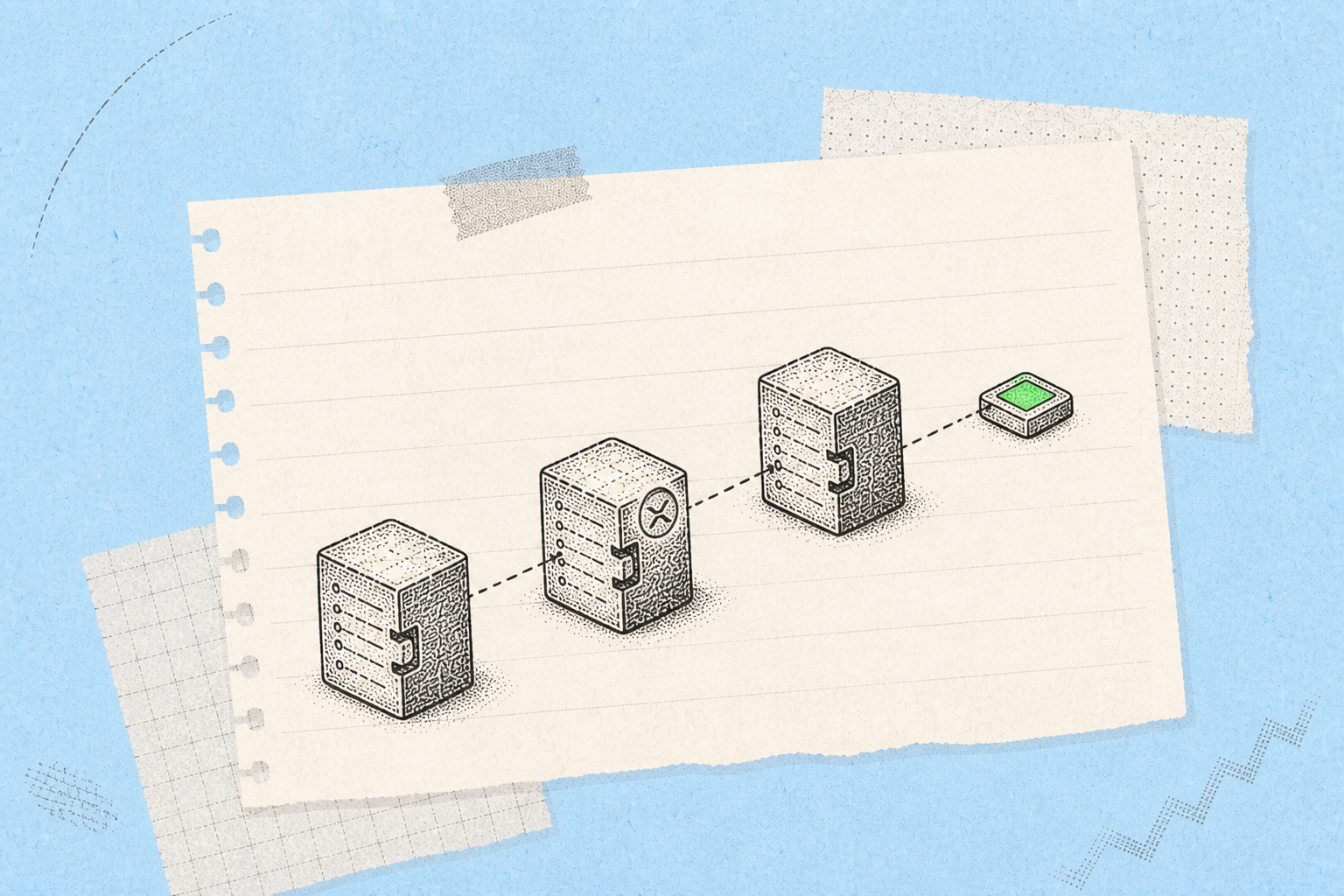
The XRP Ledger (XRPL) is often confused with Ripple, the private company formed by the creators who built it, but they are not the same thing. XRPL is an open-source, decentralized blockchain that anyone can build on. See also: Xrp eyes 15 after breaking key chart pattern.
The price of XRPL’s native XRP token is not the only interesting aspect of XRPL. It is widely used in various institutional applications such as tokenized real estate, regulated stablecoins, permissioned trading, and on-chain lending. This article explains what XRPL is, what XRP tokenization is, the differences between permissioned and open DeFi, and some of the upgrades on the roadmap.
XRPL is a public, permissionless layer-1 blockchain that settles transactions in three to five seconds for a fraction of a cent as fees. XRPL’s protocol layer already includes basic financial functionality such as payments, a built-in exchange, and new tokenization functionality, features that smart contract chains would require custom code to accomplish.
XRPL was created in 2012, three years before the birth of Ripple Labs, by its founders David Schwartz, Jed McCaleb, and Arthur Britto. It is older than most significant Web3 blockchains and has closed tens of millions of transactions since launch.
This is the exact confusion behind the XRPL maxis and “Ripple only” talk online. Three separate things:
While Ripple funds much of the development, XRPL’s validators and code are open to everyone, which is the basis for the “it’s the ledger, not the company” argument.
XRPL is upgraded through amendments, which require approximately 80% of validators to approve; this process takes approximately 2 weeks. No one company will be able to compel the change; it will be recorded on the known amendments page on XRPL.
There is no mining or staking required for XRPL. It runs Federated Byzantine Agreement (FBA), which involves rounds of voting by trusted validators to propose and confirm transactions. A transaction completes when the overlapping trust lists agree within seconds, without complex calculations or energy consumption.
Anyone can operate as a validator, but most use a default Unique Node List (UNL) provided by the XRPL Foundation and other groups such as banks, exchanges, and community operators. In late 2021, Ripple’s XRPL recorded an average of 1.8 million transactions per day without any surges in fees typically linked to proof-of-work systems.
XRPL needs no mining and no staked collateral.
| Consensus Type | Energy Use | Speed | Example Network |
| Proof of Work | Very high | ~10 min/block | Bitcoin |
| Proof of Stake | Low | ~12 sec/block | Ethereum |
| Federated Byzantine Agreement | Minimal | 3 to 5 sec | XRP Ledger |
Tokenization is the process of creating a token that represents a real or digital asset, bond, property, or dollar as a transferable token on-chain. XRPL has been implementing this via trustline-based issued currencies since 2012, and now, with the new Multi-Purpose Token (MPT) standard, native compliance controls.
Much of the tokenization and RWA discussion on XRPL lately can be attributed to the ease of minting, redeeming, and trading tokens on the platform, thanks to low fees and the built-in exchange.
The XRP Ledger is designed around issued assets as much as native XRP. Trustlines define which issued currencies an account can hold, and cutting the account reserve from 10 XRP to 1 XRP lowers the cost of opening new accounts as usage grows.
The Multi-Purpose Token (MPT) standard gives XRPL a native path for real-world assets without custom smart contracts, including KYC/AML flags, approved-holder transfer rules, supply limits, and on-chain compliance metadata. That model shows up in practice when governments and platforms tokenize property deeds or other off-chain value onto XRPL, and when issuers launch regional dollar stablecoins for cheaper transfers and FX hedging. Related: Epic chain launches xrp based rwa platform to revolutionize finance.
The durable lesson: XRPL’s edge is controlled issuance and settlement of real assets, not meme-token experimentation.
XRPL’s native token standard attracted a lot of tokens and investors hungry for projects like that, since a pilot effort with Ondo Finance, JPMorgan, and Ripple to tokenize the bank’s Treasury allegedly led to the settlement of about $250 million worth of tokens in seconds during Q1 2026 research, per Messari.
Dubai-style property tokenization is the same issued-asset model in public: a deed or other off-chain claim is represented on XRPL under issuer rules, not as a meme token experiment.
In August 2025, B2B settlement company Wellgistics Health, listed on the Nasdaq, implemented an XRPL payment system that allows pharmacies to transfer money almost instantaneously without relying on banking rails, demonstrating the utility of XRPL beyond token listings.
Agent commerce, AI agents trading with each other, is more recent. New Ripple features have also enabled agents to connect to XRPL without API keys, while XRPL recently hit one million AI agent transactions with the x402 framework, adding to the argument of programmable job settlement vs pure trading.
Permissioned DeFi gates participation by verified credentials instead of opening liquidity to any wallet. That’s via Credentials, Permissioned Domains, and the Permissioned DEX, which allows institutions to allow or deny people access to a trading venue without losing access to XRPL’s native order book.
That’s different from the open, permissionless DeFi that’s available on alternate chains like Ethereal, where anyone can join a pool without undergoing any identity verification process; regulated entities can’t access full liquidity under these conditions.
Case study: Why banks avoided the open DEX? A key reason for this is that much of the institutional XRPL flow traditionally remained on the side of the “custodial” or “licensed” gateways, where compliance teams had a preference. One major reason is that much institutional XRPL flow has historically not gone on the open DEX, due to compliance teams’ preference for “custodial” or “licensed” gateways and efforts to avoid illicit liquidity.
Permissioned Domains, Credentials, and the Permissioned DEX enable institutions to decide on their open, permissioned, or hybrid offers while maintaining the identity and domain controls. Token escrow amendments restrict assets until they are transferred to a public pool to aid trade settlement, without pressuring anyone to join a public pool. It’s not DeFi for the sake of DeFi; it’s bringing regulated activity onto the ledger without giving up or compromising compliance.
In October 2025, the MPT standard was activated, so issuers could get a protocol-level RWA path. Then came Credentials, Permissioned Domains, and the Permissioned DEX, which sort of became Ripple’s “permissioning stack”, the whole set. Rippled 3.1.0 came out in January 2026, and it added two features: Single Asset Vaults, which enable brokers to offer fixed-debt loans based on the deposited assets of the vault, and a native Lending Protocol, which moves closer into the bond-deck category of DeFi than the lending market.
Meanwhile, contributors are working on Smart Escrows, a WebAssembly-based extension to allow custom escrow logic, and on prototypes of confidential MPT transfers that obscure amounts while maintaining supply verification, as part of Ripple’s “balancing privacy with accountability” roadmap.
Software release and amendment activation are still separate clocks. XRPL 3.3.0 packages the next institutional toolset, including ConfidentialTransfer for auditor-gated private MPT moves, DynamicMPT for limited issuer property changes, BatchV1_1 for atomic multi-transaction bundles, PermissionDelegationV1_1, and Sponsor fee/reserve coverage, plus the fixCleanup3_3_0 maintenance set for vaults, lending, AMMs, permissioned trading, and pseudo-accounts. A node running 3.3.0 only means the code is available to evaluate. On XRPL, transaction rules change when validators hold more than 80% support for two weeks. As of mid-September 2026, fixCleanup3_3_0 was enabled on mainnet while those five feature amendments remained supported but not enabled. Treat version headlines as capacity news until amendment status flips, then watch whether issuers and venues actually use the new tools.
The property tokenization effort by the Dubai Land Department (DLD) with Ctrl Alt is a pretty solid example of real estate tokenization on XRPL. Investors can buy fractional real estate units for as low as AED 2,000.
In the pilot, it reportedly sold over $5 million worth of property for 7.8 million tokens, and in February 2026 a secondary market opened, but only for a controlled period.
XRPL is operational when institutions are able to both custody assets and hold cash-like tokens against regulated venues. RLUSD issued (and other chains) is an asset under trust-style reserve rules, and partnerships with exchanges and banks represent how tokenized money-market instruments can trade against RLUSD and can provide collateral.
Institutional custody launches and Tier-1 wallet infrastructure (multi-scheme signing, webhooks, and policy controls) reduce the need for every firm to run its own ledger stack.
Parallel moves like DTC tokenization rails citing Ripple-class infrastructure in patents further drive this direction; that is, XRPL is a part of a larger settlement stack, not just a retail trading venue.
That’s continued with Ripple’s investments in ZILO and Licuido, which add collateral-mobility products to enable tokenized fund shares to be pledged, rather than sold, and DTCC’s clearing infrastructure has started plugging into Ripple Prime.
XRPL is competing with chains focused on RWA and the legacy chains developing their own ledgers. SWIFT has recently tested a blockchain ledger system with 17 banks, a testament that the head start is an advantage, but not a certainty for XRPL. There is also a lack of regulatory clarity from one region to another.
Openness versus compliance is also a conflict. Around the middle of 2026, validators on XRPL protested against further reduction in the account reserve, claiming that it would make the network less robust against spam and DoS attacks.
The emphasis on XRPL seems to be shifting toward more institutional finance and away from retail-style speculation. Near-term priorities are native lending, Smart Escrows, and confidential MPT transfers. Meanwhile, custody partnerships and RWA tokenization are there to make adoption easier and faster.
Watch the permission-graded DEX volume and keep an eye on AMM and DeFi-on-XRPL interest to see whether institutional DeFi is real or just an announcement dressed up as progress.
Developed in 2012, it’s an open-source, decentralised layer-1 blockchain that supports payments in seconds for under a cent.
Issuing real or digital assets as tokens on the ledger, via trustlines or the MPT standard, so they can be transferred or traded on-chain.
Multi-Purpose Token, a native standard that will enable compliance controls such as allow-listing and clawback in the protocol itself, which is activated in October 2025.
Regulated institutions must manage their counterparty. It enables them to open gated order books just for accounts on their list.
Ripple, of course, develops products on XRPL and finances many of their product efforts, but XRPL is an open network that other companies develop independently as well.
RLUSD is Ripple’s dollar stablecoin, regulated by NYDFS, and used on XRPL as a dollar counterpart for tokenized funds and cross-border payments as a cash settlement asset.
Yes. The Dubai’s Land Department has a real estate tokenization initiative on XRPL, along with tokenized Treasury products from issuers such as Ondo Finance. Also covered: Ripple has partnered with ondo finance to tokenize u s.
Most activity involving issued assets is done by an on-chain agreement for an account to hold a particular issued currency from a particular issuer.
Use a wallet that the private keys are in control of, a hardware wallet for bigger sums and never reveal your seed phrase.
Late 2025 into early 2026, when Credentials, Permissioned Domains, and the Permissioned DEX activated, followed by native lending in January 2026.
Explore more