Dogecoin Price Analysis: DOGE Cup and Handle Could Trigger Move to $0.10

Latest in Dogecoin
Dogecoin Price Analysis: DOGE Cup and Handle Could Trigger Move to $0.10
Dogecoin Technical Setup Tightens After $0.0883 Hit-What’s Next?
Dogecoin Goes Corporate on April Fools, X Money Looms
Dogecoin Follows Recurring Cycle Pattern, Fueling Rally Expectations
Dogecoin Signals Possible Accumulation Phase as Macro Cycle Threshold Nears.
Dogecoin was never built to be scarce. It was built to move, to get tipped around on Reddit threads, to fund a bobsled team, and eventually to sit on a corporate balance sheet next to actual cash. The Doge Army has spent over a decade watching it swing between meme and infrastructure, and 2026 has leaned harder into the infrastructure side than most people expected.
This page covers what Dogecoin actually is and why it has no max supply, the payments push behind the Official Dogecoin Reserve, the corporate treasuries and ETFs now holding DOGE, how mining works, a price reality check that doesn’t promise you the moon, and the DOGE Department mix-up that still confuses people. Live posts handle the day-to-day. This page is the map.
Three threads matter right now. Where DOGE is actually being spent, who’s putting it on a corporate balance sheet, and what’s happening on the mining side that affects how the coin moves day-to-day.
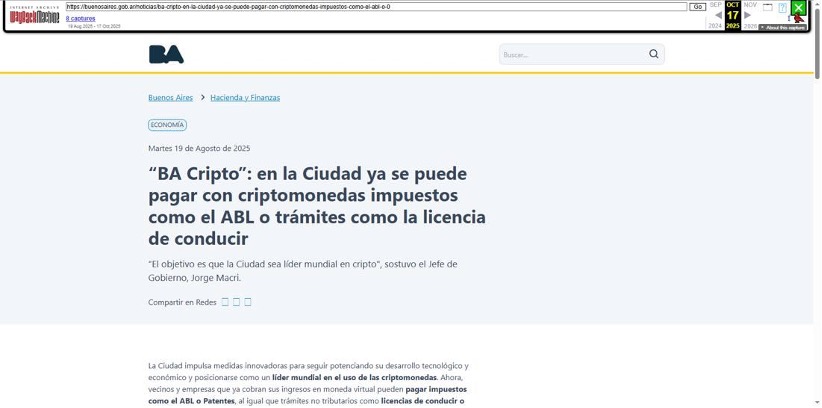
Buenos Aires now lets residents pay city taxes, vehicle fees, and traffic fines with crypto, DOGE included, through a QR flow under its BA Cripto program. Payments get converted to pesos at the point of sale, so the city itself never holds crypto on its books. It’s a utility story, not a moon call.
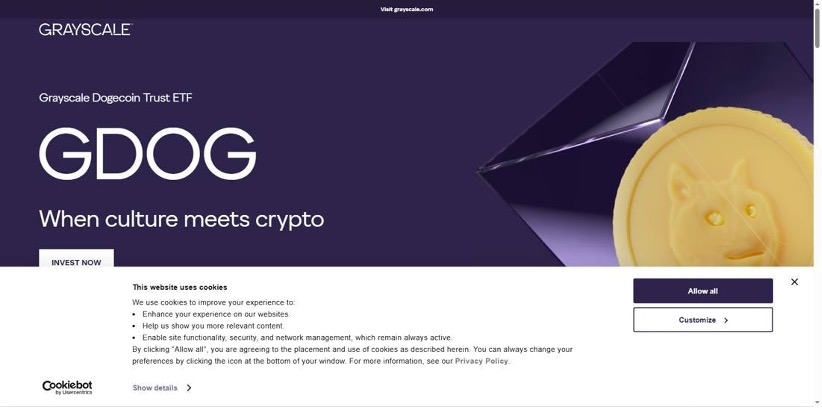
Public companies have piled into DOGE treasuries this cycle. Bit Origin bought over 40 million DOGE as the first move under a facility that could scale to $500 million. CleanCore Solutions raised $175 million to build what it calls the only Dogecoin treasury actually sponsored by the Dogecoin Foundation and House of Doge. On the fund side, Grayscale’s Dogecoin Trust now trades on NYSE Arca, and REX-Osprey’s DOJE beat it to market as the first US-listed spot Dogecoin fund.
Thumzup Media, the company backed by Donald Trump Jr., closed its acquisition of Dogehash Technologies and renamed the combined mining business Datacentrex. Dogehash runs Scrypt ASIC rigs that mine DOGE and Litecoin side by side, since the two chains share the same mining algorithm and get merge-mined together. More hash power chasing the same block reward tends to matter more for miner economics than for DOGE’s price directly.
Forget scarcity. Payments and culture were always the design brief here. Dogecoin descends from Litecoin’s code, uses the same Scrypt algorithm, and confirms transactions quickly with low fees. Tipping and spending were the point from day one. Holding was never really the pitch.
None of that overlaps with what Shiba Inu or the broader Altcoins hub cover. This page stays on Dogecoin specifically.
Mining runs on Scrypt here, same as Litecoin, and the two chains have been merge-mined since 2014. One rig, one power bill, both networks secured at once. Cloud mining offers built around Dogecoin vary wildly in legitimacy. Some are real hosting arrangements. Plenty are payout schemes dressed up as mining contracts. Treat any promise of guaranteed daily DOGE income as a red flag rather than a shortcut.
The chronology below leans on Dogecoin’s own history page. Worth pulling up directly if a date here needs to be double-checked.
Billy Markus and Jackson Palmer launched Dogecoin online on December 6, 2013, running on Litecoin’s Scrypt code and centered on the Doge meme, a Shiba Inu named Kabosu with broken Comic Sans thought bubbles running through her head. Neither man expected it to last. Markus has said more than once that he built it in a couple of hours as a joke about how seriously crypto was taking itself, and somehow the joke stuck around anyway. The community still treats that origin as history worth defending, not something to be embarrassed about.
Reddit tipping turned Dogecoin into a verb long before it turned into an investment. That culture is where the community-fundraising stories actually start, Redditors pooling DOGE to sponsor NASCAR driver Josh Wise at Talladega in 2014, then separately crowdfunding the Jamaican bobsled team’s trip to Sochi that same year. Low fees and a tipping habit did more to build Dogecoin’s identity than its price ever did, years before anyone was writing headlines about DOGE’s market cap.
Elon Musk kept mentioning it publicly. Stack that on the broader meme-stock retail wave, and 2021 becomes DOGE’s cultural and price peak. That’s the moment Doge Army identity went mainstream. Separate celebrity-driven attention from durable fundamentals here. The two moved together for a while. Then they didn’t.
House of Doge launched the Official Dogecoin Reserve. Bit Origin, CleanCore, and Thumzup built out treasury and Scrypt-mining strategies. Grayscale’s trust and REX-Osprey’s DOJE gave DOGE regulated fund exposure for the first time. All of it covered above, all of it dated and linked to the source.
Buenos Aires went live with crypto tax payments through BA Cripto. Separately, X rolled out X Money to Premium subscribers starting in mid-2026, and DOGE’s price popped on pure speculation about whether it might plug into the new payments rail. As of this writing, X Money is a fiat product built around bank transfers and a Visa debit card, and X has not confirmed any DOGE integration. Worth watching, not worth betting on yet.
DOGE trades on attention more than most large-cap coins, which makes it unusually sensitive to a handful of forces. Liquidation cascades when leveraged positions unwind fast. Whale wallets moving toward or away from exchanges. Where the broader market cycle sits. Narrative spikes tied to a single tweet or headline.
None of that supports a clean dollar target. A read built around those four forces ages a lot better than a single chart line promising that DOGE will hit a dollar by a specific date. Treat any such promise as entertainment and check LBN’s live Altcoin News for dated analysis instead.
Dogecoin headlines split into a few repeat buckets. Payments news covers pilots like Buenos Aires and House of Doge’s merchant push. Treasury and ETF news covers the corporate buyers and the funds now holding DOGE. Celebrity attention covers whatever Elon Musk said this week, which moves price without moving fundamentals. Everything else is noise.
One recurring mix-up deserves its own line. The federal Department of Government Efficiency, run out of doge.gov, shares an acronym with Dogecoin and nothing else. It is not cryptocurrency policy, and headlines that treat a DOGE Department announcement as a price catalyst for the coin are getting the two confused. For the daily version of sorting real news from noise, check LBN’s live Altcoin News feed.
Dogecoin Owns Payments-and-Culture; SHIB and Other Coins Stay Elsewhere
The Altcoins hub covers the broader market. This page stays on Dogecoin. Shiba Inu comes closest to a meme-coin peer here, close enough to earn its own page instead of getting folded into this one. Solana, Cardano, Pi Network, and Hedera round out the rest of the cluster, each with its own hub. This cluster owns Dogecoin. The siblings own their own coins.
Dogecoin launched in December 2013 as a lighthearted meme coin, and the community still treats humor and culture as part of the product. That matters, because Dogecoin doesn’t run on a fixed maximum supply. Continuous issuance keeps coins flowing for tipping, micropayments, and everyday transfers, a deliberate contrast to scarcity-first crypto narratives. Fast confirmations and low fees back up the same idea, DOGE gets built to be moved, not treated like a rare collectible. Public attention has repeatedly pulled in new retail recognition, but lasting relevance still comes down to community strength and real payment use, not short-term hype cycles.
New DOGE enters circulation every block, forever, by design. That continuous issuance is what makes tipping and micropayments cheap and easy rather than something you’d hesitate to do with a scarcer asset. It is a bet on utility over a store-of-value narrative, made deliberately, not a bug nobody got around to fixing.
Blockchain settlement can be too slow or uneven for routine retail checkout, even when fees are low. House of Doge, the Dogecoin Foundation’s commercial arm, created an Official Dogecoin Reserve to hold DOGE liquidity that can smooth merchant and consumer payments. The reserve acts as a cushion so partners can settle purchases without waiting on every on-chain delay. The same payments thesis appears in public-sector experiments such as Buenos Aires’ BA Cripto, which lets residents pay municipal taxes, vehicle fees, traffic fines, and licenses with cryptocurrency via QR flows. Together, these efforts frame Dogecoin as a spending rail, not only a traded meme asset.
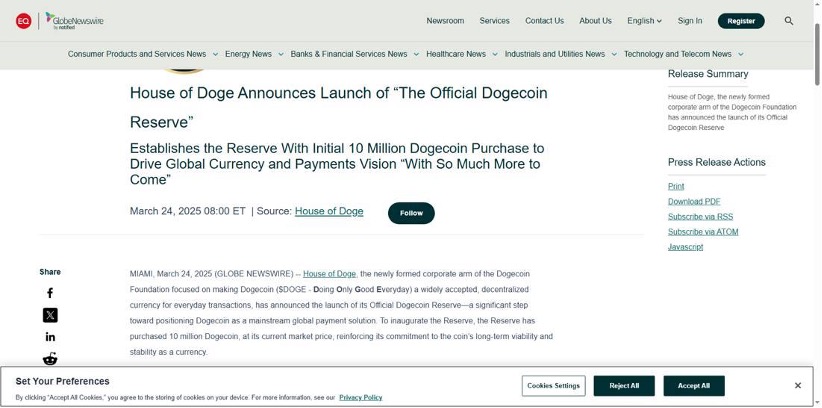
Source: GlobeNewswire / House of Doge
Buenos Aires is the clearest example so far, but it is a pilot, not a template every city has adopted. The city never custodies the crypto itself. Licensed processors handle the conversion to pesos at the time of payment, which keeps the municipal books entirely fiat while still allowing residents to pay in DOGE or other coins at the counter.
A handful of public companies treat Dogecoin as a treasury and infrastructure asset now, not a short-term trade. Bit Origin, CleanCore, and Thumzup have all paired DOGE holdings with payments, remittance, or Scrypt-mining plans, often running Litecoin hardware alongside it since both coins share the same algorithm. On the investment side, products like Grayscale’s Dogecoin Trust and spot ETF vehicles such as REX-Osprey’s DOJE give institutions regulated exposure without self-custody. These models can deepen liquidity and payment experiments, but they also concentrate operational and market risk inside corporate balance sheets.
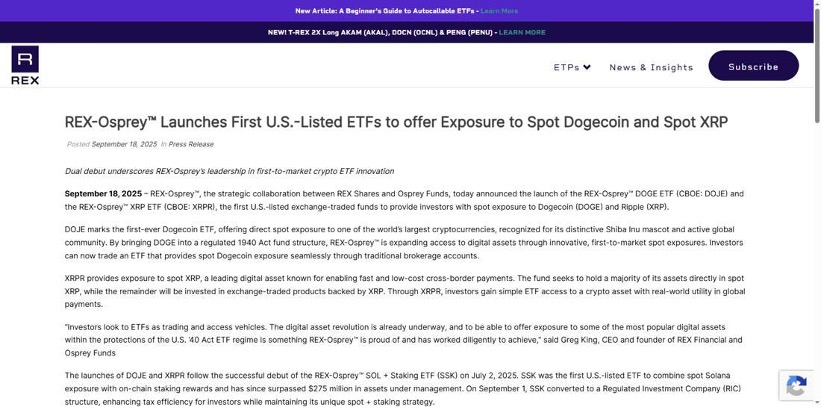
REX-Osprey’s DOJE got to market first, in September 2025, using a 1940 Act fund structure with a Cayman subsidiary rather than the slower commodity-trust approval path. Grayscale’s GDOG followed in late November 2025 as a pure spot holding, converted from its earlier private trust. Different structure, same bet: give institutions a way to hold DOGE exposure without managing a wallet themselves.
Dogecoin is a Litecoin-descended cryptocurrency launched in December 2013, built around fast confirmations, low fees, and a payments-and-culture identity rather than scarcity.
Yes. New DOGE enters circulation with each block, with no fixed cap, which keeps the supply flowing for tipping and payments rather than locking it up as a scarce asset.
A mix of liquidation cascades, whale-to-exchange flow, where the broader crypto cycle sits, and narrative or celebrity attention spikes, more than any single fundamental metric.
Nobody can responsibly promise that. Treat any specific dollar target as one scenario to weigh against the price picture above, not a guarantee.
Dogecoin uses the Scrypt proof-of-work algorithm and has been merge-mined with Litecoin since 2014, letting the same hardware secure both chains at once.
A DOGE liquidity reserve created by House of Doge, the Dogecoin Foundation’s commercial arm, meant to smooth merchant and consumer payments rather than sit as a passive holding.
Yes, on a limited but growing basis. Buenos Aires accepts it for municipal taxes and fees, and House of Doge’s reserve and merchant push both target everyday checkout use.
Not currently. X Money, X’s payments product, runs on fiat, bank transfers, and a Visa debit card. X has not confirmed any Dogecoin or crypto integration as of this writing.
No. The Department of Government Efficiency is a federal initiative that happens to share an acronym with the coin. It is not cryptocurrency policy and should not be treated as a Dogecoin price catalyst.
December 6, 2013, created by Billy Markus and Jackson Palmer.
The Altcoins hub covers the wider market, and Shiba Inu, Solana, Cardano, Pi Network, and Hedera each cover their own coin.
Explore more