 James Godstime·6hr ago

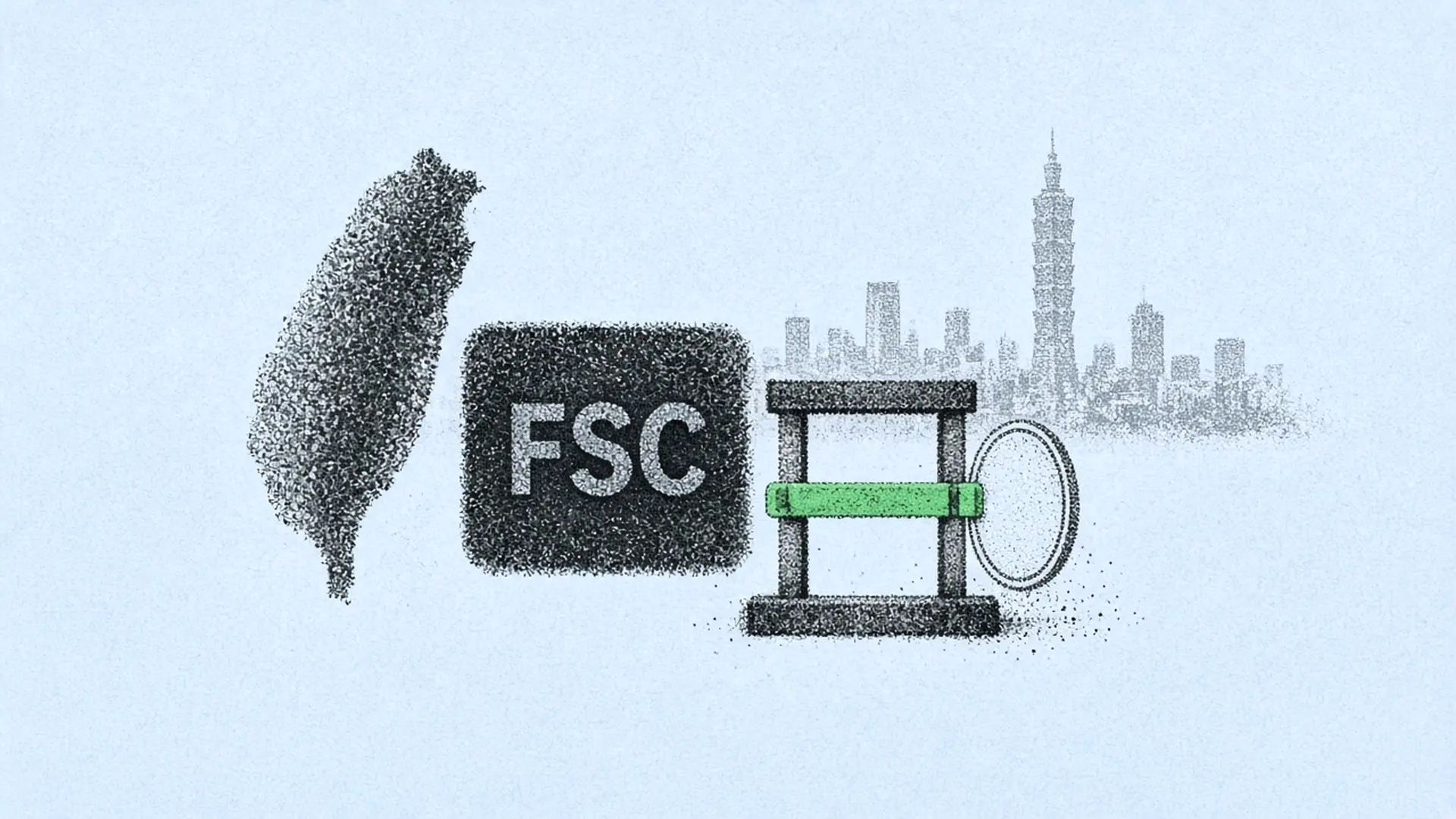
Taiwan’s Financial Supervisory Commission (FSC) said on November 3, 2026 that it has drafted rules for licensed stablecoin issuance. The package includes a Taiwan stablecoin capital floor of NT$300 million in paid-in capital for nonbank issuers. It also requires one-to-one pegs, full fair-value reserves, and AML duties. A 40-day public comment window opens once the drafts are formally posted.
That is the plain read. Taipei is not asking who can mint a token. It is asking who can stand behind a peg with balance-sheet weight, audits, and freeze capacity.
In a November 3 press release, the FSC said it has prepared three instruments. One is a draft Stablecoin Issuance Permit and Management Regulations. The others amend the Regulations Governing Anti-Money Laundering of Financial Institutions and bank AML/CFT internal-control rules. The drafts will be gazetted and posted on the FSC site for comments under the Administrative Procedure Act.
Eligible applicants fall into three buckets. Banks can apply. So can companies invested by a financial holding company or a bank. The FSC may also announce other eligible entities later. Nonbank issuers face the sharpest gate. They must hold at least NT$300 million in paid-in capital (about US$9.4 million at a NT$32 exchange rate). They must also complete a public offering and run a dedicated business limited to stablecoin issuance and redemption.
The draft also limits what may be issued. Tokens must track the New Taiwan dollar or a single foreign currency on a one-to-one basis. Issuers must verify subscriber and redeemer identity before taking those trades. Reserve assets at fair value must at least match tokens in circulation. Issuers must commission regular CPA audits. They must also build internal controls, business-continuity procedures, and information-security systems. They must restrict transfers or dispositions quickly when competent authorities lawfully order it. Issuers must file financial and business data with both the FSC and the Central Bank. They must also meet set public disclosure content and frequency.
On AML, the FSC plans to designate stablecoin issuers as financial institutions under Article 5, Paragraph 1, Subparagraph 18 of the Money Laundering Control Act. The wider FI AML rulebook would then apply. That puts the draft inside Taiwan’s broader crypto regulation stack, not a side aisle for tokens alone.
Here is the recurring question the draft presses. When a private token says it is worth one unit of currency, what makes that promise credible enough for a licence?
Capital is not the peg. Reserves are. But a NT$300 million paid-in floor raises the cost of showing up as a nonbank issuer. So do the public-offering duty and the narrow issuance-only charter. The rules filter thin shells before the reserve test even begins. The fair-value reserve rule then locks the circulating float to assets marked at market, not to a hopeful book value. CPA audits and Central Bank reporting add a second clock on whether that match still holds.
The freeze-and-restrict language is the other signal. A licensed Taiwan issuer is expected to move fast when authorities order a block. That is closer to a regulated payments instrument than to an open bearer token that nobody can pause.
None of this is final law yet. The Virtual Asset Service Act was promulgated on July 22, 2026. Its effective date still sits with the Executive Yuan. The FSC says the stablecoin package will take effect in step with that Act after comments are collected. Comments run for 40 days from the day after formal announcement. Until then, the capital floor, peg limits, and AML designation are draft policy, not live licensing.
What the draft does settle, for now, is the shape of the bar. Nonbank would-be issuers need seven-figure New Taiwan dollar capital. They also need a one-currency peg, full fair-value cover, and the compliance stack of a financial institution. The peg promise is still the same question it always was. Taiwan’s answer starts with who is allowed to make it.
Related News
Explore more